
How to replace a washing machine actuator
 The design of activator-type washing machines is quite simple; it would seem that there's nothing that could possibly break. However, parts are subject to wear and tear, and at some point, the question arises of how to replace a particular part in such a machine. In this article, we'll look at the activator in washing machines, how it works in different models, and how to replace it correctly.
What is called a washing machine activator?
If you ask this question to users of semi-automatic washing machines, they will answer that An activator is a rotating disk on the bottom or wall of the washing machine tank that agitates the laundry during washing. We'll just add that the outer surface of the disc, which is made of plastic, contains blades. These activators can vary in shape and size, but their main purpose is the same: to set the contents of the tank in motion.
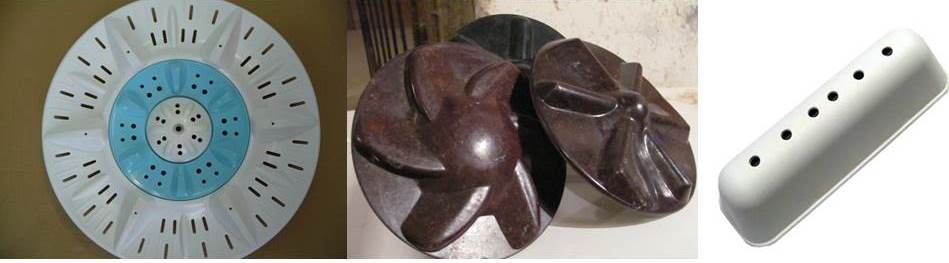
Modern automatic washing machines also have an agitator. It's a bit odd, but it's true. This is actually a drum breaker, usually a plastic element that looks like a barrier. It's attached to the inside of the drum and its purpose is to break up and shake out clumps of laundry, thus improving the wash quality.
Note! This activator also has another function: it acts as a drum reinforcement, protecting this component from damage and strengthening it.
Types of washing machines by activator location
Small washing machines, designed to wash 1-1.5 kg of laundry, were found in almost every Soviet family. Today, they are used by summer residents. Having a professional repair such a machine is often unwise, as it can cost half the price of a new one. Therefore, users often try to fix the machines themselves. And it must be said, most are quite successful at it.
Compact machines are divided into two types. Some have a vertically positioned activator. These machines include the Samara and Desna. The second type has a horizontally positioned activator, such as the Malyutka-425M, Fairy-2, or Mini-Vyatka. In semi-automatic machines with a wringer, the activator is also located horizontally. Disassembling such a vehicle also presents its own challenges. Let's look at how to remove and replace the actuator in different vehicle models, one by one.

Washing machines SM-1
Machines of this type include the "Malyutka," "Samara," and "Otrada." The internals of these machines consist of the following basic components: a tank, a lid, a housing, an electric motor, a thermal relay, capacitors, and an activator. An activator-based machine does not have a drum; the drum's functions are replaced by an activator, which rotates the water in the tank.
To remove the activator, you need to disassemble the washing machine itself and prepare the key needed to unscrew the activator. Let's look at making such a key from a length of water pipe using the "Malutka" washing machine as an example. The pipe should be 150 mm longer than the diameter of the activator body. Using a 6 mm drill, make two holes in the pipe, 9.5 cm apart, symmetrically located around the center. Then take two bolts and insert them into the holes; the ends of the bolts should protrude 10-15 mm. Finally, secure the bolts with nuts.
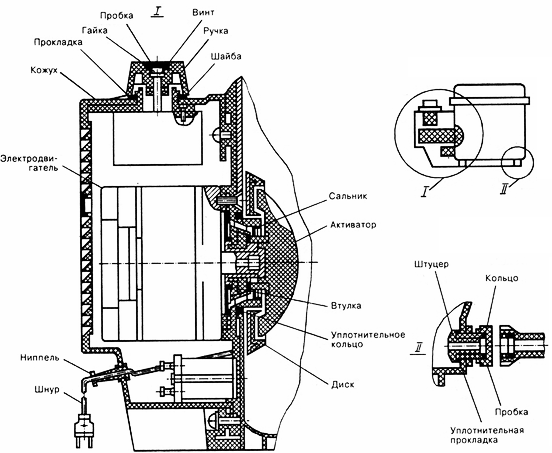
Now we will describe how to unscrew the activator:
- We pull out the plug on the side of the machine.
- We turn the activator by hand so that the hole in the housing exactly matches the hole in the impeller.
- We take a screwdriver and insert it into the engine rotor, thereby jamming it.
- We insert the homemade key into the activator body and unscrew it.
Important! The activator can be unscrewed either clockwise or counterclockwise on different machines.
- After removing the activator, take a similar one and assemble the machine in reverse order.
Washing machines SM-1.5
Machines with the SM-1.5 design include the "Fairy," "Ivushka," and "Mini-Vyatka." Their distinguishing feature is that the activator is driven by a belt drive. Removing the activator in these machines is quite easy. Let's list the procedure using the Mini-Vyatka machine as an example.:
- After disconnecting the washing machine from the power supply, remove the tray (marked 1 in the figure).
- Loosen the bolts holding the engine.
- Remove the drive belt (34) from the pulley (32).
- Next you need to unscrew the nut holding the pulley (21).
- Now, having knocked out the stopper (20), remove the activator (25).
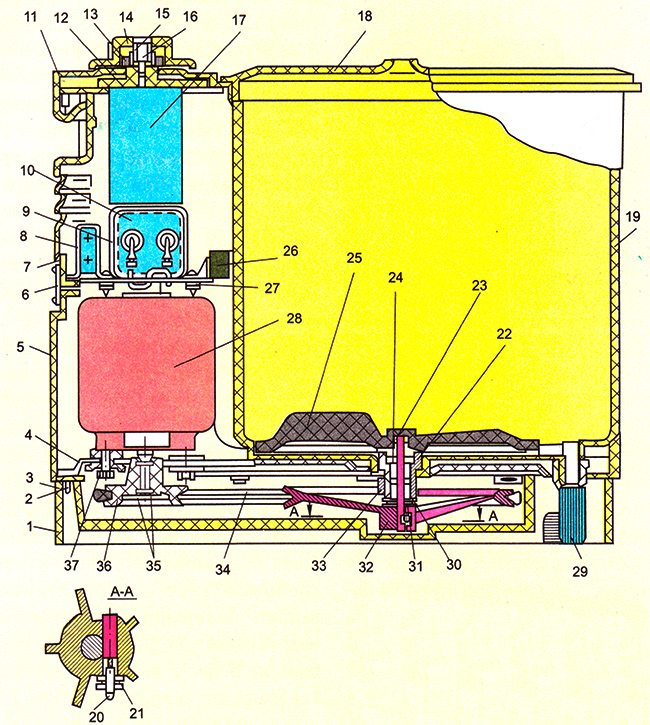
When installing a new activator, remember that the distance between the tank and the activator should not exceed 2 mm, and the axial offset should not exceed 0.5 mm. To adjust the activator's installation, use a washer.
Washing machines SM-2
Washing machines of this type differ from previous ones in their larger size and the ability to wash up to 2.5 kg of laundry. The rectangular body of the machine is made of painted metal. The activator is usually located on the side. To remove and replace it, follow these steps:
- Unscrew the back cover of the case and remove it.
- Remove the belt from the pulley.
- Remove the bolt holding the pulley on the activator shaft.
- While holding the activator with one hand, remove the pulley.
- Press the shaft together with the activator disk into the washing machine tank.
- Get the activator.
- Assemble the machine in reverse order, using a new activator.
Automatic washing machines with a drum and an activator
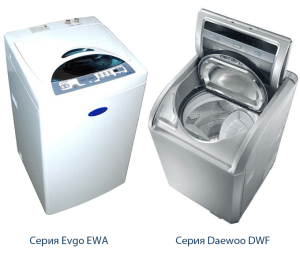
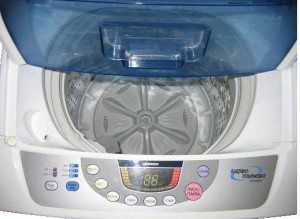 As a general rule, automatic and semi-automatic washing machinesMachines without a drum are called activator-type machines because the water in the drum is set in motion by an activator. Machines with drums opposite the activator don't have one, as they operate using a rotating drum. However, there is an exception to this rule: Daewoo top-loading washing machines. They have both a drum and an activator. So how do you remove a broken activator on these machines and replace it with a new one?
- In this case, dismantling the drum is not required. To remove the activator, you will have to remove the drum rim, otherwise it will get in the way. We move the plastic clips to the sides and remove the rim.
- Now you need to unscrew the nut holding the activator in place. It's located right at the bottom of the drum, so you'll need a socket wrench.
- After unscrewing the nut, we pry up the activator with a screwdriver, and then pull it out together with the nut and washer.
- We purchase a new original activator, install it in place of the old one, and then secure it with a nut.
Please note! When loosening the nut holding the activator, have someone hold the drum to prevent it from rotating. While you can jam the drum with a wooden block, this can damage the rotating mechanism.
Changing the rib punch
Replacing a rib punch is easy; almost anyone can handle it. What should you do?
- We take a stiff wire (or spring).
- We bend its tip with a hook.
- We insert the wire into the hole of the rib punch, press on it and feed it towards ourselves.
- The rib punch should pop off the retainer and come off.
- The new drum rib is put on by hand. We move the part slightly upwards and then place the opposite part on the hooks.
- Now the hooks need to be tightened. To do this, take an awl, pass it through the holes in the rib punch and tighten the fixing hooks.
To summarize, you can replace your washing machine's actuator yourself, without calling a professional. The key is to buy the original part and heed all expert advice. Of course, if you're not familiar with technology and aren't confident in your abilities, call a professional, and they'll do the job in just a few minutes.
Interesting:
Readers' comments
Headings
Washing machine repair




For buyers




For users


Dishwasher




Add a comment