
What is an activator washing machine?
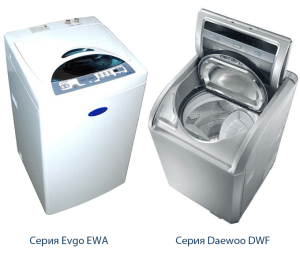 There are still people who use mini washing machines with an activator to wash their clothes. The modern generation doesn't even know what these machines are, but our parents knew all about them. An activator machine has its own advantages over an automatic drum washing machine. We'll discuss these advantages and also review popular models of activator washing machines.
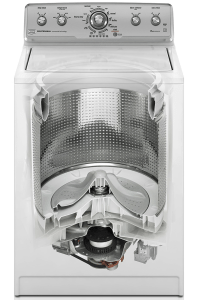
The structure of a similar washing machine
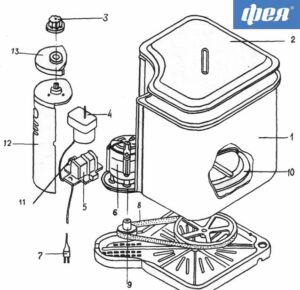
Activator-type machines have the simplest design. They consist of four main parts:
- tank made of metal or plastic;
- electric motor;
- activator;
- mechanical timer.
To wash, pour water into the drum, add and dissolve the detergent, load the laundry, and set the timer. The activator rotates, and the laundry rotates with it. This completes the washing process. When the machine stops, remove the laundry and rinse it in a separate container, or add clean water and restart the machine. If the machine has a centrifuge, after rinsing, transfer the laundry to it and spin it.
The activator machine is very simple. The absence of electronics eliminates frequent breakdowns. The only things that can break are the electric motor or timer; in very rare cases, the plastic tank can burst.
Strengths and weaknesses
Activator-type washing machines offer several advantages over automatic washing machines. Here are some of them:
- Energy savings. In simple activator-based machines, the water is already heated when it's added, meaning energy is expended only on the electric motor. There are, of course, models with water heating, which consume more energy when the heating element is turned on.
- the ability to wash things with any powder, even for hand washing.
- Save water consumption. You can do 2-3 washes in the same water, for example, wash whites first, then colors, and wash blacks last.
- do not require connection to the central water supply. This makes it possible to use such machines in rural areas, at summer cottages and other places where there is no running water.
- reliability ensured by simple assembly.
- the ability to regulate the washing time, as well as stop the washing at any time.
- washing large volumes of laundry, some models are designed for 14 kg of items per wash cycle.
- have a reduced noise level and practically do not vibrate during operation.
- They are small in size, which makes it easy to move these machines around or transport them to your dacha.
- Low price. Most activator-based machines are several times cheaper than automatic drum machines, especially domestically produced models. Their prices range from $15 to $60.
As for the shortcomings, there cannot be none.
- Washing clothes in this type of machine requires manual labor, such as rinsing and rearranging wet items, and spinning (if there is no centrifuge). This means, such a machine cannot be left unattended.
- Water is collected manually.
- It is dangerous to wash delicate items in such machines, as this may damage them.
Please note: Modern models now feature delicate wash cycles, as well as cashmere and wool wash cycles, which isn't a drawback.
- These machines cannot be built-in, as they are loaded from above.
- When draining water, you need to place a special container underneath each time, and then pour it into the designated place.
Types of activator machines
Machines of this type come in different types, they differ in their design features and the functions they have. But Moreover, all of them have only vertical loading of laundryThere are three different types of such washing machines, but this division is considered arbitrary.
- The simplest activator machines. They consist of a tank, an activator, and a manual wringer. The manual wringer consists of two rollers attached to each other, with the wet item inserted between them and spun. These machines include the "Malutka," "Oka," "Saturn 1616," and "Fairy."
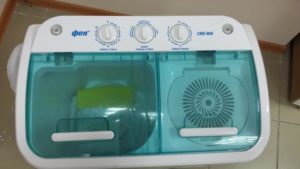
- Activator semi-automatic machinesThis type of machine has two tanks, one for washing and rinsing. The second tank is a centrifuge, used to spin the laundry transferred from the first tank. Different models have different additional features, such as a timer with wash time selection, a delicate wash cycle, a reverse cycle, and so on. Examples of semi-automatic machines include the Sibir, Renova WS 40, Unit 210, and Belosnezhka 55.
- Automatic activator machines. This type includes modern activator machines that fill with water, drain, heat, boil, and rinse with air and bubbles. They also feature a delicate cycle, wool wash, and more. The activator machine differs from the drum machine in that it has an activator-impeller in its tank.Here is an example of an automatic activator machine: Redwer WMA 5521, Evgo EWP 4026 N, Mabe LMR1083PBYR0, Whirlpool Vantage.
Please note! Automatic washing machines with an active type do not have the disadvantages listed above. Their only drawbacks are their higher cost and the larger volume of water they consume.
Review of famous models
There are quite a few washing machines with agitators. Despite this, many people prefer machines with drums. What's the problem? We believe it stems from a misunderstanding of the issue. The market offers drum machines and advertises them well, so the consumer has no choice but to buy.
When we hear the phrase "activator machines," most of us picture models like the "Malutka" or "Sibir." But that's incorrect, so we'll try to provide an overview of all available activator-type machines.
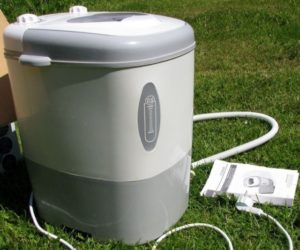
- The Malutka. One of the most popular washing machines of the Soviet era, beloved by housewives for its compact size and ability to quickly wash small loads of laundry. The machine's tank holds 27 liters of water, and a single cycle can handle up to 1 kg of laundry. It has a drain hose. This is the most popular machine in its class. Ideal for a summer house. Prices start at $15.
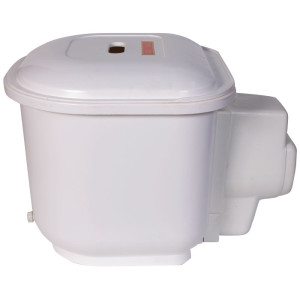
- Feya CMP-20. Semi-automatic washing machine with centrifuge. Load capacity up to 2 kg. Spin speed 1320 rpm. Price: approximately $25.
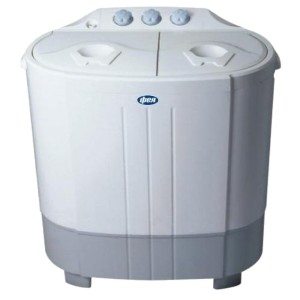
- Renova WS 50. Semi-automatic washing machine with a centrifuge. Load capacity up to 5 kg. Spin speed 1350 rpm. Includes a water inlet and outlet hose. Mechanical controls. Starting at $40.
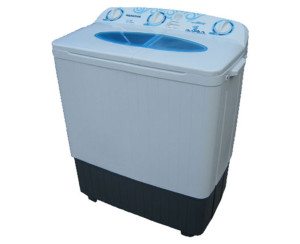
- Mabe LMR1083PBYR. Automatic washing machine with manual controls. Maximum load capacity: 10 kg. Spin speed: 680 rpm. Delicates and express wash modes. You can select the water temperature, including cold and hot water options. There's also an emergency door release. Prices start at $150.
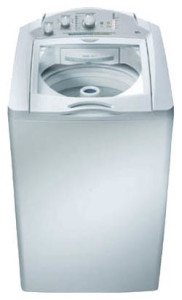
- Bosch WOR 16155. Automatic activator washing machine with electronic controls. Load capacity up to 6 kg. Maximum spin speed of 800 rpm. You can select the water temperature and spin speed, and there's leak protection. Delayed start is available. Prices start at $320.

- Whirlpool Vantage. Automatic washing machine with touch controls, USB interface, color display and the presence of 33 washing modesYou can create your own washing schedule, washing sportswear, shoes, and small bath mats. However, this technological marvel is not cheap, costing around $1,235.
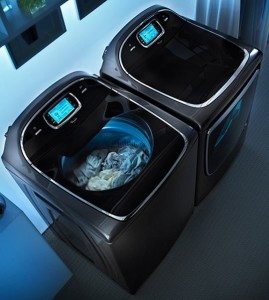
So, activator-type machines come in different varieties: the most basic and convenient for transport and use in the countryside, as well as cutting-edge and modern ones. In terms of performance, these machines are in no way inferior to drum-type machines. The choice is yours.
Interesting:
3 reader comments
Add a comment
Headings
Washing machine repair




For buyers




For users


Dishwasher




We bought a Zarget washing machine, loving its simplicity and ease of use. We had some questions after the first wash, but we didn't know who to ask. The store where we bought it didn't have a qualified technician, and we couldn't find a service center in St. Petersburg.
Well, this Bosch washer is just an automatic, not a manual one. It's a fully functional machine, complete with tank, etc.
Can I use detergent designed for activator-type washing machines in automatic washing machines? Can anyone explain?