
Dishwasher Aquastop Hose - Inspection and Replacement
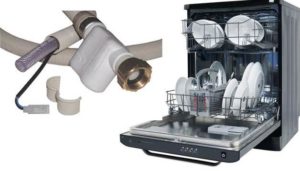 Aquastop system or Aquastop hose—these phrases are often heard in home appliance stores in connection with dishwashers and washing machines. But even dishwasher salespeople, who often use catchphrases in their praise for effect, don't fully understand what these phrases mean. In this article, we'll discuss hoses with the Aquastop system, their purpose, their design, and how to install, replace, or inspect them.
What is Aquastop and what are its functions?
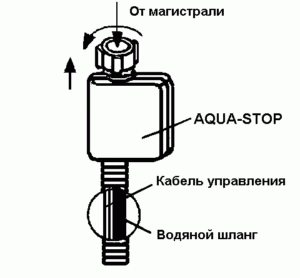
The Aquastop dishwasher hose is a standard hose enclosed in a protective casing and equipped with a special device that shuts off the water flow to the dishwasher in the event of a leak or hose rupture, protecting your home and the neighbors below from imminent flooding.
Please note! The pressure in the water supply system is quite high, and water hammer is a common occurrence. A system to protect the hose is essential.
 Most modern dishwashers are completely leak-proof. Manufacturers install an Aquastop inlet hose on them, and along with it, equip the machine body with a special tray with an electromechanical device. The device operates according to the following scheme:
- There is a leak inside the dishwasher;
- the tray begins to fill with water;
- the float inside the dishwasher tray rises, raising the lever;
- The lever closes the electrical circuit, the electric valve is activated and shuts off the water.
It turns out that the hose is protected by the external Aquastop system, and the dishwasher is protected from the inside by the internal Aquastop system. Experts note that the Aquastop electromechanical and absorbent system protects dishwashers and washing machines 99% of the time; only in 8 cases out of 1,000 does the system fail to operate properly, and a leak still occurs. Aquastop mechanical valves have worse statistics: 147 leaks out of 1,000 activations, for a success rate of approximately 85%. Let's discuss the different types of Aquastop systems for inlet hoses and their design in more detail.
How does this system work?
You've probably guessed that the Aquastop system protecting your dishwasher hose can come in a variety of designs. Manufacturers install the following on dishwashers: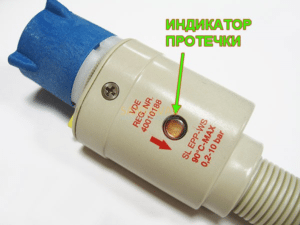
- simple mechanical Aquastop;
- absorbent mechanical Aquastop;
- electromagnetic Aquastop.
A simple mechanical Aquastop for a hose is becoming less common these days, but it can still be found on some budget Bosch dishwashers. The system is based on a special spring and valve. The spring is designed for a specific water pressure, and if the pressure remains constant, the hose operates as normal. If the hose is damaged, ruptured, or subjected to water hammer, the water pressure suddenly changes, and the spring immediately activates, sealing the valve tightly.
Important! The mechanical Aquastop for dishwashers does not detect minor leaks (such as leaks or drips), which can also cause significant damage.
A simple mechanical Aquastop valve is not able to completely protect the machine hose from leakage., but what about the others? The absorbent mechanical Aquastop is more reliable. The mechanism is based on a plunger with a valve, a spring, and a special absorbent in a reservoir. The system works like this:
- If even the slightest leak occurs, moisture from the hose gets into the protective casing;
- the absorbent quickly gets wet and expands;
- This causes the spring and plunger to activate and close the valve.
The main disadvantage of the absorbent Aquastop is that its safety valve is disposable. Once the absorbent inside the housing gets wet and expands, it hardens and closes the valve, making it impossible to reuse it, as well as the entire hose.
Please note! There are some Aquastop absorbent mechanisms around the world that use only a plunger or only a spring, but these are subtleties.
The Bosch Aquastop electromagnetic system is based on the principle of a solenoid valve. The device housing, at the base of the hose, contains either one or two valves. As soon as water enters the hose's protective cover, it begins to drain into the Bosch dishwasher's tray, which houses an electromechanical device (described in point 1). The device is triggered and completely shuts off the water flow into the Bosch dishwasher (or any other machine).
How to install/replace it yourself?
Now let's figure out how to check if the Aquastop hose has been activated. Firstly, the most important sign that the hose has been activated is that the dishwasher will refuse to pump water; it simply won't be able to. Secondly, the Bosch dishwasher will display a system error. Error code E15 for Bosch dishwashers This means that the Aquastop system has been activated. Once you decipher it, everything will immediately become clear.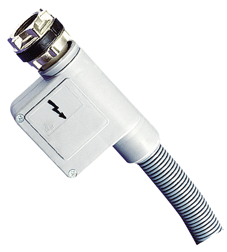
But sometimes, the Bosch dishwasher doesn't display an error code, and water still won't flow into the dishwasher. What should I do?
- The water needs to be turned off.
- Unscrew the Aquastop hose.
- Look inside the hose; you should be able to see the valve just behind the nut.
- If the valve is pressed tightly against the nut and there is no gap between it and the rib, then water will not pass through such a hose – Aquastop has worked.
Next, you can double-check that your Bosch dishwasher's Aquastop has been activated. Unscrew the bottom panel and look into the tray with a flashlight. If water is present, the Aquastop has definitely been activated, and the hose needs to be replaced.
Remember! The simple mechanical Aquastop does not need to be replaced; simply compress the spring until it clicks into place, and it's ready to use again.
Installing or replacing the Aquastop hose is straightforward. Simply turn off the water, unscrew the old hose, and screw the new one in its place. If you're using an electromagnetic system, you'll also need to connect the wire and plug to the leak detection sensor. This is straightforward, as the wire exits directly from the Aquastop base, and the inlet is located near the inlet valve on the outside of the Bosch dishwasher.
Finally, we'd like to point out that the Aquastop hose is designed to protect your dishwasher and you from flooding. The system is quite effective, so experts recommend installing it. Testing and installing the system is easy; even someone with no technical knowledge can do it; the entire job takes 10-15 minutes. Good luck!
Interesting:



Readers' comments
Headings
Washing machine repair




For buyers




For users


Dishwasher




Add a comment