
Automatic balancing in a washing machine
 To prevent overloading, modern washing machines are equipped with a load sensor that starts the cycle only if the drum is balanced. Otherwise, the wash cycle won't start, and an error code will appear on the display, requiring the user to manually redistribute the laundry. However, auto-balancing features are becoming increasingly popular in washing machines. What is it and how is it used?
How does auto-balancing work?
At first glance, an imbalance in a washing machine seems completely harmless, but in reality, it negatively impacts several fundamental components (for example, the motor or shock-absorbing system). Overload is especially noticeable during high-speed spin cycles and manifests itself in unusual sounds and increased vibration. Italian and Korean washing machine manufacturers have come up with a solution: an auto-balancing mechanism.
It consists of sensors installed in the drum that detect excessive accumulation of clothes in one area. As soon as the machine's control unit receives a corresponding signal, it stops the wash and rebalances the contents of the drum by rotating it in reverse. If automatic balancing fails, the user is prompted to continue the process manually. In either case, the washing machine will be saved from overload.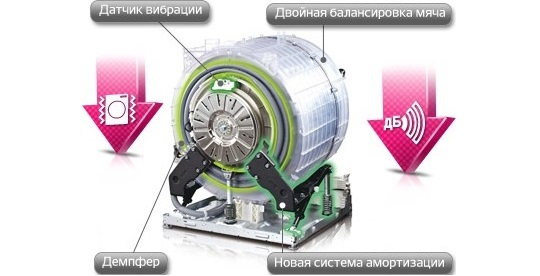
Which washing machine brands offer this useful feature? Absolutely all Samsung, LG, Bosch, Smeg, and AEG models. Not all, but most Candy, Gorenje, and Beko washing machines also have this feature. The load capacity doesn't affect the auto-balancing feature, so you can find a model to suit your taste; the only difference will be the price.
Why did the imbalance arise?
Essentially, an imbalance is an improperly loaded washing machine: either the laundry is crammed into the machine in clumps, creating the illusion of overload, or the load is actually too large. In such cases, simply redistributing the load or removing some of the items may be sufficient. However, sometimes an imbalance can be caused by improper installation or a malfunction.
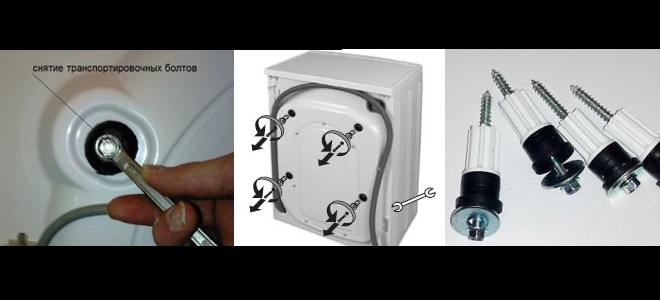
- Unremoved shipping bolts. These are designed to keep the drum stationary during transport. Imagine the stress a washing machine experiences operating in this condition. Shaking, bouncing, and overload are guaranteed if this simple operating rule is violated. Furthermore, failure to remove the shipping bolts is not covered by the warranty, and the unit cannot be repaired. There are only four bolts, located on the rear panel, and removing them is quite easy.
- Incorrect installation. The more level the surface on which the washing machine is placed, the less noise, vibration, and risk of imbalance. Standard floor leveling (tile or concrete) under the machine is essential, but special accessories, such as an anti-vibration rubber mat or foot pads, are also helpful. It is not advisable to place the machine on carpet, linoleum or laminate.
- Shock absorber problems. These components are designed to reduce the washing machine's natural vibration during the wash and spin cycles. The rubber pads in the shock absorbers wear out over time, the fasteners become loose, and then the system can no longer cope, causing imbalance.
You can easily check the damper's functionality. Open the top lid of the washing machine and press down on the drum. If it bounces a few centimeters and then stops, everything is fine. However, erratic side-to-side movements and hopping indicate a problem.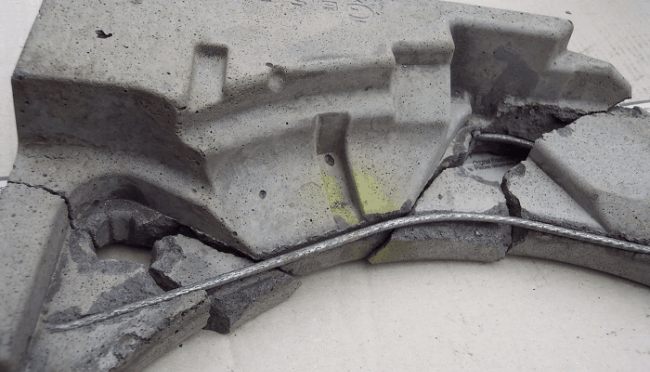
- The problem is with the counterweights. What are they? The shock-absorbing system includes not only a damper but also artificial weights—counterweights—which are attached to the tank on all sides. If the counterweights fail, vibration is not suppressed, the machine begins to move excessively, and parts of the damaged counterweights (concrete blocks) strike other parts of the machine. The problem may be that the counterweight retaining elements have worn out, or the counterweights themselves have become damaged. In this case, replacement is necessary, and this should be done with extreme caution.
Important! Cracks in the concrete counterweight can be easily filled with PVA glue or cement mortar.
- Bearing problem. If the drum rotates unusually slowly and a clunking noise is heard during the wash and spin cycles, the problem is likely with the bearings. This also causes overload and requires attention. However, bearing repair or replacement is a complex procedure requiring professional intervention, so if this problem occurs, contact a service center.
Statistically, washing machines that don't experience overload last 5-7 years longer. The automatic rebalancing feature automatically distributes laundry according to its comfort level. So, if your washing machine is equipped with this feature, it can automatically protect itself from imbalances and ensure a long lifespan.
Interesting:




Readers' comments
Headings
Washing machine repair




For buyers




For users


Dishwasher




Add a comment