
Choosing a circuit breaker (RCD) for a washing machine
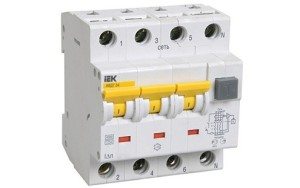 A modern home, crammed with electronics and electrical appliances, requires protection. Electrical substations in older residential areas weren't designed to handle the heavy load from so many consumers, leading to periodic outages, power surges, and other problems. A single power surge can easily knock out all your appliances: your refrigerator, television, split-system air conditioner, and even your washing machine. But installing the right RCD can prevent these problems.
Why install a RCD?
An RCD circuit breaker is essential—it's clear that a house can't do without one. But why install a separate circuit breaker for a washing machine? What's the point? First, let's clarify the concepts. Electricians refer to every operating electrical appliance as a "consumer," and a washing machine is a fairly large consumer, placing a significant load on the wiring. Therefore, it's advisable to install separate electrical circuits for it, making sure to protect the circuit with a circuit breaker.
Consumers such as computers and televisions do not require a separate RCD, since they operate in a normal environment and create less load on the network. A washing machine operates in a humid environment, meaning that such equipment is, by definition, at risk, and therefore its energy supply must be approached with the utmost responsibility. And if we're talking about a modern, expensive washing machine with a drying function, then in this case, such equipment should be protected by more than one circuit breaker.
Please note! A washer-dryer with the "Wash-Rinse-Spin-Dry" program selected places approximately one and a half times greater strain on the electrical system than a standard automatic machine.
What is this magical RCD circuit breaker, what does it consist of, and how does it work? First, let's define the components of an RCD. It consists of:
- transformer;
- housings;
- chain breaking mechanism;
- mechanism that performs self-testing;
- electromagnetic cutoff (for the latest devices).
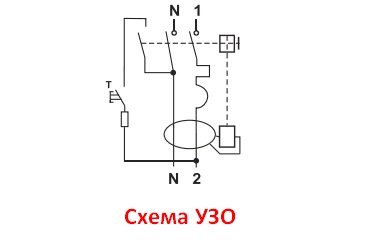 An RCD trips when there's an excessive load on the electrical wiring. In this case, the circuit breaker forcibly breaks and de-energizes the circuit. This can occur if a person touches a bare wire or if water spills on a wire, and the circuit breaker trips and prevents a tragedy. An RCD is designed for repeated use, so it doesn't need to be replaced if a power surge occurs (unlike fuses). An RCD is an absolutely essential protection for a washing machine.
What kind of RCD should I install and what does it depend on?
We'll give you a surprising and unconventional answer to this question: none. In fact, progress is advancing, and conventional RCDs are a thing of the past, as they don't protect electrical circuits from all risks. We, for our part, recommend installing a residual-current circuit breaker (RCCB) rather than an RCD as protection. A RCD is a unique device that combines an RCD and a fire-stop switch.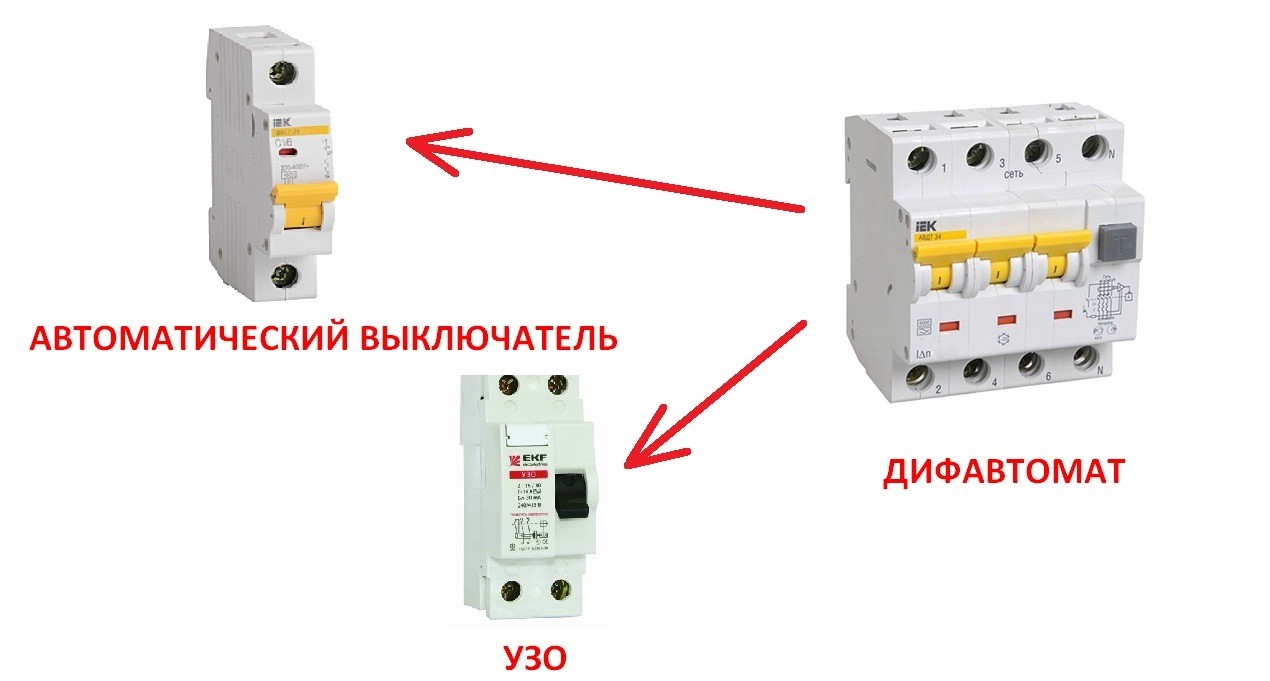
Previously, these two devices had to be installed one after the other, thus providing complete network protection. Now, a residual-current circuit breaker (RCCB) combines these two devices in a single compact enclosure. A RCD is still quite expensive, so choosing and installing one requires careful consideration. Most experts recommend installing a 0.03 Amp electromechanical residual current circuit breaker. You can, of course, buy an electronic device rated for 0.01 Amp; it is, of course, nominally more reliable and more expensive, but in reality, such reliability is overkill.
Important! Electronic residual-current circuit breakers are twice as expensive, and they fail more often. Moreover, 0.01-amp devices are installed in fire-hazardous areas, which an apartment or house certainly does not qualify as.
How much does a 0.03 Amp residual current circuit breaker cost for a washing machine? The approximate price of the device is about 14 USD. The price will depend on the device's specifications, manufacturer, seller, and other factors. But generally, if the question arises about how much a residual-current circuit breaker costs, this price is a reasonable estimate; it's an average.
How to install a residual-current circuit breaker or RCD yourself?
An RCD and a residual-current circuit breaker are installed in roughly the same way. If you've already installed a separate electrical circuit from the electrical panel to the washing machine, this significantly simplifies the RCD installation diagram, as it's a simple network with a single consumer. If you need detailed information about connecting the washing machine to electricity, you will have to study additional information.
Run a VVG 3x2.5 cable from the electrical panel. If possible, you can install a 30 mA residual-current circuit breaker directly into the panel if there's space. If not, the device can be installed directly next to the washing machine's waterproof outlet; however, this requires enclosing it in a waterproof enclosure. Follow these steps.
- We take a screwdriver-indicator, find the phase and neutral wires.
- We connect them to the residual current circuit breaker (it has corresponding signed outputs on top).
- We lead the phase and neutral wires from the device to a moisture-resistant socket.
That's the whole simple scheme. If you want to connect a dishwasher to this circuit in addition to a washing machine, it is recommended to install an additional RCD, as shown in the figure. If this RCD is disconnected due to a malfunction of the dishwasher, the difatvomat will remain operational, meaning the washing machine will continue to operate without interruption.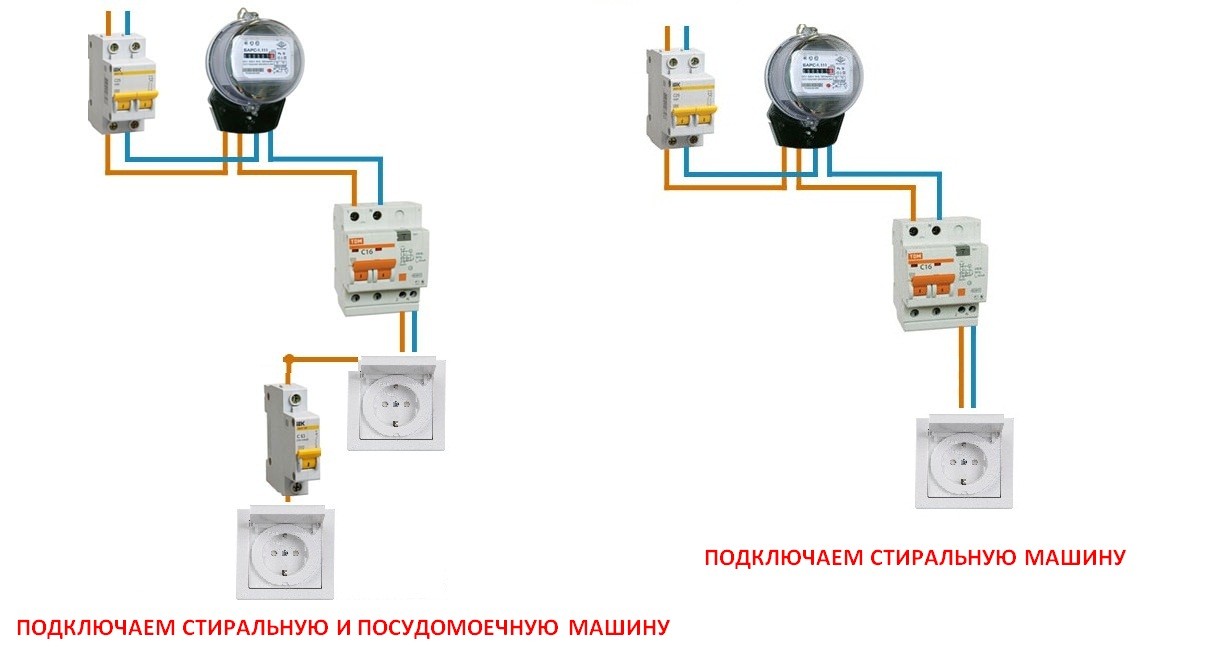
In conclusion, installing an RCD and residual-current circuit breaker will protect your washing machine from power surges, which can destroy its control unit, motor, drain pump, and other components, sending your washing machine to the trash heap. Installing an RCD isn't difficult, but even if you're apprehensive about electrical work, you can always consult a professional. Don't skimp on protection, or you'll end up paying for a new washing machine.
Interesting:

1 reader comment
Add a comment
Headings
Washing machine repair




For buyers




For users


Dishwasher




Thank you