
Automatic cleaning on an Ariston washing machine
 Every time you wash, your appliance inevitably gets clogged. Small debris, lint from fabrics, and excessively hard water cause clogs and scale buildup, which in turn affects the performance of the machine's internal components. You can save your washing machine from buildup and debris using a special automatic cleaning mode. Few people know how the automatic cleaning feature works on an Ariston washing machine. We suggest filling this gap and exploring this feature in more detail.
Starting automatic cleaning
On the dashboard of almost every Ariston model there is a button with a self-cleaning mode. This option can launch an automatic cleaning of the washing machine, which will remove limescale and dirt from the machine parts without any extra effort from the user. The main thing is to regularly activate the function and add an effective detergent.
Despite the program's usefulness and convenience, many Ariston owners don't use it due to lack of knowledge. However, launching the mode is very simple:
- make sure there are no items in the drum;
- open the detergent drawer by pressing the central “latch” (this will make the powder work more effectively);
- add a special cleaning agent for household appliances;
- start the auto-cleaning by simultaneously pressing the “Extra rinse” and “Quick wash” buttons;
- pay attention to the display (if the program is activated, the combination “AUE” will appear, which will change to “UEO”, and then “EOS” will appear);
- We observe the washing machine’s behavior (ideally, the machine should beep, lock the hatch, and start filling with water).
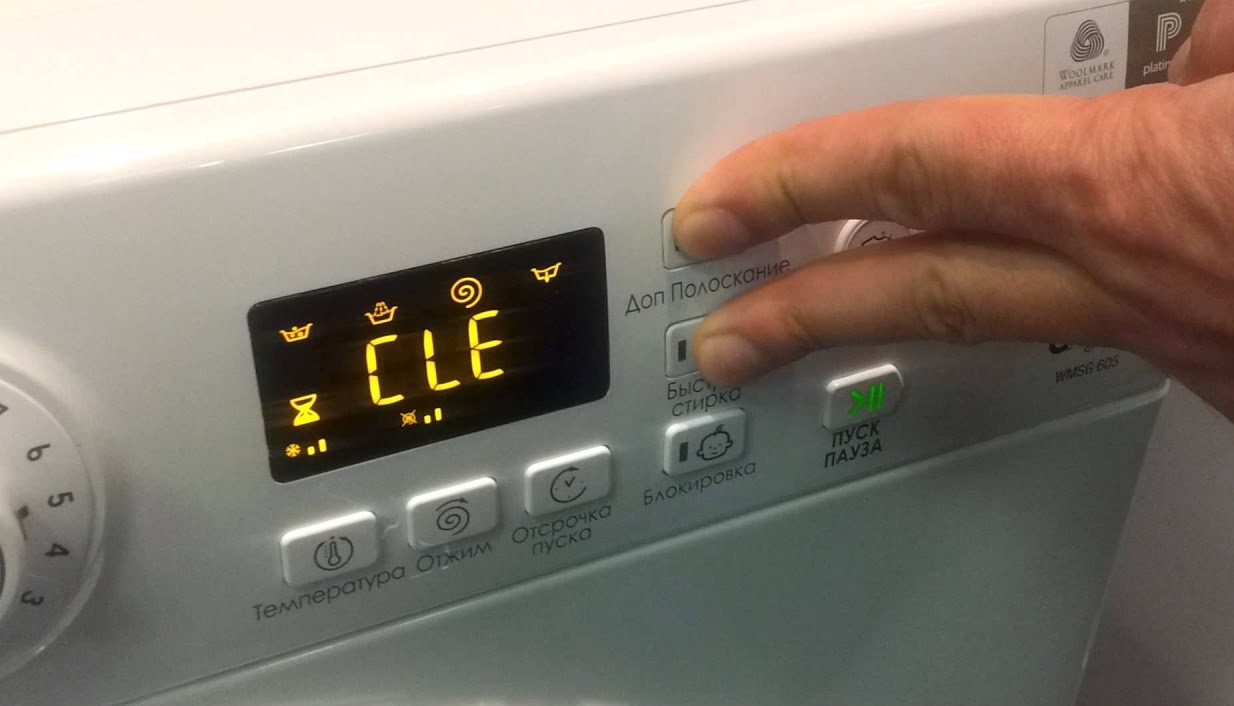
If you follow the instructions, activating the test mode is easy. After starting the cycle, you can leave the machine alone for 2-3 hours. During this time, Ariston will remove scale from the heating element, clear clogs from the pipes and hoses, and, by washing at 60-90 degrees, disinfect the unit, eliminating mold, mildew, and unpleasant odors.
To keep your machine clean and prevent breakdowns, run the automatic cleaning routine regularly. The manufacturer recommends repeating the procedure every 1-3 months.
What tool will we use?
Before turning on self-cleaning, it is worth stocking up on a suitable cleaning agent. Regular powder won't work - you need a special compound, which is purchased separately. It's better not to experiment with brands, but to choose proven cleaners.
- A liquid detergent made in Japan that can remove soap scum, mildew, limescale, and other dirt. It comes in 550 ml bottles, enough for a single cleaning of a washing machine up to 9 kg. The price ranges from $6 to $6.30.
- Japanese tablets with proven effectiveness. They remove any stains and are attractive due to their relatively low price. A pack of 5 tablets costs about $2.
- Dutch anti-mold powder for all types of washing machines. Sold in 0.162-liter packs for $10.
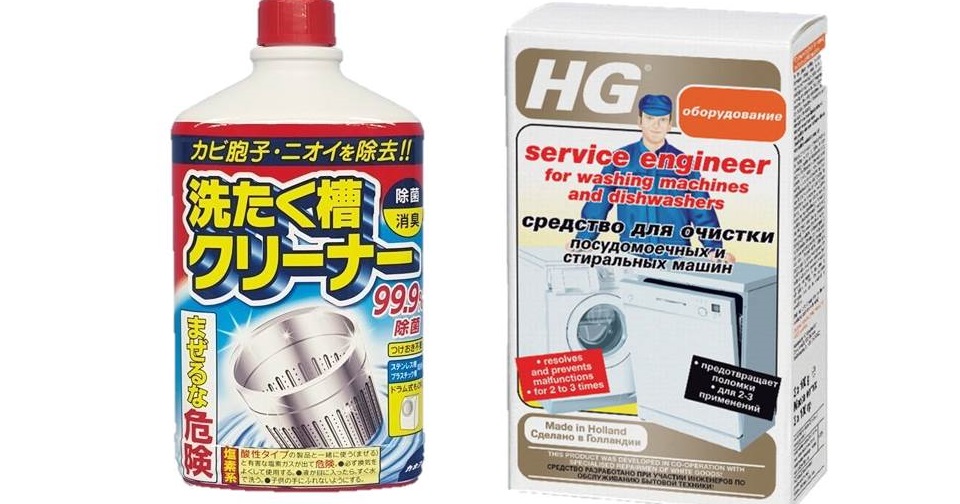
Before use, please read the instructions on the packaging and strictly follow the dosage instructions. Otherwise, the desired effect will not be achieved, and the expensive product will be wasted.
What shouldn't you use to clean your washing machine?
In an effort to save money, some housewives resort to "cheating" and look for alternatives to expensive detergents among available products. Advice and recommendations can be found online, although not all of the listed "analogues" can be considered effective and safe.
So, the most common advice on forums is to use bleach, various acids, and Coca-Cola as detergent when turning on the self-cleaning mode. Unfortunately, none of these liquids will save you money; instead, they will damage the machine and incur additional costs.
- Bleach. It's rightfully considered a powerful and effective cleaner, and thanks to its concentrated chlorine, it quickly removes dirt and limescale from the inside of your machine. However, there's a significant caveat: the substance severely corrodes rubber parts, leading to breakdowns and leaks.
- Acids. As well as whiteThey will cause significant damage to the machine's rubber seals and gaskets. Metal components will also be damaged: the drum will darken, and the shaft and heating element will oxidize. Some users have even experienced burns to the drain hose from the liquid.
- Cola. It's renowned for its cleaning properties, but the concentration of active ingredients isn't enough to completely clean the machine. You'll need about 15-20 liters, which is several times more expensive than a dedicated solution.
There's no point in skimping on cleaning your washing machine. Harsh and untested chemicals will do more harm than good. There's a high chance that budget experiments will lead to you having to buy a new washing machine.
Interesting:
1 reader comment
Add a comment
Headings
Washing machine repair




For buyers




For users


Dishwasher




My machine doesn't have these buttons. What should I do?