The washing machine drum is catching on something.
A washing machine should operate virtually silently—only a steady hum or the characteristic roar of the spin cycle is acceptable. If you hear rustling or rattling sounds coming from the drum during a normal wash cycle, there's a problem. This is especially true when the sound is louder at low speeds and quieter or disappears entirely at high speeds. This rustling occurs when the washing machine drum catches on something while spinning. The only thing left to do is figure out where the problem is and how to fix it.
Causes of the scraping sound
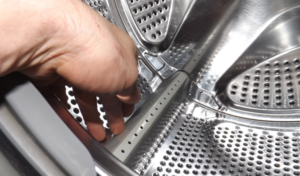
You can find the source of a scraping noise at home without calling a specialist. Simply run a step-by-step diagnostic to check for possible causes. First, unplug the washing machine, open the door, spin the drum with your hand, and evaluate its behavior:
if the cylinder rotates silently with a slight tension, there is no breakdown;
If you hear grinding and humming sounds when cranking, the bearings are worn out;
the drum does not spin – a solid object has entered the machine and is jamming the cylinder;
the cylinder touches the edge of the hatch cuff - the rubber has come off or was selected incorrectly;
The drum rotates slowly, with strong tension - problems with the drive belt or a broken crosspiece.
The second step is to rock the drum forward and then back. It's important to assess whether there's any play: if the cylinder shifts or settles, a significant gap will form. If the gap is visible, urgent repair is required.
The washing drum should rotate silently and with a slight strain: rumbling, grinding, or slowing down during rotation are signs of a breakdown.
Next, you should connect the washing machine to the utilities and run an empty spin program at maximum speed.If the machine starts hitting the housing walls during acceleration, it means the container has come off the shaft or is hanging on its edge. In this case, the shock absorbers and bearing assembly will be suspect.
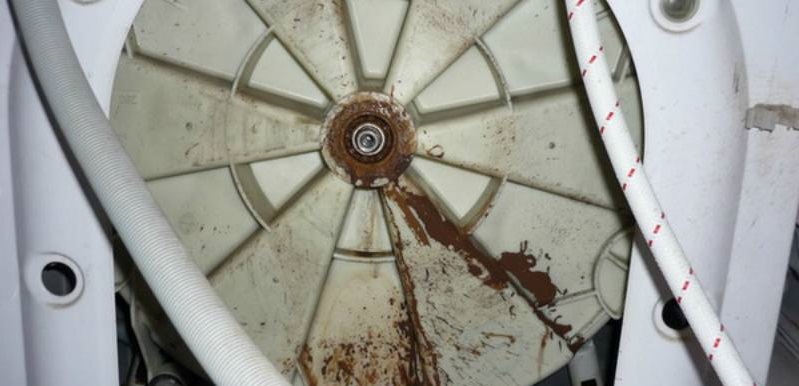
The next step is to inspect the rear of the washing machine. The easiest way to do this is through the rear panel: unscrew the bolts holding it in place and detach it from the housing. Then, assess the condition of the tank. If you see rusty streaks or water droplets, the bearings are worn.
During diagnostics, one of the following problems should be detected:
deformation of the drum crosspiece;
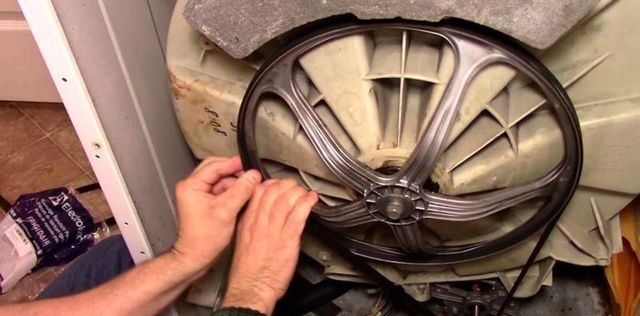
problems with the drive belt (the rubber band has come off or broken);
bearing wear;
shaft breakage;
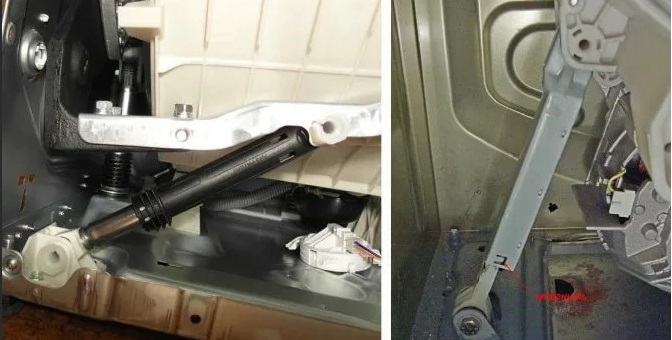
failure of shock-absorbing elements (springs or dampers);
foreign object entering the tank.
Any of these issues will cause the drum to change its rotational path, resulting in grinding and rustling sounds. However, a more detailed system test is necessary for an accurate diagnosis, which will require a thorough review of all possible causes.
We find and fix the problem
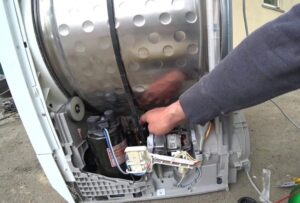
A superficial diagnosis is only the first stage of repair. To confirm the nature of the problem and determine precisely why the drum is rubbing against the machine's walls, you'll need to partially disassemble the machine. Next, you should check all possible faults sequentially, moving from the easy-to-test drive belt to the difficult-to-test bearing assembly.
The test starts with the drive:
disconnect the washing machine from the utilities;
we turn it backside forward;
unscrew the bolts holding the rear wall;
we put the unscrewed panel aside;
look at the pulley (is there a belt on it?);
we return the slipped belt to the pulleys by turning the wheel by hand;
We replace the torn rubber band with a new one, focusing on its serial number.
If the drive belt is in place, the diagnostics continue. Open the drum and inspect the seal: sometimes the edge of the cylinder rubs against the seal. You'll need to trim the rubber slightly or sand down the excess with fine-grit sandpaper.
The next step is to check the shock absorption. The drum will drop below the set level, collapsing into the housing, if the upper springs are faulty. Broken or weakened coils can't hold the cylinder in the correct position, causing the drum to shift and start banging against the walls of the washing machine. To correct this, remove the old parts and install new ones. The instructions are as follows:
To remove the lower spring: secure the tank, pull the coil down, unhook its hook from the surface of the tank and from the machine body;
To remove the top spring: place an object under the tank to stabilize it, pry the spring hook with a screwdriver and unhook it;
To install the spring: proceed in reverse order.
The shock absorbers are also a must-check: loose, broken, or worn shock absorbers will not dampen the vibrations emanating from the drum. These components must be replaced—removing the old ones and installing new ones. The procedure is as follows:
remove the front panel of the case;
unscrew the bolt securing the rack from below;
unfasten the upper latches of the damper by placing a nut or socket wrench on the back of the bushing, and then pull it towards you with pliers;
remove the shock absorber from the machine.
Is the shock absorption OK? Then remove the back panel, take out the heating element, and through the resulting opening, try to feel for the object that fell into the tank. A wire hook can be used instead of your fingers.
Bearing unit
Most often, the drum starts rattling due to worn bearings. Delaying their replacement can worsen the problem, leading to deformation of the universal joint and shaft failure. It is better not to take risks, but to immediately, at the first signs of a malfunction, begin diagnosing and repairing the bearing unit.
Replacing bearings is a labor-intensive task. It requires completely disassembling the machine, splitting the wash tub in half, and then cleaning out the bearing housing and removing the bearing races. Doing it yourself is possible, but difficult.
For DIY repairs, we recommend purchasing a special repair kit consisting of two bearings and an oil seal. You will also need grease, WD-40 cleaner, a hammer, a drift, and a hacksaw.
Hello, I need some advice! The drum is rubbing against the housing, so I split it in half. The drum spins perfectly, without any play, so it's not a bearing, but it's not symmetrical. It's as if the shaft is bent, or the drum itself has become deformed, and when I put the other half of the housing on, it rubs against the wall. Has anyone encountered this problem?

 A washing machine should operate virtually silently—only a steady hum or the characteristic roar of the spin cycle is acceptable. If you hear rustling or rattling sounds coming from the drum during a normal wash cycle, there's a problem. This is especially true when the sound is louder at low speeds and quieter or disappears entirely at high speeds. This rustling occurs when the washing machine drum catches on something while spinning. The only thing left to do is figure out where the problem is and how to fix it.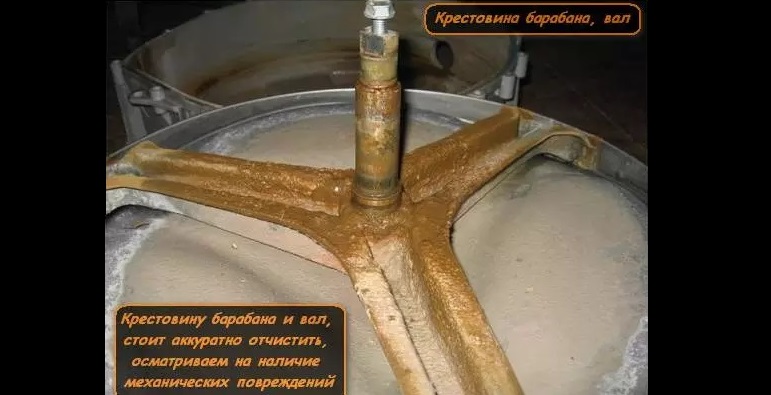















I replaced the flange on my top-loading Ardo. Now something's catching on the drum. Probably the heating element. Can you tell me what I did wrong?
The heating element was installed upside down or did not fit into the socket.
Hello, I need some advice! The drum is rubbing against the housing, so I split it in half. The drum spins perfectly, without any play, so it's not a bearing, but it's not symmetrical. It's as if the shaft is bent, or the drum itself has become deformed, and when I put the other half of the housing on, it rubs against the wall. Has anyone encountered this problem?