
Tumble drying in a washing machine
 The Russian home appliance market is replete with washing machines with drying functions. Manufacturers claim that by purchasing a 2-in-1 machine, users will forget about hanging laundry on radiators and clotheslines. The washing machine will do all the work itself – clothes can be removed from the drum completely ready to wear.
However, reviews of tumble dryers are mixed. Many customers are very satisfied and can't imagine how they ever lived without a washer-dryer with this feature. Some hint that the dry items coming out of the machine are too wrinkled. Let's explore how tumble drying works in a washing machine and whether it's worth paying extra for a machine with advanced features.
How does a tumble dryer work?
An automatic washing machine capable of drying wet laundry is equipped with an additional heating element. The main heating element sets the desired temperature and is located underneath the drum. The second heating element heats the air that is blown into the drum when the drying program is activated.
During the drying process, heated air enters the drum, penetrates the fabric fibers and “takes away” the remaining moisture.
The washer-dryer also has a condensate tank. The liquid then flows from this tank through the drain pipe into the sewer. To ensure uniform drying, the washing machine drum slowly rotates in different directions during the program.
This feature is available in both top-loading and front-loading washing machines. Drying is the final stage of the washing process, occurring after the rinsing and spinning cycles are complete. This feature can also be activated as a standalone program, separate from the main wash cycle.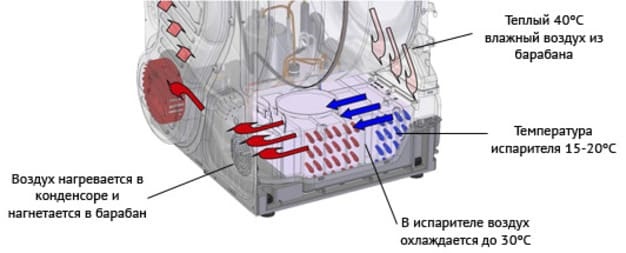
Tumble drying in a washing machine can be done by a set time or by the amount of residual moisture in the items. In the former case, the user controls the duration of the cycle using a dedicated timer. For example, the LG F1203CDP model offers drying times of 30 minutes, one hour, or two hours.
In the second option, the machine is equipped with a residual moisture indicator. Users can dry clothes to the desired condition, for example, by leaving them slightly damp for ironing. This option is more convenient, as it eliminates the risk of overdrying the laundry.
Sensors monitoring the moisture level in the drum are located under the condenser. These sensors allow the washing machine to monitor the moisture level of the laundry and interrupt the drying process if the level approaches the preset level.
Drying programs
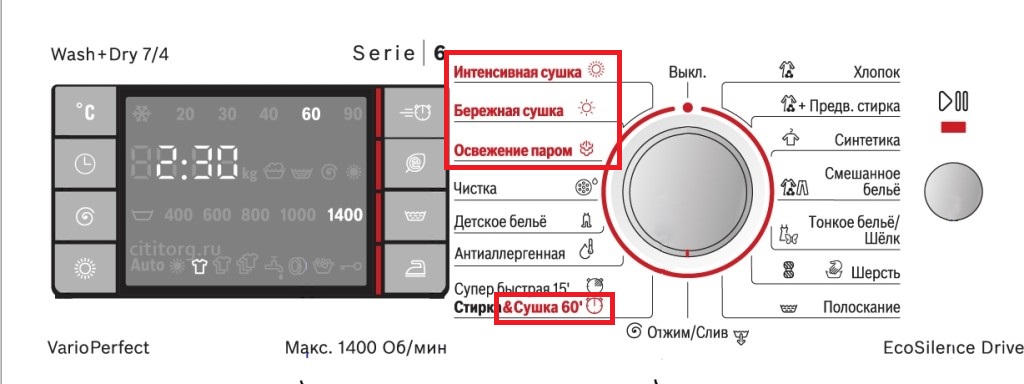
Depending on the washing machine model, the range of drying modes may differ. Some washing machines have one drying program, while other washing machines have 3-4 modes. Conventionally, the following option names can be distinguished:
- "Intensive drying". The laundry in the drum may even become "over-dried";
- "for easy ironing." In this case, the humidity level in the drum is 15%;
- "in the closet." The optimal option is a linen moisture level of no more than 3 percent;
- "gentle drying".
More modern 2-in-1 machines offer both hot and cold drying options. The first function is ideal for rough, durable materials, while the second is ideal for synthetic and delicate fabrics. Some machines feature a quick drying option, which can complete the task in just 30 minutes. The express program can be used with a small load of items.
Constantly using the quick drying cycle is not recommended. Ideally, use the "easy iron" or delicate cycle. This will prevent items from overdrying. Otherwise, the fibers will weaken faster, causing the clothes to wear out faster.
Please remember that the volume of laundry loaded into the drying machine will be 2 times less than for a standard wash.
The main advantages of machines with dryers
When considering purchasing a washer-dryer, people weigh the pros and cons of such a machine. Reviews from those who have already purchased a 2-in-1 washing machine can greatly help in making a decision. Analyzing expert and user opinions, we can identify the following advantages of washer-dryers:
- Versatility. If you have such a machine at home, you can wash clothes at any time of year, regardless of the weather outside. This machine will allow you to dry your laundry even when it's raining outside and the heating is off;
- Compactness. By purchasing a 2-in-1 machine, you won't have to worry about where to place a separate washing and drying unit. Furthermore, some models with a drying function are even smaller than regular washing machines;
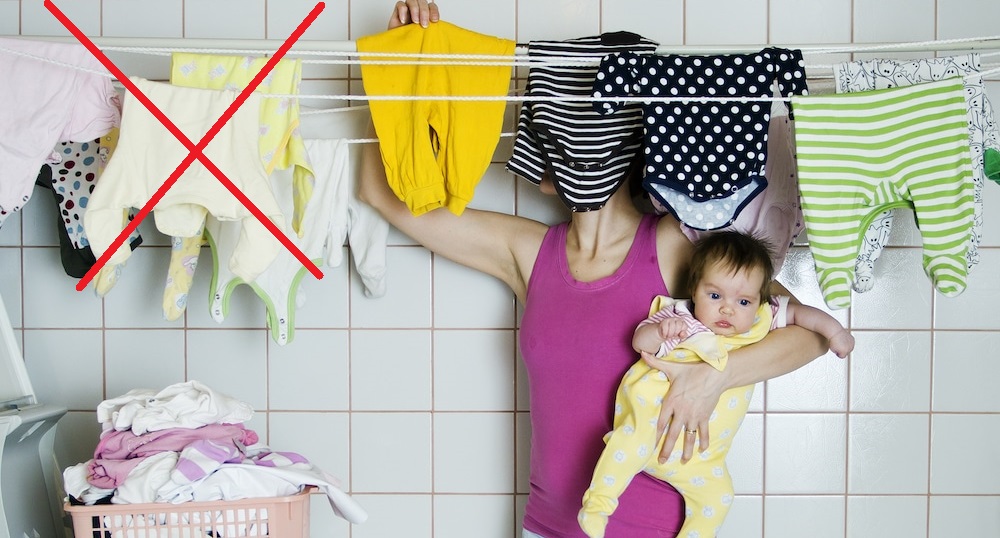
- The ability to reduce humidity in an apartment. For example, families with small children wash clothes almost daily and hang them wet around the house. A tumble dryer will help you eliminate this need and avoid constantly breathing stale, humid air;
- Aesthetic aspect. Family members and guests will no longer have to see laundry hanging around the apartment or on the balcony.
Of course, the main factor that draws people to 2-in-1 washing machines is the ability to quickly dry washed items. Some models even feature a "Wash and Dry in 1 Hour" mode. This means you can put on clean clothes after 60 minutes, which is very convenient. Another appealing feature is the ability to no longer hang laundry around the apartment—after the drum, clothes can be placed directly in the closet.
The main disadvantages of machines with dryers
Before purchasing, it's also worth considering the disadvantages of washer-dryers. Like any appliance, 2-in-1 washing machines have their drawbacks. These include:
- Higher cost compared to conventional machines. Machines with a drying function are approximately 30% more expensive than their counterparts;
- Limited load capacity. This is one of the main drawbacks. For example, while a washing machine can wash up to 6 kg of laundry at a time, it can only dry up to 3 kg. Therefore, if you fully load the machine, you'll have to dry the clothes in two batches. This takes extra time and consumes energy.
- Lack of a dust filter. Dryers have one, but 2-in-1 dryers don't.
- increased energy consumption.
If you don't use your washing machine's tumble dryer properly, you can easily ruin your clothes. Overdrying can also wear out your clothes faster, which is another drawback. However, if you follow all the recommendations, this problem won't arise.
What should you pay attention to when buying a 2-in-1 washing machine?
When choosing a washer-dryer, you need to pay attention to many factors. When purchasing a washing machine with a drying function, first of all, focus on the permissible load volume and the presence of sensors that monitor the humidity level. The more capacious the washing machine, the easier it will be for you to use your “home assistant”.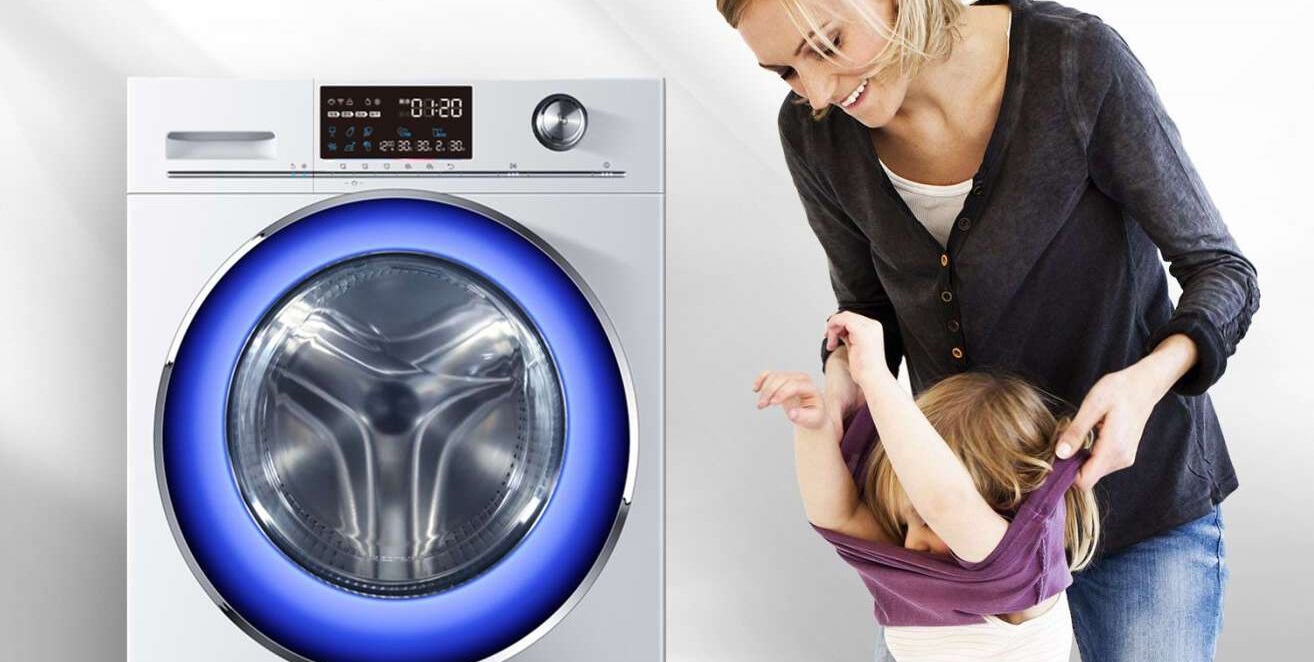
Top-loading washer-dryers are more convenient to use. They allow you to dry clothes of different materials, opening the lid during the drying process and removing more delicate fabrics from the drum beforehand.
Of course, if you have the budget, it's better to buy a separate washing machine and dryer. This way, you can dry all 7 kg of clean, wet clothes in one cycle. With a 2-in-1 machine, you'll have to divide the washed clothes into two loads and dry them alternately.
Machine problems with drying
Among the most common malfunctions of washer-dryers is a malfunction of the auxiliary heating element used to heat the air. Typically, the device fails because users violate the operating instructions and load more laundry into the drum than allowed.
Repairing the additional heater is not advisable; experts advise replacing the element immediately.
Buying a new heating element will cost even less than hiring a technician to repair the existing one. Therefore, it's much easier and more reliable to purchase a replacement part. If you don't have the knowledge and skills to repair washing machines, it's best to contact a service center.
Interesting:


Readers' comments
Headings
Washing machine repair




For buyers




For users


Dishwasher




Add a comment