
Which is better, an Indesit or a Beko washing machine?
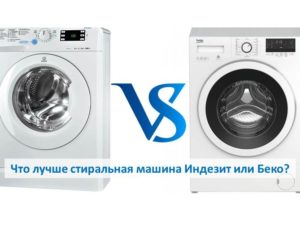 When choosing a budget-friendly and high-quality washing machine from a reliable brand, you often consider two options: Italian Indesit or Turkish BEKO. These manufacturers offer affordable appliances with an optimal feature set. Reviews about common breakdowns don't deter buyers. If you're unsure which brand to choose, read our article. We've compared individual models from each brand and tried to determine which is better: a Beko or Indesit washing machine.
Let's compare two brands
It's impossible to say for sure whether Indesit is superior to BEKO or vice versa. That's the difficulty – washing machines from both manufacturers are very similar in terms of features and design. But nothing is impossible, so we suggest taking a closer look at the pros and cons of each company and identifying a clear winner. To begin, let's compare the two brands across three key characteristics: design, quality of materials, and build quality.
- Design. Indesit washing machines have a clean and unified appearance. The entire model range is designed in a consistent style, with individual machines differing only in the door diameter and program names printed on the panel. The predominant color is white, with machines in other shades extremely rare. Beko appliances, according to customers themselves, have a better design. The color scheme is complemented by gray and black, and the front door is eye-catching and unique.
- The quality of the materials used. The positions are the same here – both brands use cheap plastic as a base. Because of this, the buttons on the control panel are difficult to press, the body “jiggles” when touched, and a specific smell lingers after several washes. The white color can also be a letdown, as it begins to turn gray or yellow after several years of use. This latter drawback can be avoided by choosing a darker plastic.
- Build quality. Only Indesit can boast a low defect rate and rare breakdowns. These washing machines have unreliable door handles that often break, while Beko machines frequently suffer from motor burnouts, slipping and breaking drive belts, and malfunctioning pressure switches. Heating element malfunctions add to the list of problems. Users also have many complaints about Beko's assembly: according to well-known service centers, the manufacturing defect rate approaches a shocking 30%.
The above clearly indicates that there is no clear winner. Those who prioritize aesthetics and color choose VEKO, while Indesit is more suitable for long-lasting and trouble-free operation. However, these are general characteristics of both brands. For a final decision, it's best to compare models from both manufacturers that are similar in price and functionality.
BEKO WKB 61001 Y and Indesit IWSB 5085
The easiest way to identify the winner between two manufacturers is through specific examples. To do this, let's take two machines and compare their capacities across all relevant parameters. We chose the BEKO WKB 61001 Y and Indesit IWSB 5085, both freestanding front-loading machines with a removable lid for installation in kitchen cabinets or cabinets.
Both washing machines are white, feature electronic controls, a plastic tank, and the ability to freely adjust the wash water temperature. Safety features are identical, with partial leak protection and automatic imbalance and foam control. Energy consumption and washing efficiency ratings are also identical—both are at "A" level. However, there are significant differences.
- VEKO allows a maximum load of 6 kg, while Indesit, for the same price, limits washing to 5 kg.
- In terms of size, the Italian brand wins with a compact depth of 40 cm, and in terms of weight, the Turkish one is better – the machine weighs 11 kg less.
- BEKO offers a higher spin efficiency class thanks to its drum rotation speed of up to 1000 rpm and the ability to vary the spin speed, including turning it off completely. Its competitor lacks these options, and its maximum spin speed is 800 rpm.
- The BEKO has more washing modes – 15, compared to the Italian brand's 13. The latter has the advantage of a dedicated program for washing silk items, but the former offers wrinkle-resistant features and a special cycle for children's clothing.
- Delayed start timer. Indesit has this option, allowing the machine to automatically start at a set time within 12 hours. Its competitor does not.

Based on reviews, additional differences can be noted. For example, consumers note that Beko is noisy and has adjustable feet, while the Italian manufacturer has a useful feature that reduces water consumption and an issue with residual water in the powder compartment.
But the general nature of the comments is the same: both models offer an optimal price-quality ratio.
Among the machines under consideration, the Indesit or Beko wins in the battle, thanks to its better spin, expanded range of modes, and greater capacity. But the gap is small, as Indesit “catches up” with additional options such as a delayed start and reduced water consumption, which significantly simplify the washing process.
BEKO MVSE 79512 XAWI and Indesit EWD 71052
Now let's compare more expensive models. The BEKO MVSE 79512 XAWI and Indesit EWD 71052 are freestanding front-loading machines with a capacity of up to 7 kg of dry laundry. Both have electronic controls, a digital display, and a plastic drum. They offer identical energy efficiency ratings of A++ and wash performance of A.
The same spinning performance is also available, with a C-level spin speed of approximately 1000 rpm, and the ability to select spin intensity or cancel. The list of common features also includes a few functions, including a wash temperature setting and a delayed start timer. Other performance characteristics vary:
- The Indesit model has a clear advantage, since the top cover is removable, which allows the washing machine to be built into closed cabinets;
- MVSE 79512 XAWI with a depth of 45 cm, a height of 84 cm and a weight of 61 kg is more compact and lighter than Indesit's EWD 71052 with values of 54, 85 and 67, respectively;
- Both cars are white, but Beko has a distinctive feature – a grey door;
- Both models have automatic control of the drum balance during spinning and the level of foaming during washing, but the Beko is safer, as it provides complete protection against water leaks and a control panel lock to prevent accidental pressing and child intervention;
- In terms of the number of modes, Indesit leads with 16 options, including washing silk, sports, wool, mixed, colored and heavily soiled items, while its “opponent” has 15 programs, including special ones - anti-allergy, steam, for black clothes and down items;
- The difference in water consumption is small, but the Indesit machine is slightly more economical, consuming no more than 50 liters per standard cycle. The Bek machine uses about 52 liters per wash.

To summarize, Beko stands out for its design, compactness, and safety, while its competitor offers a long list of modes, is attractive due to its efficiency, and is built-in. Most likely, the last chances are more significant, so in this round the victory goes to Indesit.
There's no definitive answer as to which is better, Indesit or BEKO. Everything depends on the specific model, so we recommend comparing your favorite washing machine with a similarly priced competitor. It's also important to consider consumer opinions of the brand, along with actual data on breakdown rates and manufacturing defects.
Interesting:
Readers' comments
Headings
Washing machine repair




For buyers




For users


Dishwasher




Add a comment