
White stains on clothes after washing
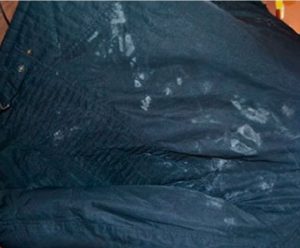 It's unpleasant when clothes remain "dirty" after washing. These include white spots or stains on dark clothes, or a greenish or yellowish residue on light-colored fabrics. The problem isn't serious, but it can cause a lot of trouble and worry. The key is to understand who's to blame, how to fix the situation, and how to prevent it from happening again.
The product did not dissolve well.
Most often, undissolved detergent is to blame for white stains on black items after washing. Powder granules do not have time to dissolve in water, but settle on the fabric, penetrate the structure of the fibers and remain there. After drying, the particles appear and turn into light spots.
Pouring dry powder mixtures directly into the drum can make it difficult to dissolve. It's best to add the powder to the detergent drawer before loading the laundry and then soak it in a small amount of water for 2-3 minutes. This will allow the granules to dissolve more quickly and prevent them from becoming lodged in the fabric.
Powders dissolve poorly in cold water, which results in white spots and streaks appearing on clothes.
The powder also dissolves poorly at low temperatures. If you've selected a program that heats water to 40 degrees Celsius, it's best to first dissolve the dry detergent in boiling water and then pour the soapy solution into the dispenser.
Liquid detergents dissolve faster, so they are recommended for washing delicate fabrics and at 30-40°C (86-104°F) temperatures. Gels should also be poured through the detergent tray, as direct contact with the fabric can negatively impact the quality of the laundry. A double rinse will also help prevent streaks.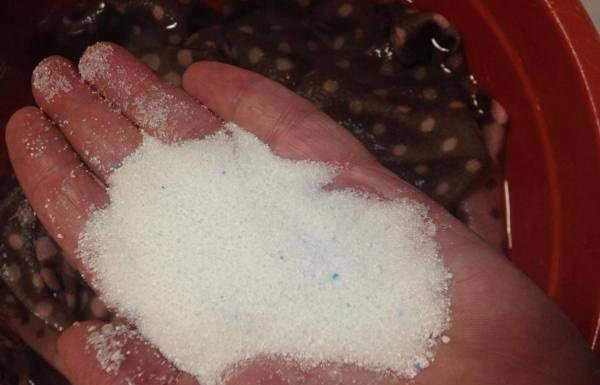
Another cause of white residue after washing is a dirty detergent dispenser. Often, even liquid detergents don't dissolve completely, hardening and clumping into the drum. To avoid this, remove the dispenser and rinse with a solution of hot water and white vinegar. If the detergent drawer is stuck, pour the mixture into the compartments and let it sit for 20-30 minutes. Then, run an empty cycle to remove the residue. unpleasant odor.
They overdid it with the funds
Exceeding the recommended dosage of detergent also causes white-yellow stains. If there's too much detergent in the water, it won't rinse out and will penetrate deep into the fabric. This will leave a foreign residue on the garment.
When adding detergent to the machine, it is necessary to strictly follow the dosage indicated on the packaging!
Exceeding the recommended dosage is especially dangerous when using high-efficiency washing machines. These machines use less water for washing and rinsing, making it more difficult for the detergent to dissolve. It is better to lower the recommended dosage and clean the dispenser regularly (if it is an automatic type).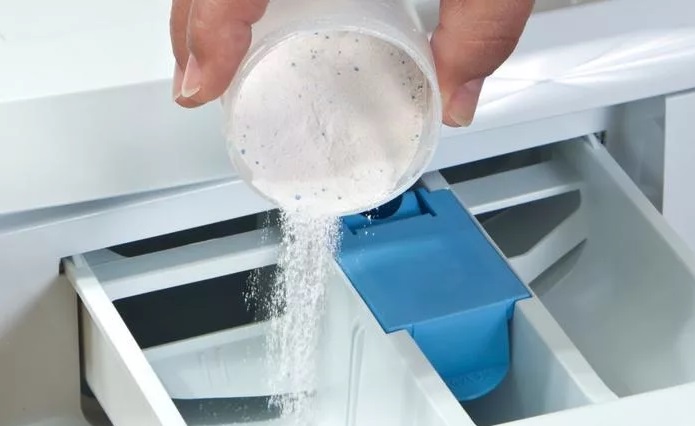
The washing machine is to blame
Sometimes the root of the problem lies in the washing machine itself. This happens when the water circulation in the washing machine is disrupted, and too little water enters the drum. Without enough water, the detergent doesn't have time to dissolve, remaining on the clothes and staining them.
To remedy this, you need to clean the machine's drainage system, or more specifically, the debris filter. In modern machines, it's hidden behind a service hatch in the lower right part of the machine's body, while in older models, it's located behind the rear panel. Just open the door and check the trash bin. It often becomes clogged with dirt, hair and other small debris.
Hard tap water reacts with detergent, leaving mineral deposits on the water.
The following factors also make it difficult for the powder to dissolve and for clothes to rinse:
- if you wash with a full drum (for saving money, a full load is good, but in this case, things cannot “float” freely and be rinsed);
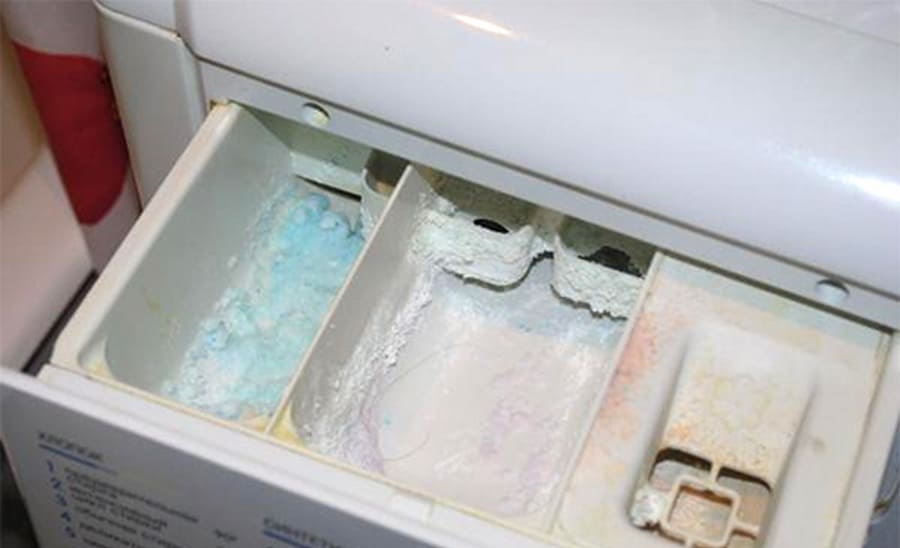
- if the machine has not been cleaned for a long time (dirt and powder residue accumulate in the machine and partially settle on the washed items);
- when there is no filtration system (hard water contains many impurities that leave a residue on clothes).
Removing powder residue is easy—just rinse the clothes again in clean water. However, it's best to prevent this type of staining by choosing liquid detergents, paying attention to the dosage, installing filters, and cleaning the machine regularly.
Interesting:



Readers' comments
Headings
Washing machine repair




For buyers




For users


Dishwasher




Add a comment