
Hypoallergenic baby washing powder
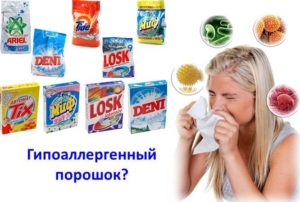
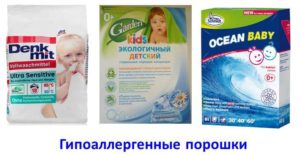 We're increasingly seeing children develop allergies to household chemicals, particularly laundry detergent. What's the problem? What causes this reaction? It's likely the detergent's ingredients, not the child's. Most laundry detergents contain harmful, yet inexpensive, ingredients that trigger allergies. The question arises: how can you choose a hypoallergenic laundry detergent for children's clothes that's as safe and effective as possible?
What are the dangers of powder allergy?
Laundry detergent allergies can manifest differently in different children, and some may not experience any allergies at all. Symptoms that children experience include:
- redness on the skin, most often on the back, arms, legs;
- peeling skin;
- the appearance of small blisters, rash;
- sneezing, dry cough and itchy eyes.
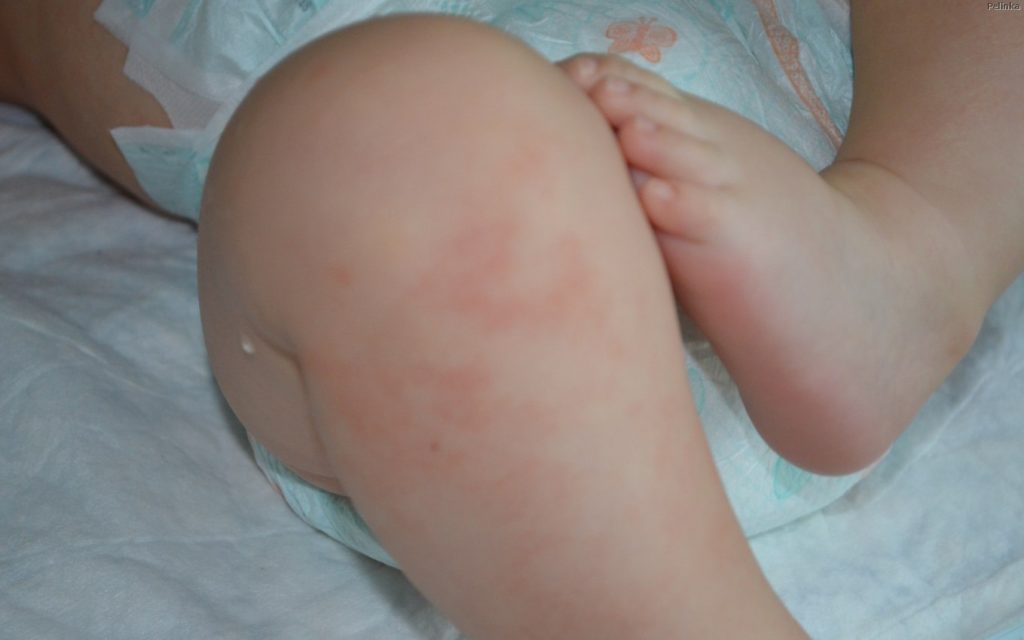
In severe cases, asthma attacks and severe facial swelling may occur. In this case, it's necessary to immediately call a doctor for a diagnosis and medication.
Even if a child doesn't have allergies, this doesn't mean that regular powder can be used; harmful components can enter the bloodstream, accumulate, and thereby affect the functioning of internal organs. This means that when purchasing baby powder, you need to pay attention to its composition to ensure that it is safe and hypoallergenic.
Composition of safe powder
A safe laundry detergent is one that doesn't contain chemicals and is made entirely from natural ingredients. But such detergents simply don't exist, unless, of course, you make your own. The main components of a natural detergent are:
- soap;
- soda;
- citric acid.
However, the effectiveness of such a powder may be low, and its shelf life will be short. Therefore, substances that remove stubborn stains, soften water, and prevent excessive foaming are added to the powder. These substances should not include:
- phosphates - they are quite aggressive and work well on stains, but they also often cause allergies and affect the child’s immunity;
Important! Phosphates are banned in many European countries, so pay attention to imported powders. - Zeolites are phosphate substitutes, many write that they are less harmful, but in fact this is not true. Zeolites can also cause allergies.
- Surfactants are surface substances that enhance the action of the previous components. No powder can do without them, but there are different types. Plant-based surfactants are safe in acceptable doses, but other types are harmful.
- optical brightener - it is retained in the fibers of the fabric, then gets on the skin, which leads to dryness and redness; this component in good powders is replaced with oxygen bleach;
- Fragrances and flavorings are strong allergens.
Other ingredients, such as baking soda, sodium citrate, sodium silicate, salt, and enzymes, may be present in hypoallergenic detergent. They will ensure effective cleaning.
However, the presence of enzymes in the detergent prohibits washing wool and silk. A substance called saponin disinfects clothing during washing.
Overview of funds
Conventionally, baby powders can be divided into several groups:
- Phosphate-free powders
- Hypoallergenic powders
- Powders for newborns - those marked 0+ or for newborns.
- Baby powder for automatic washing machines
- Liquid detergents for washing children's clothes.
In this section, we'll look at safe laundry detergents labeled "hypoallergenic." We won't rank them or say which is the best. You'll have to find out for yourself.
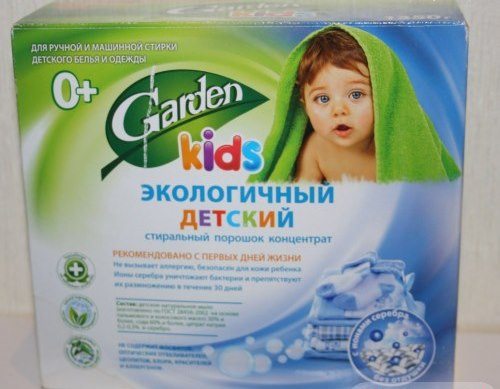
- Garden Kids - the main components of the powder are soda, sodium citrate and natural soap, fortunately, it does not contain phosphates and zeolites. In addition, the powder contains silver ions, which kill bacteria. The product is concentrated and therefore used sparingly.
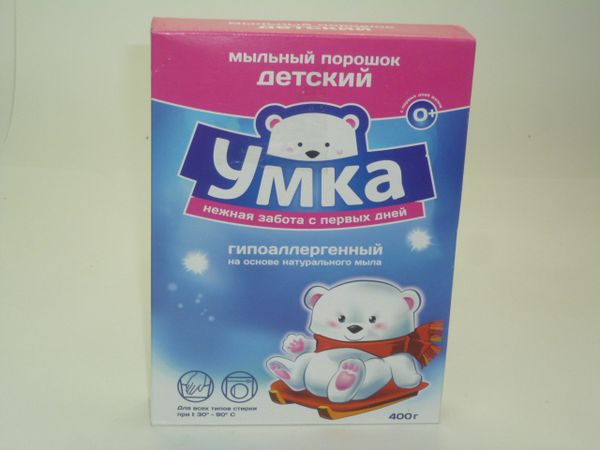
- Umka is a hypoallergenic baby laundry detergent for children from birth. It contains surfactants (5%), soap powder (10%), sodium carbonate, and sodium silicate. The fragrance component is a concern, although the powder is practically odorless. It is made in Russia.
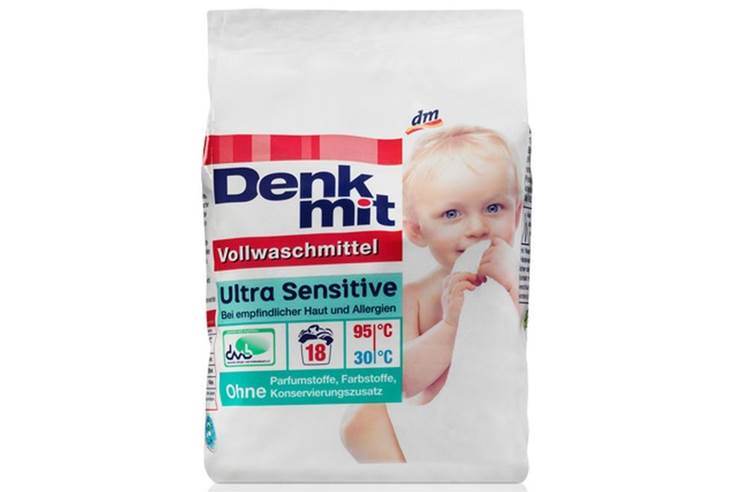
- Denkmit Ultra Sensitive is a fragrance- and phosphate-free laundry detergent for hand and machine washing. It works at temperatures from 30 to 90 degrees Celsius. It is manufactured in Germany.
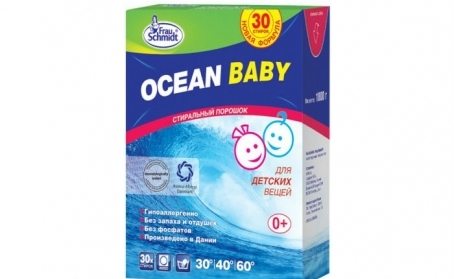
- Frau Schmidt Ocean Baby is a phosphate- and zeolite-free powder made in Denmark. It contains enzymes, surfactants, citric acid, salt, and sulfates. The hypoallergenic composition has been confirmed by clinical trials.
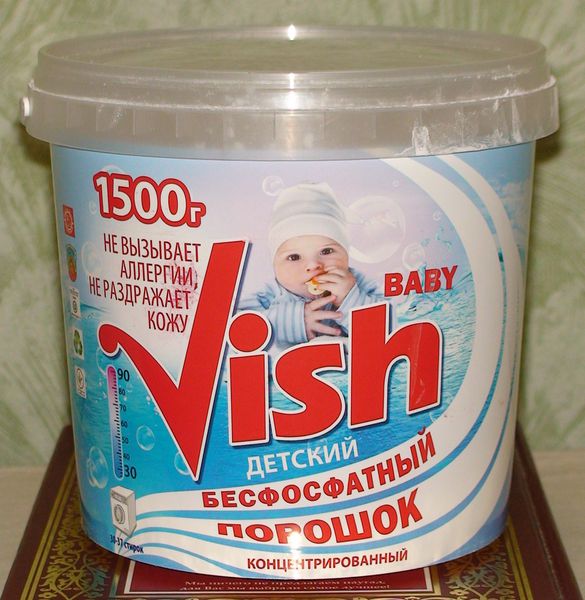
- Vish Baby is an Israeli-made laundry detergent. The manufacturer claims it's hypoallergenic and non-irritating. It contains no phosphates, chlorine, or other harmful substances. Its alkaline and acidic compounds not only cleanse but also disinfect. However, it contains jasmine fragrance and oxygen bleach, so it's best not to use this detergent for children prone to allergies.
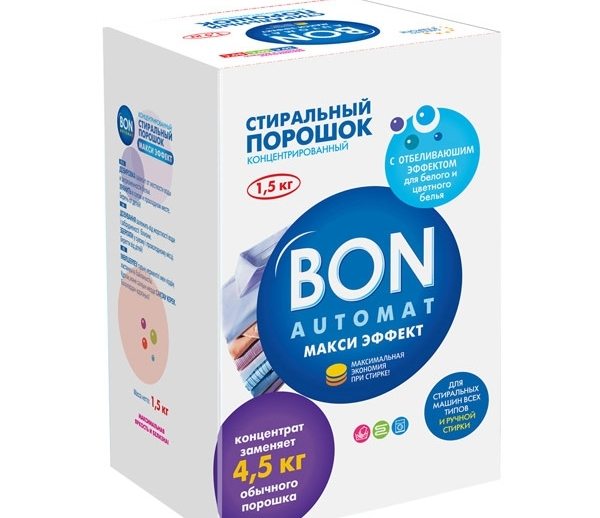
- Bon Automat is a laundry detergent for children's clothes from birth. It contains soap, surfactants, enzymes, oxygen bleach, and an allergen-free fragrance. It does not contain phosphates or zeolites. Because it is concentrated, you need less.
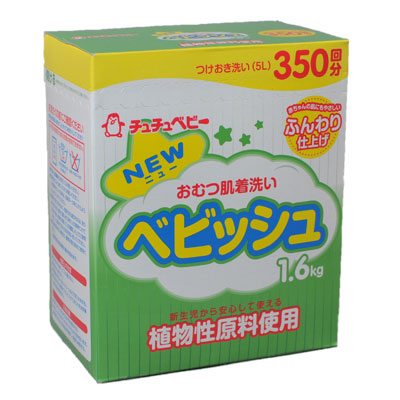
- Chu Chu Baby is a phosphate-free laundry detergent from Japan. It's a good soap-based product, suitable for both machine and hand washing. It doesn't contain fragrances or bleaches, but it does contain surfactants. The concentrated powder is economical to use.
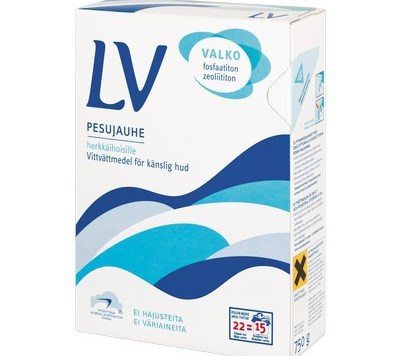
- LV Micropowder is a hypoallergenic product from Finland. It's phosphate-free and contains no more than 15% surfactants. The powder is based on soap and an oxygen-based stain remover. It's approved for allergy and asthma treatment.
Adviсe
In conclusion, we'll offer some tips on how to choose the safest laundry detergent for children's clothes.
- Be sure to read the ingredients listed on the packaging. The powder should not contain phosphates or phosphonates, fragrances, and the surfactant content should not exceed 30%, and it should be of plant origin.
- Look for powder labeled hypoallergenic.
- Inspect the integrity of the packaging; there should be no pieces of powder that can be felt in the soft bag.
- The washing efficiency of the powder will be higher if it contains oxygen bleach.
- Pay more attention to powders from foreign, proven manufacturers, for example, European and Japanese ones.
- Before washing, check how the powder lathers. A good powder will not produce too much foam, and the smell will be subtle or neutral.
- It's best to buy hypoallergenic baby powder in a store so you can inspect it. Try to avoid buying it online; after all, it's your baby you're dealing with.
Important! If children are prone to allergies, even with a good detergent, turn on the extra rinse function. This will increase the safety of your detergent.
No matter what the laundry detergent's composition (phosphate-free, surfactants-free), you can only test its effectiveness yourself. After all, the same detergent may cause allergies in some people but not in others, even if it's hypoallergenic. Good luck choosing!
Interesting:
Readers' comments
Headings
Washing machine repair




For buyers




For users


Dishwasher




Add a comment