
What is the bio-phase in a washing machine?
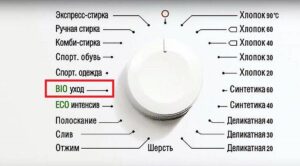 Every year, the quality of laundry cleaning continues to improve, as new detergents and devices emerge. Modern concentrates can remove even the most stubborn and difficult stains from fabrics, regardless of their origin. Laundry detergents are also keeping pace with advances, helping powders and gels "open up" in special washing modes. For example, the Bio-Phase in washing machines is an option for washing with enzyme-based detergents. Let's take a closer look at how its algorithm differs from others and which concentrates are best.
Purpose and features of this algorithm
It used to be thought that the effectiveness of detergent and the quality of stain removal depended directly on water temperature. The logic was simple: the higher the temperature, the faster and more effectively the dirt would be removed. So, people would first boil their laundry on the stove, then choose washing machines with a maximum temperature of 90-95 degrees Celsius and constantly run high-temperature cycles. But time has proven the scientists wrong.
It's now clear that high temperature isn't the most important indicator of washing performance. Moreover, many items become misshapen at 60-90 degrees, and washing machines break down faster due to frequent heating. To improve the quality of cleaning and keep things and equipment in their original condition, you should not abuse the heating element, but use modern cleaning products. Among the latest are enzyme-based powders.
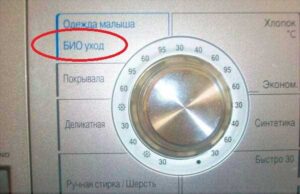
The Bio-phase program is designed for washing with detergents containing enzymes.
Protein stains are considered among the most difficult to remove. Without specialized cleaning agents, removing a greasy kitchen towel or a blood stain from jeans can be quite difficult. Bio-additives—enzymes—come to the rescue.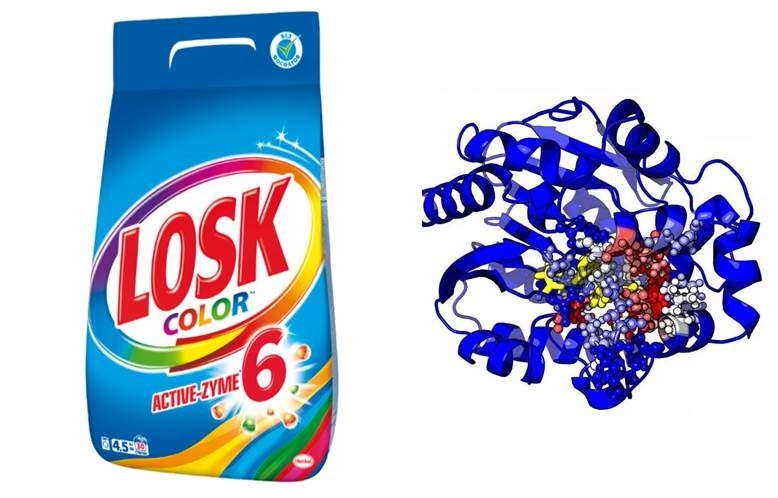
Enzymes are biological additives that instantly break down proteins, fats, and carbohydrates. These components help remove organic stains from fabrics without damaging their structure. As a result, clothing is resistant to food stains.
- berries (strawberries, plums, raspberries, cherries);
- wine;
- food colorings;
- fat (oil);
- greenery;
- coffee, tea;
- chocolate;
- with blood.
The problem is that enzymes only work in cold and warm water. When heated above 40 degrees Celsius, the substances lose their effectiveness. To prevent this from happening, manufacturers have developed a special "Bio-Phase" program.
When the bio-phase is activated, the washing machine stops heating at 40 degrees Celsius. The main wash cycle lasts 10-20 minutes, during which the machine maintains a low temperature. During this time, enzymes penetrate the fabric and break down dirt. The machine then continues the cycle as usual: rinsing and spinning the laundry.
Some modern machines offer advanced bio-care. For the first 15-20 minutes, the washing machine maintains a temperature of 40°C (104°F), where enzymes remove protein stains. After the set time has passed, the machine increases the maximum temperature to 60-95°C (140-205°F). The boiling process activates other components of the cleaning agent. As a result, even the most stubborn stains are removed.
We activate this algorithm on the machine
The bio-phase is started like any other mode. Plug the machine in, select the appropriate position with the selector, and press the start button. The key is to first add enzyme-based detergent to the dispenser.
When the Bio-phase is activated, washing occurs when the water is heated to 40 degrees.
The Bio-Program algorithm differs from other cycles. After heating the water to 40 degrees Celsius, the washing machine drum practically stops, spinning slowly and sparingly. This "soaking" process evenly distributes the enzymes throughout the fabric and begins to work on stains. The machine then switches to an active wash cycle with intensive drum rotation.
What to do if there is no bio-phase in the machine?
To get rid of protein stains, you don’t need brand new equipment. An analogue of the premium “bio-phase” can also be found among standard positions. Most washing machines have a variety of programs that can replace enzyme cleaning. Let's look at the most suitable alternatives.
- Soaking. The most obvious option. When activated, the machine soaks in cold water for 15-30 minutes, giving the enzymes time to dissolve the stains.
- Cotton 40. Here, the water temperature will be maintained at 30-40 degrees Celsius, which is ideal for protein detergents. The only downside is that the enzymes will have to work with the drum spinning vigorously. This isn't a big deal, as the cycle lasts a long time, and the detergent will have time to dissolve.
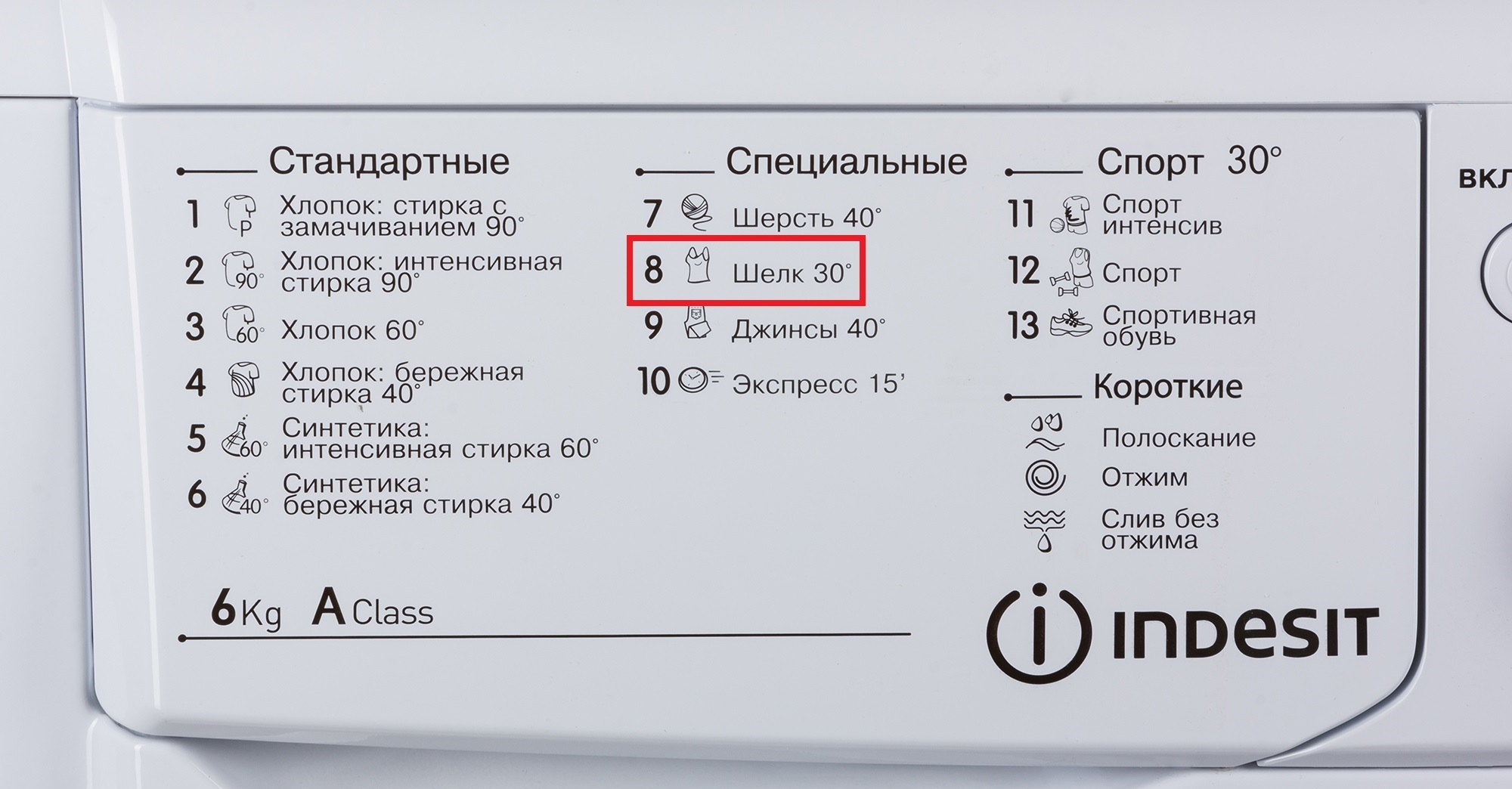
Alternatives to the Bio-phase include the Soak, Cotton 40, Silk and Pre-wash programmes.
- Silk. For delicate washing, the system sets a low temperature, gentle drum rotation, and a wash cycle of 60-90 minutes. The cycle parameters are similar to the bio-phase.
- Pre-wash. This program consists of two stages. In the first half, the laundry is soaked in cold water, allowing enzymes to work on the stains. Then, a high-temperature wash begins, completing the cleaning process.
Finding an alternative to the bio-phase is easy—you can choose or manually adjust similar cycle parameters. The manufacturer also provides instructions on how to use the enzyme powder on the back of the packaging. It is important to read the instructions carefully and follow the recommendations provided when starting the wash cycle.
Laundry detergents with enzymes
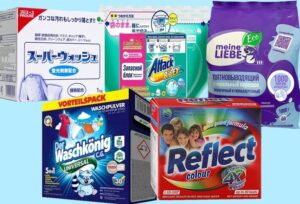
For washing with a bio-cleaning function, you need special detergents. Look for concentrates with added enzymes—their presence is indicated in the ingredients or on the front of the packaging. These products are sold in local stores, chain hypermarkets, and online marketplaces.
- Eared Nyan for washing children's clothes. A universal cleaning product suitable for both hand and machine washing. Ideal for bleaching light and white fabrics made of cotton, synthetics, and linen. In addition to enzymes, the powder contains bleaching agents, anionic surfactants, and nonionic surfactants. The latter content does not exceed permissible limits, ensuring the granules are completely rinsed out of the fabric and preventing allergic reactions. The formula is supplemented with special agents to soften water and protect the washing machine from corrosion. Sold in 2.4 kg plastic bags for $2.60–$4.60.
- Losk Color is the latest generation of laundry detergent. Thanks to its exclusive Active-Zyme 6 formula, which combines six enzymes, it effectively removes any stain without damaging fibers. The concentrate also includes a stain remover that enhances the effectiveness of the bio-additives. It also contains a fragrance composition that adds extra freshness to clothes. It works in water from 30 degrees Celsius and rinses completely out of fabrics. Suitable for all fabric types except wool and silk. Price: $3.50 per 4 kg.
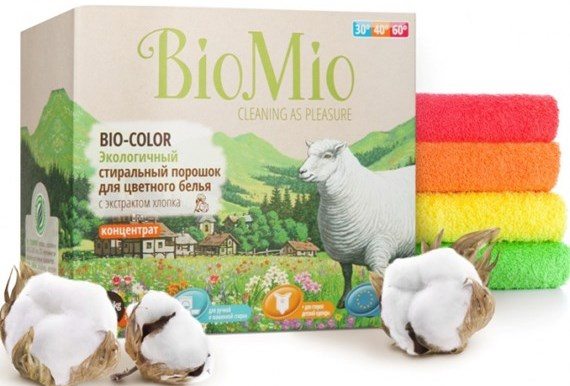
- BioMio BIO-COLOR. A powder concentrate designed for hand or machine washing of colored and dark-colored children's clothing made from cotton and synthetic fibers. Thanks to enzymes, anionic surfactants and cotton extract, it has a gentle effect on fabric, removing all types of stains even in cold water. The product is phosphate- and fragrance-free, making it easy to rinse, hypoallergenic, and biodegradable. It has the "Leaf of Life" eco-label, signifying its eco-friendliness and natural composition—87% natural ingredients. It is sold in 1.5 kg cardboard boxes and costs approximately $5–$6.
Powders with enzymes are produced by the brands Ushasty Nyan, BioMio, Ariel, Attack Bio EX, Tide, Losk and Synergetic.
- Ariel Color. A universal laundry detergent. Suitable for hand and machine washing, it's suitable for all colors and fabric types. Its active formula, based on enzymes, anionic surfactants, and nonionic surfactants, removes stubborn stains and odors from fabrics without leaving a trace. Thanks to color-trapping components, the product preserves pigment in the fibers and prevents dirt from re-settling. An interesting bonus is that it helps smooth out clothes, thanks to the fabric softener included in the concentrate. Available in bags from 0.45 to 9 kg and priced between $1 and $11. It's also available in gel and capsule form.
- Attack Bio EX is a Japanese laundry detergent with a concentrated action. It's suitable for cleaning white and colored clothes made of linen, synthetics, and cotton. The granules are infused with oxygen, allowing the concentrate to dissolve quickly and begin removing stains. It contains bleaching agents, enzymes, and a fragrance—phosphate- and chlorine-free. It works best in water at 30-40 degrees Celsius (86-104 degrees Fahrenheit). It has a light floral scent. A 0.8-1 kg cardboard box costs $4-$10.
- Tide Alpine Freshness. A detergent based on bleaches, enzymes, anionic and nonionic surfactants, and free of phosphates and other harmful substances. Designed for washing white and light-colored cotton and synthetic fabrics. The innovative "Aquapowder" formula instantly activates upon contact with water, removing all dirt from the fibers. The product copes even with difficult to remove stains – traces of sweat, cosmetics and food. The concentrate also eliminates unpleasant odors from fabrics, imparting a "mountain" scent. Prices range from $0.80 to $18, depending on the packaging.
- Synergetic ECO. An economical superconcentrate, 1 kg of which can replace 6 kg of another product. It contains safe plant-based ingredients and 5 types of enzymes. It is hypoallergenic, biodegradable, and leaves no odor on clothes. It does not contain phosphates, dyes, harsh bleaches, surfactants, or SLS, making it suitable for washing children's clothes. Sold in stick sachets, one dose is enough to clean moderately soiled clothes, and two doses are enough for difficult stains. The price depends on the number of "doses" in the package; a pack of 4 can be purchased for $0.79.
Protein stains are the most common type of stain, and the bio-phase in your washing machine will help remove them quickly and effectively. The key is to buy a high-quality detergent with enzymes.
Interesting:

Readers' comments
Headings
Washing machine repair




For buyers




For users


Dishwasher




Add a comment