
My Bosch washing machine isn't heating water – what should I do?
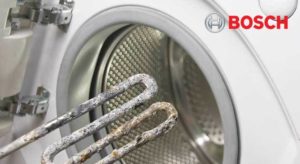 Technicians are perplexed, unable to understand why so many users rush to replace the heating element when their washing machine stops heating. A lack of heating can be the result of a variety of malfunctions, and today we'll try to describe them. If your Bosch washing machine isn't heating, don't jump to conclusions. First, you need to thoroughly check everything, and that's what we'll do now.
Reasons for failure
No heating during washing? This problem is usually noticed almost immediately after its appearance. Firstly, laundry starts to wash much more slowly, and secondly, condensation appears on the door during washing, indicating that it's being washed from the inside with cold water.
In most cases, the machine continues to operate normally despite the lack of heating. But sometimes it stops, giving errors F19 or F22. You need to solve the problem immediately, but how can you carry out repairs without the necessary knowledge and experience? Don't worry, our specialists are always ready to help. Let's first outline the range of possible malfunctions.
- The heating element has burned out or its circuit has broken.

- The temperature sensor or its circuit is faulty.
- The water level sensor is clogged or burned out.
- The control module is faulty, the firmware has crashed.
Even an experienced technician can find it difficult to pinpoint a specific problem with a Bosch washing machine based on its external behavior. An amateur can only detect the problem through a standard inspection. We'll explain how to perform this now.
Heating element or its circuit
The heating element on a Bosch washing machine is located at the front, so to access it, you need to remove the front panel of the machine. You can't just remove the front panel; you must first:
- remove the top cover;
- pull out the powder receptacle;
- unscrew the control panel;
- remove the decorative panel;
- remove the hatch cuff;
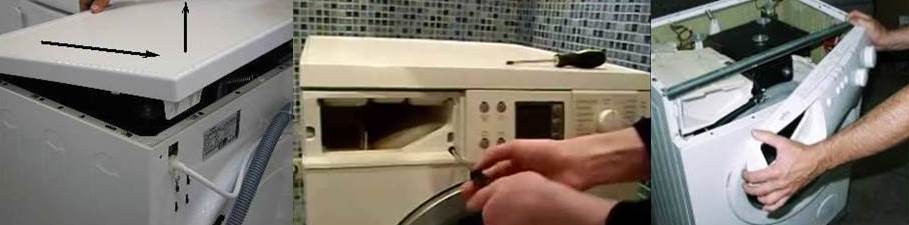
You don't have to remove the hatch cuff completely; just pull off the clamp and tuck the rubber band into the drum.
- unscrew the door lock.
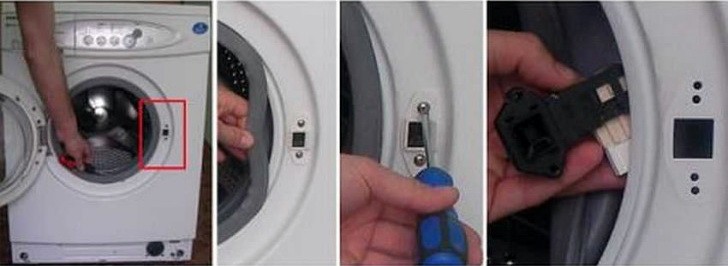
To partially disassemble the washing machine, you only need a screwdriver with square and hex bits, and for testing, we'll need a multimeter. First, we check the resistance of the heating element itself, which is installed in a special socket in the drum. Next, we check the power supply wiring.

We then proceed based on the inspection results. If the heating element is faulty, it must be removed and a new, original part installed. If a break in the circuit is detected, the wire must be soldered or replaced if damaged. Learn more about the process.Replacing the heating element in a Bosch washing machine described in the article of the same name, so we will deliberately omit the details and move on.

Temperature sensor
Temperature sensors don't break very often, but it's still worth checking. Temperature sensor failure can be caused by overheating of the water, a manufacturing defect, or a system failure, but ultimately, the cause isn't that important. It's much more important to detect the problem promptly and replace the faulty part.
The temperature sensor is installed directly into the heating element seal., which means, as in the previous case, we will have to partially disassemble the Bosch washing machine to get to this part.
Before disassembling your Bosch washing machine, you must disconnect it from the power supply and turn off the water.
- Use a T-20 bit and remove the screws holding the top cover of the machine. Slide the cover forward slightly and then lift it up.
- We pull the powder drawer towards ourselves until it reaches the end, and then, pressing on the tab in the area of the rinse aid compartment, we pull out the powder drawer.
- There are screws under the dispenser that hold the control panel in place; they need to be removed. There's another screw on the right side of the washing machine's control panel; that also needs to be removed.

- The control panel is now secured with latches. Using some force, unclip it and remove it. Be careful not to tear the wires.
- Open the hatch door fully, bend the seal at the top with your fingers, and then use a screwdriver to hook the clamp spring. By pulling the spring clamp upward with a screwdriver, you can easily remove it.
- We tuck the cuff inside the hatch so that it does not interfere with the removal of the front wall of the machine body.
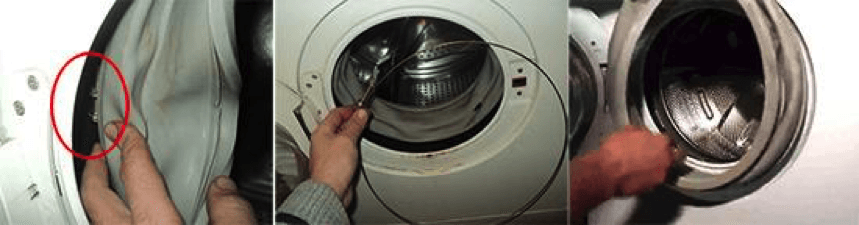
- There's a narrow decorative panel underneath the front panel of the machine. It's secured with clips. Carefully remove the decorative panel and then remove all the screws holding the front panel in place.
- We unscrew the screws near the door lock, as well as one screw that is located on top between the front wall of the machine body and the control panel.
- Carefully remove the front wall, while simultaneously disconnecting the power cable of the UBL.

So, now we have the heating element and temperature sensor in plain sight, what do we do next? Next, we remove the wires from the temperature sensor and check its resistance. If the sensor is faulty, unscrew the tension nut, remove the old sensor, and install the new part in its place. If the sensor is intact, we need to check the wiring for breaks.

Level sensor
If your Bosch washing machine isn't heating up, the water level sensor may be to blame. At first glance, there's no direct connection between the water level sensor and the water heating, but that's just the appearance. In fact, the pressure switch may be the culprit.
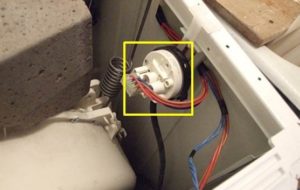 The water level sensor is located near the heating element, so we won't repeat the partial disassembly of the washing machine. By carefully reviewing the previous step, you'll be able to access this component. First, check that the pressure switch tube is not clogged.
- We reach with our hand between the tank and the side wall of the Bosch washing machine body.
- We feel the tube that goes to the pressure switch and carefully remove it.
- We pull out the tube and inspect it for blockages, blowing it out if necessary.
If there's no blockage, you need to check the resistance of the pressure switch coil. A faulty coil cannot be repaired; you'll have to disconnect the wires from the level sensor, remove the broken pressure switch, and install a working part in its place. We check the wiring for breakdown using the standard method.
Control module
Once you've verified that the heating element, temperature sensor, and pressure switch of your Bosch washing machine are working properly, and the wiring is intact, consider any problems with the electronics. There's a high probability of a fault in the control module.
It's difficult to determine the nature of this malfunction. It's possible a tire has burned out or a track is damaged. It's also possible the firmware has simply crashed and needs to be reset. There are numerous possibilities, and the true cause can only be determined through comprehensive professional testing. We strongly recommend entrusting this work to an experienced technician, as if you damage the control module during a home-made repair, the cost of replacing it will be enormous.
A technician will test your Bosch washing machine's electronics for a relatively low cost and determine whether it should be repaired or replaced. Electronics are usually repairable, so don't worry too soon.
How to wash without repairing
If you're short on time for repairs to your Bosch washing machine, but need to do a mountain of laundry right now, we offer a unique solution. Let's be clear: it's best to stop using a faulty machine for a long time and have it repaired as soon as possible. So, how do you wash your laundry efficiently if your machine refuses to heat the water?
- First, we decide at what temperature we will wash the items. We set the specified temperature on our home water heater (for example, 600C) and wait until the water heats up.
- We go to the washing machine and turn off the cold water supply. Open the detergent drawer, pour in the detergent, and insert the shower head.
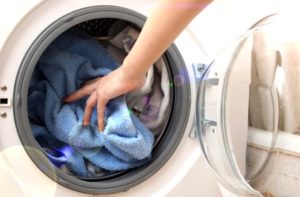
- We put dirty laundry into the washing machine drum, close the door, turn on the machine and set the washing program.
- Immediately turn on the hot water, which begins to flow through the shower head into the powder dispenser, washing the powder into the washing machine tank.
- We wait until the water is collected and observe the behavior of the washing machine. As soon as there is enough water, the machine will start washing, at this time we must turn off the hot water, remove the shower head from the tray and push the powder container back into place.
- Open the cold water tap, which you previously shut off, and you can safely leave the bathroom. The washing machine will then automatically finish the wash cycle, drain the soapy water, fill the rinse water, rinse the laundry, and then spin it. All of this will happen without your intervention.
As you've already noticed, this method isn't only suitable for those with hot water. If you only have cold water in your home, you can heat two buckets of hot water and gradually pour this water through the detergent drawer into the washing machine's drum. The effect will be exactly the same.
Interesting:


3 reader comments
Add a comment
Headings
Washing machine repair




For buyers




For users


Dishwasher




“If there is no blockage, it is necessary to check the resistance of the pressure switch coil.”
That's it? Where's the test description? What's the coil resistance?
How to check the pressure switch, how does it affect the heating element on/off?
A pressure switch basically just has contacts! There are also electronic ones, but you can't easily check them.