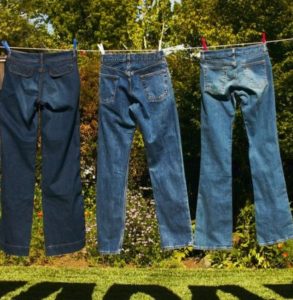
After a full wash, denim won't dry in 5 minutes—the dense material will require at least a day. Water will first run off the pants, then slowly evaporate. Elastic bands, belt loops, embroidery, and pockets take especially long to release moisture. But you can speed up the process by improving drying conditions. Now let's figure out how to dry jeans quickly after washing and how long it will take.
Squeeze well
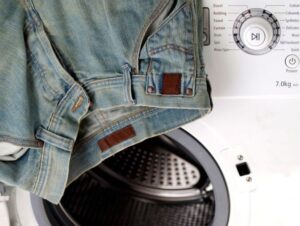
The easiest way to speed up the drying of jeans is to thoroughly spin them. This is best done using a washing machine: place the garment in the drum and run the spin cycle at 1000 rpm or higher. This will spin the machine and "knock" the moisture out of the denim fibers.
There's just one caveat: some jeans can't be spun at high speeds. Manufacturers typically limit the spin cycle if the pants have decorative elements or abrasions. It's better not to take risks and check the label on the item before drying.
To speed up the drying of jeans, you can spin them at 1000 rpm in the washing machine.
If automatic spinning isn't allowed, you can try wringing your jeans out with towels. Here's how:
lay a dry terry towel, diaper or sheet on the table;
Place wet jeans on the canvas;
cover the denim with a second dry towel;
roll or form a bundle;
wait until the outer towels get wet;
replace wet towels with dry ones;
repeat steps “5” and “6” at least 4 times.
Towels will absorb most of the water from the fibers, speeding up the drying process. Finish the process by hanging the jeans on the balcony, attaching them to the clothesline by the waistband or ankles. It's important to protect the garment from direct sunlight and turn it inside out, as UV rays will ruin the color.
Heating or "Wind Blower"
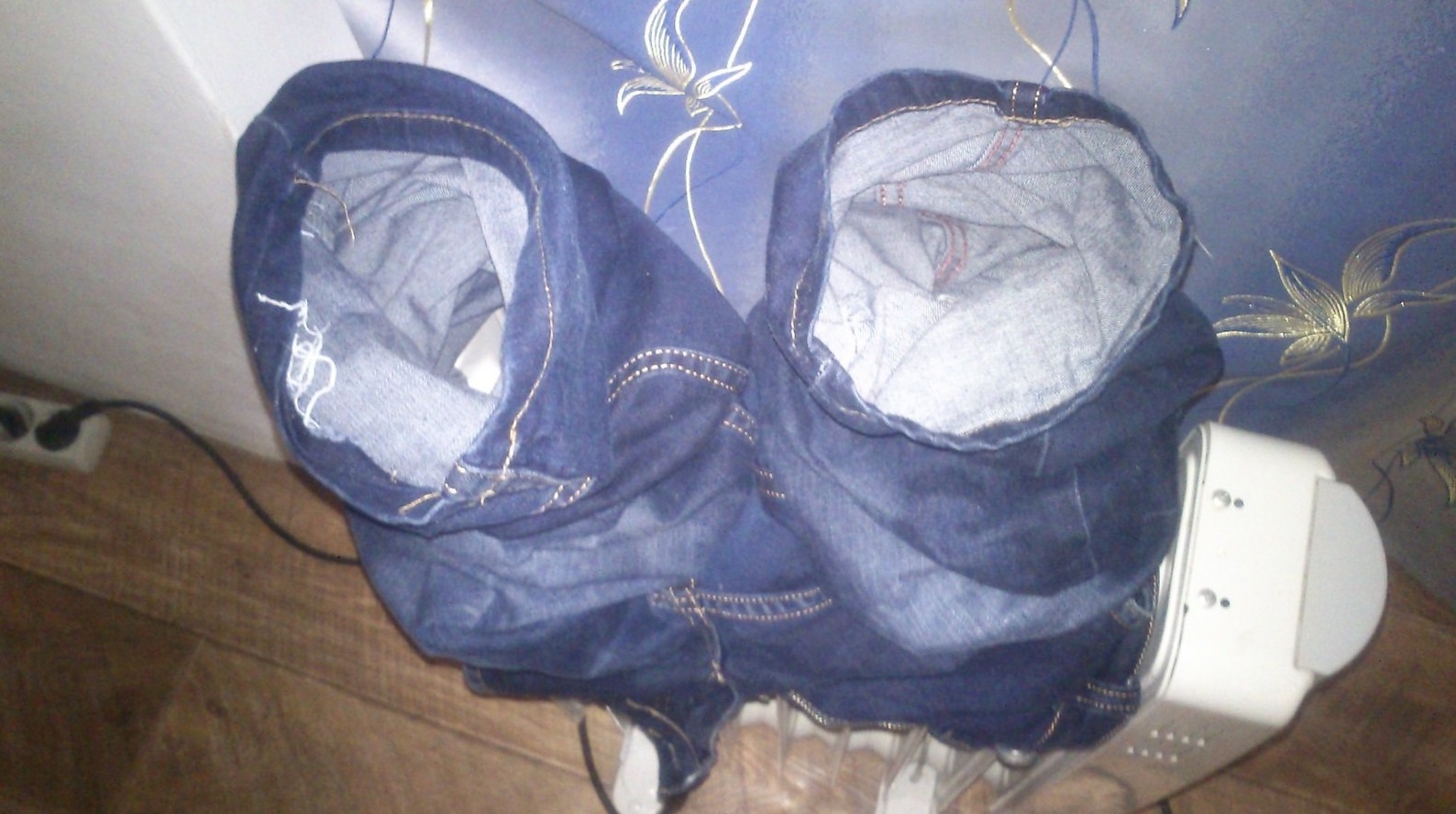
In winter, there's no balcony, but central heating is very effective for drying jeans. Simply lay the damp denim on a hot radiator and leave it undisturbed for two hours. Then, remove the pants, shake them out, turn them upside down, and return them to the radiator. After two to three hours, the garment is completely dry. The advantage is that the garment warms up gradually and the fibers are not damaged. The main thing is to remember to keep an eye on the drying garment, otherwise the fabric will dry out too much, becoming stiff and unpleasant to the touch.
In summer, you can use another radiator—an electric heater. The procedure for using it is identical, with one difference: leaving the appliance covered with clothing unattended is prohibited! You must constantly be nearby, turning the jeans over, and adjusting the heat. Remember, this method is a fire hazard!
Do not leave electric heaters running and covered with clothing unattended – this is a fire hazard!
It's much safer and more reliable to use a so-called wind blower at home. Here's how:
We hang the denim on a chair or on a floor drying rack;
measure 30 cm;
we install a wind blower – a fan that supplies hot air;
We turn on the last one.
The blower ensures constant circulation of warm air, which accelerates the process of water evaporation. If you regulate the heating temperature of the electric appliance and turn the jeans over, drying will only take a few hours. A similar action is used by a room air conditioner, the flow of which is directed at a wet product.
Iron soleplate and electric dryer
There's a special device for drying jeans—an electric dryer. Many people own one, but it's often not used for its intended purpose. It's easy to use: lay out the pants, place the heating elements inside, and plug it in. There's no need to monitor the process, as the device operates autonomously and safely. Just time the drying process, and in a few hours, your clothes will be dry.
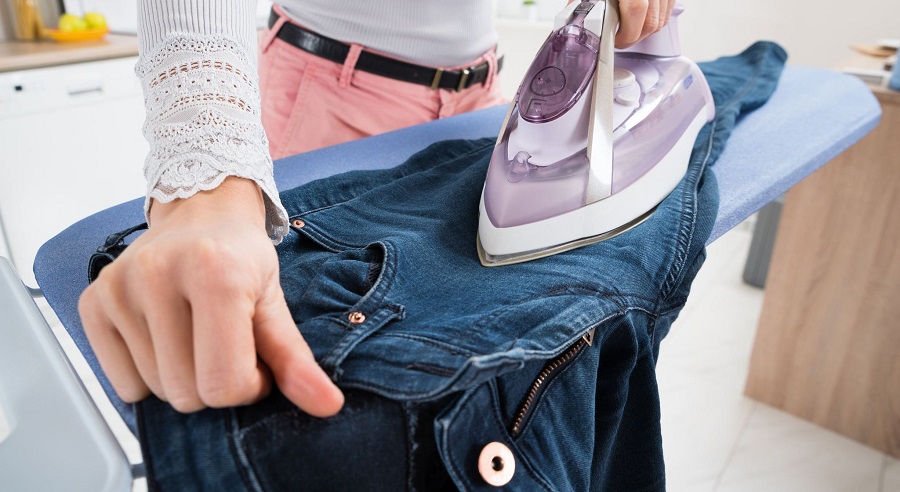
If you don't have a dryer, you'll have to iron them. Set up an ironing board, line it with a terry towel, place the wet jeans on top, wrong side up, and cover everything with a thick blanket or sheet. Then preheat the iron and begin ironing. As soon as the top layer becomes wet, remove it and replace it with a dry one. Meanwhile, shake the pants out and allow them to cool. Repeat this sequence until the pants are completely dry. It's important to turn off the steam on the iron, otherwise the moisture content will increase.
For the iron method to work, you need to adjust the heating temperature correctly. Rough and thick fabrics can be ironed at maximum temperatures, while thin stretch items can become deformed if left under a hot sole for a long time. It is better not to take risks and start drying from the first division.
Hair dryer
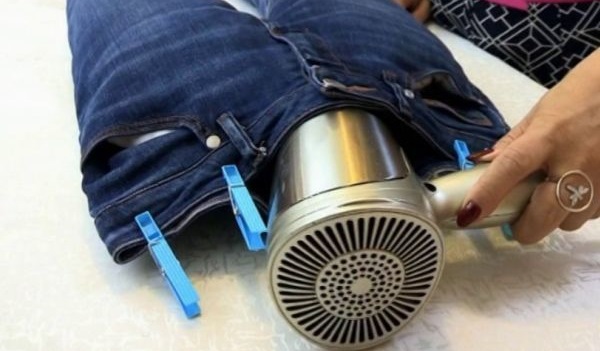
A hair dryer is also a good choice for drying jeans at home. Its advantage is that you can direct the air flow anywhere, ensuring the heat is as even as possible. However, the drying speed depends entirely on the power of the device.
It is not recommended to keep the hair dryer turned on for a long time - the device will overheat and break.
Dry trousers as follows:
turn the jeans inside out and straighten them lengthwise;
we fix it on hangers and hang it in the bathroom;
Turn on the hair dryer to medium temperature and begin drying: gradually move the device from top to bottom, covering the entire surface of the product;
After 7-10 minutes, turn off the hair dryer and let it “rest” (long-term use leads to overheating of the device);
During a break, shake out the denim and turn it inside out;
we take hold of the trouser legs, lowering the device inside each leg;
We monitor the hair dryer’s air filter, which should always be located outside;
As soon as the main part of the fabric has dried, we move on to the difficult areas – the belt, pockets, patches.
Drying with a hairdryer is effective, but difficult: your hands are under constant strain and quickly tire. Another drawback is the device's high power consumption. Another downside is the risk of overheating and failure.
Oven
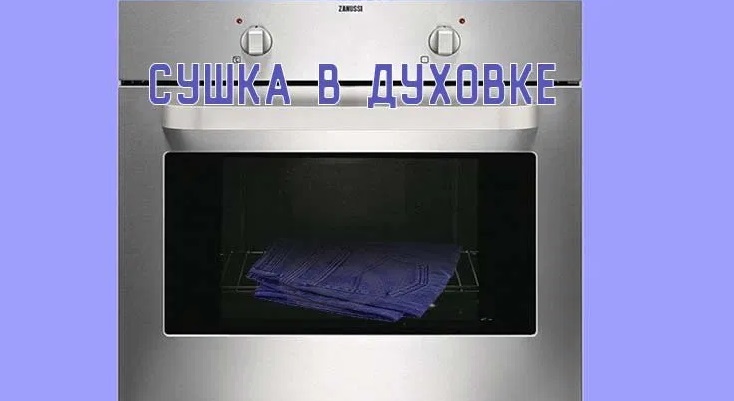
If you don't have a hair dryer or iron at home and need to dry your jeans quickly, the most extreme option is the oven. While the oven will evaporate moisture almost instantly, the risks are extremely high. Before deciding to take this step, be aware of the potential dangers.
Fire. Using the oven for other purposes is extremely dangerous – there's a high risk of your jeans catching fire, endangering property, the lives, and health of occupants.
Fabric damage. The oven won't ensure even drying; instead, some areas will remain wet, while others will overdry and scorch.
The drying process itself is as follows. Rolled jeans are placed in a washed and preheated closet at 120 degrees Celsius. The door is left slightly open, and every 5-6 minutes, the pants are removed, inspected, and turned over. Do not leave the pants unattended—a fire could start within 10 minutes, so be careful! Rather than waiting for them to dry completely, it's best to finish drying them outside, hanging them nearby.
How fast do jeans dry?
When dried naturally, denim takes an average of 1-2 days to dry. Using the methods below, you can speed up the drying time for jeans, from 6 hours to 30 minutes. Let's take a closer look at how long it takes.
30-40 minutes. Jeans dry faster in the oven, but the price for speed is very high – it's dangerous, risky, and requires constant monitoring.
60 minutes. An iron will do the job in an hour, but you'll have to work hard and risk damaging the fabric, as long ironing is damaging to denim fibers.
1.5 hours. Drying hair evenly with a hairdryer is difficult and can damage the appliance.
1-2 hours. Drying mode on automatic.
3-4 hours. Radiators or an electric dryer, while having all the advantages, risk drying out the fabric.
4-5 hours. Fan drying takes longer, but is safer for the fabric.
5-6 hours. This is how long it takes for jeans to dry after a spin cycle in a washing machine.
Natural drying of jeans takes at least 24 hours, but ensures safe and even evaporation of moisture.
It is highly recommended not to dry jeans regularly using a strong spin cycle or heating devices. Excessive heating and drying weakens the fibers, deforms the structure of the fabric and leads to color loss. It's better not to rush and give preference to natural drying - then the item will last many times longer.

 After a full wash, denim won't dry in 5 minutes—the dense material will require at least a day. Water will first run off the pants, then slowly evaporate. Elastic bands, belt loops, embroidery, and pockets take especially long to release moisture. But you can speed up the process by improving drying conditions. Now let's figure out how to dry jeans quickly after washing and how long it will take.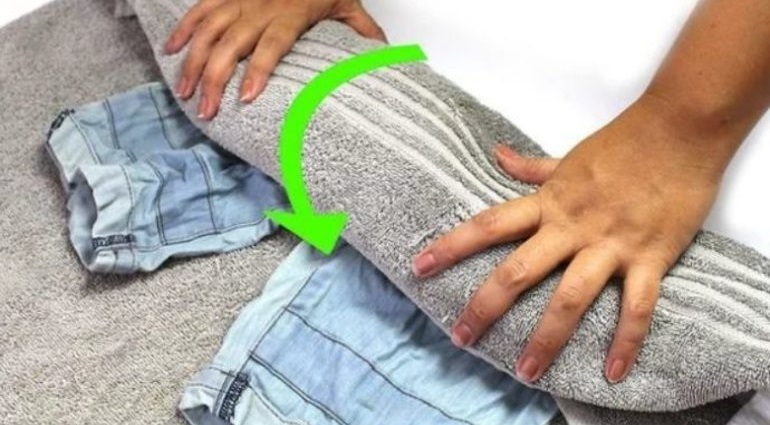














Add a comment