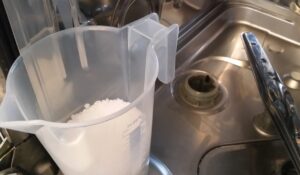
Typically, you rarely need to add salt to your dishwasher. Many housewives fill the special container once a year and continue using the machine without any problems. The amount of granules consumed depends on how often you use the dishwasher and the water hardness in your region.
What should you do if your dishwasher runs out of salt quickly? Check and adjust your dishwasher settings. We'll explain why consumption may be too high.
What causes salt to disappear too quickly?
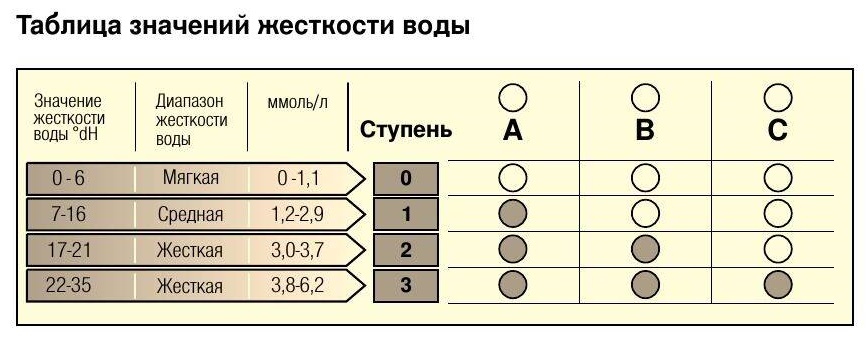
The salt consumption rate is determined by the dishwasher's settings. In dishwashers, the ion exchanger is adjusted manually, using a special table. During operation, it is necessary to periodically monitor the water hardness and adjust the settings.
Before using the dishwasher for the first time, the user must adjust the salt consumption. This depends on the water hardness in the region. By default, the manufacturer sets the softener level to 5, which corresponds to a water hardness of 3.0-3.7 mmol/L.
How to set the optimal softener level is described in detail in your dishwasher's instructions. The steps will vary depending on the model, so please read the user manual carefully.
The higher the hardness of tap water, the faster the salt is consumed in the ion exchanger.
Another factor affecting salt consumption is the frequency of dishwasher use and the amount of dirty dishes. If you run your dishwasher 2-3 times a day, the sodium in the ion exchanger will deplete faster than if you run your dishwasher less frequently.
So think about how often you use your dishwasher.Typically, 600-800 grams of salt in the ion exchanger are consumed in 6 months if the dishwasher is run once a day.With more intensive use, the sodium will run out after just a quarter. However, if you use the appliance less frequently, this amount will last for a whole year.
If you notice your dishwasher salt is quickly running out, check that the reservoir is properly sealed. Another cause of increased consumption is a malfunctioning ion exchanger. A faulty inlet solenoid valve also leads to increased water consumption and, of course, salt granules.
Let's adjust the salt consumption
Often, excessive salt consumption is caused by incorrect settings. When the water softener is set to a high level of hardness, the crystals are consumed accordingly. Therefore, it's important to set your dishwasher correctly.
You can determine the hardness of your tap water using special test strips. The indicators are impregnated with a special compound and change color depending on the amount of impurities in the water. They are inexpensive, making them affordable for most consumers.
If your water isn't very hard, you should adjust the ion exchanger settings. This will slow down salt consumption. The dishwasher manual describes how to adjust the settings. As an example, we'll show you how to adjust the softener level in Bosch machines.
Turn on the dishwasher.
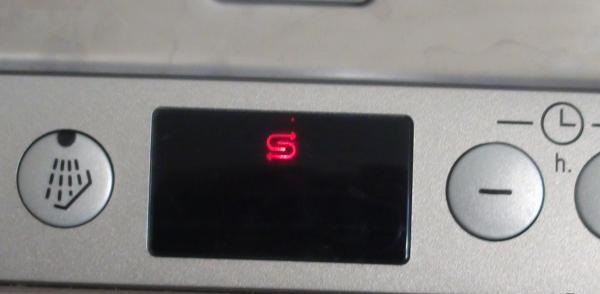
Press and hold the "Start" and "Auto" buttons for a few seconds. Wait until the display shows the current water hardness level, for example, "H:06."
Use the Plus or Minus buttons to adjust the softener level.
Press the Start button.
Adjusting your dishwasher's water softener can be done in just a few minutes. So, don't be lazy and use your dishwasher at the factory settings. Be sure to adjust the ion exchanger to your liking.
The dishwasher manual provides information on what softener level to set. Find the table with the values. As an example, here's the information for Bosch dishwashers:
when water hardness is 0-0.6 mmol/liter, the level should be 0;
if 0.7-1.1 mmol/liter, the softener is moved to position 1;
from 1.2 to 1.6 mmol/l, level 2;
when the hardness of tap water is 1.7-2.1 mmol/l, the softener is set to position 3;
if 2.2-2.9 mmol/liter, then level 4 should be set;
when 3.0-3.7 mmol/liter, the softener should be set to level 5;
from 3.8 to 5.4 mmol/l – level 6;
above 5.5 – position 7.
For dishwashers, it is necessary to use special salt with a NaCl content of more than 99%.
Salt softens extremely hard water, thereby extending the life of your dishwasher. Sodium prevents scale and limescale buildup on the dishwasher's internal components.
Which salt is better?
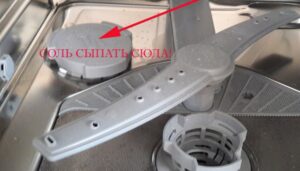
Every dishwasher has a special salt compartment. The capacity of the reservoir ranges from 700 grams to 1.3 kilograms. You can load the container either fully or halfway.
As mentioned earlier, regular table salt cannot be used in dishwashers. You need to purchase a special product with larger granules.
The main component of PMM salt is sodium chloride. To it, in small doses, are added:
citrates;
hydrocarbonates;
flavorings;
disilicates, etc.
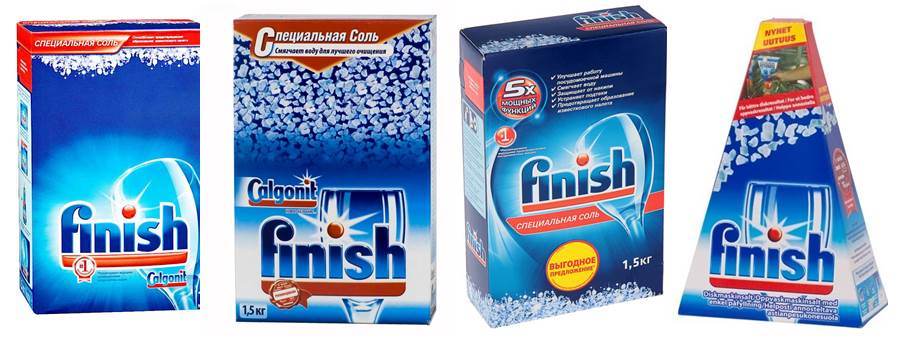
In addition to softening water, dishwasher salt has an antibacterial effect. Salt crystals improve the cleaning quality of dishes, prevent streaks, and add shine and a pleasant aroma. Among well-known brands, you can give preference to Finish, Synergetic, BioMio.
How do you know when you're out of salt?
Modern dishwashers are equipped with salt level indicators. When the salt level is low, a light on the dishwasher's control panel comes on. When you see the light, refill the reservoir to the indicated level.
Without an indicator, the user must monitor the salt reservoir themselves. You can tell when the salt is running low by how well the dishes are cleaned. If a white film or streaks appear on your cutlery, it's time to refill.
You can also time how long a full container will last. For example, six months. Then, after adding salt, attach a sticker with the date to the side of the machine. After six months, refill the container with salt crystals.
3-in-1 dishwasher capsules are available. They already contain salt. However, in practice, the active ingredient in the tablets is usually insufficient to soften hard water. Therefore, the dishwasher's reservoir should always be filled with sodium chloride.

 Typically, you rarely need to add salt to your dishwasher. Many housewives fill the special container once a year and continue using the machine without any problems. The amount of granules consumed depends on how often you use the dishwasher and the water hardness in your region.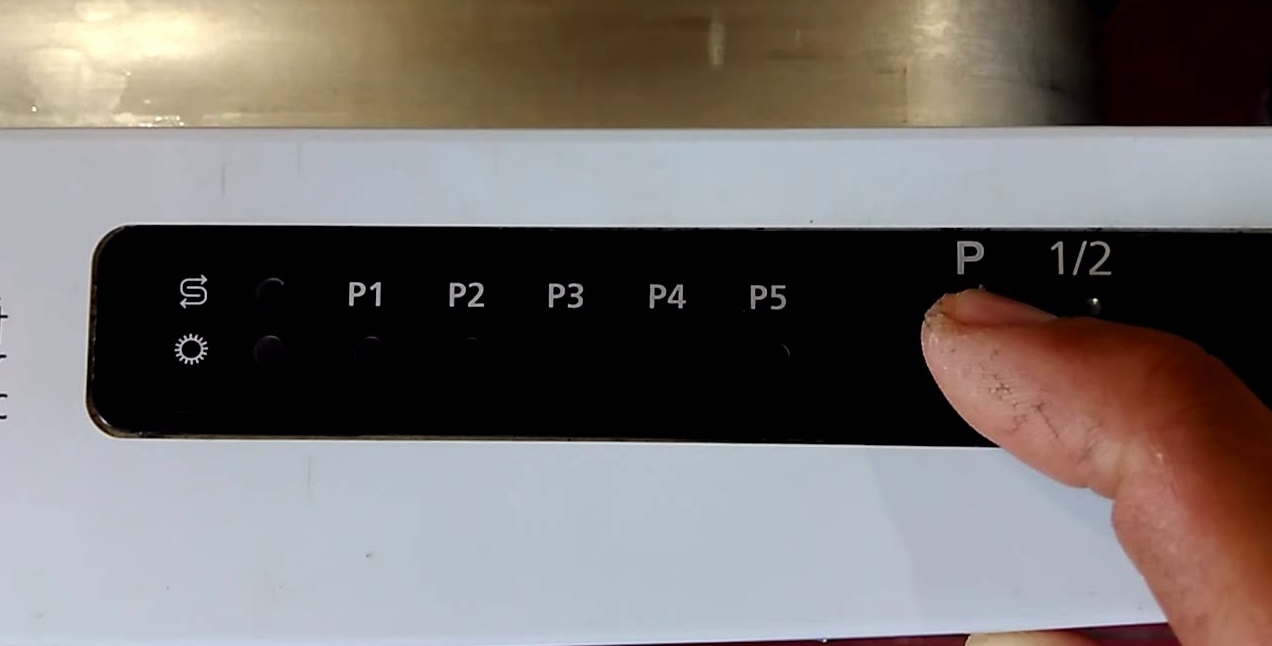

















Add a comment