
Review of centrifuges for wringing out laundry
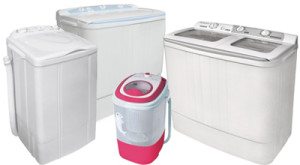
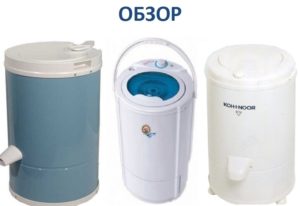 A spinning centrifuge is a familiar device to Russian housewives, once often included with semi-automatic washing machines—at least with those models that didn't have spinning units. With the advent of automatic washing machines, spinning centrifuges have been largely forgotten, as any such machine is perfectly capable of producing high-quality spins.
However, there is a fairly large group of people who, for one reason or another, are dissatisfied with the spin cycle of their automatic washing machines. These are the main fans of centrifuges. Add to this the owners of semi-automatic washing machines, and you have a potential audience that will be interested in this publication.
What should you pay attention to when choosing?
When choosing household laundry spinners, people base their decisions on two main criteria: price and quality. They often ask sellers for a cheaper device and one that won't break down. In our opinion, this is an absurd and one-sided approach that will never allow you to make the right choice.
Firstly, truly high-quality equipment can't be too cheap, and secondly, quality assembly is by no means the deciding factor in truly appreciating this spinner. So, what should you really pay attention to when choosing a good centrifuge?
- Capacity. The larger the load capacity of a centrifuge, the more valuable it is, as this means that it can spin large items, be it curtains or even outerwear. The larger the centrifuge's capacity, the more laundry it can spin in one go and the less time you'll have to spend caring for it.
- Spin speed. The average spin speed of a modern centrifuge drum is around 2000 rpm or more. The higher the speed, the better the spin.
Important! High spin speeds can damage your laundry.
- Stability. This can only be verified by performing a test run of the centrifuge on a special stand in the store. This is actually very important. If the centrifuge resembles a battering ram during operation, it's worthless!

- Power consumption. These devices typically consume a significant amount of electricity, but also don't operate for long. Most centrifuges have a power output of around 350 watts, so you won't have to worry about significant power consumption.
- Dimensions. If you plan to store the centrifuge in a closet or other designated location, it's a good idea to pay attention to its size. This will help you easily locate the device in your home.
- Drum and housing material. Even without a specialist, you can tell what material the drum and housing are made of. Preferably, the housing should also be made of metal, but if the housing is plastic, you need to check the quality of the plastic (carefully inspect the housing and press it with your finger).
- Placement and quality of the sealing rubbers. The sealing rubbers must be installed properly and adjusted correctly. If they are crooked or fall out, it's best not to purchase the device.
- Drain location and configuration. The drain should be located at a sufficient height above the floor, and the spout should be long enough to allow liquid to drain easily into a container, rather than partially dripping onto the floor.
Centrifuges with a removable spout are especially valuable, as this design element often gets in the way when placing the device for temporary storage in a pantry.
Rating of similar devices
When compiling this ranking of household centrifuges, we sincerely hoped that domestic brands would take the top spots. Who doesn't remember the old Soviet centrifuges that were commonplace in every other home, now happily languishing in garages, awaiting the dump? However, after studying the market and consumer reviews, we concluded that our expectations would be disappointed. As a result, we selected the five best centrifuges and ranked them based on a number of criteria. Here's what we came up with.
- KOH-I-NOOR VISION C-352. We placed this Argentinian centrifuge at the top of our rating for three reasons. First, the build quality and materials are top-notch, plus it has a 5 kg capacity. Second, this centrifuge spins laundry better than any other existing alternative (even industrial ones), as residual moisture in laundry reaches up to 22% after use. Third, the KOH-I-NOOR VISION C-352 is very energy-efficient, runs quickly, and, most importantly, doesn't rattle like crazy. Price: $220.

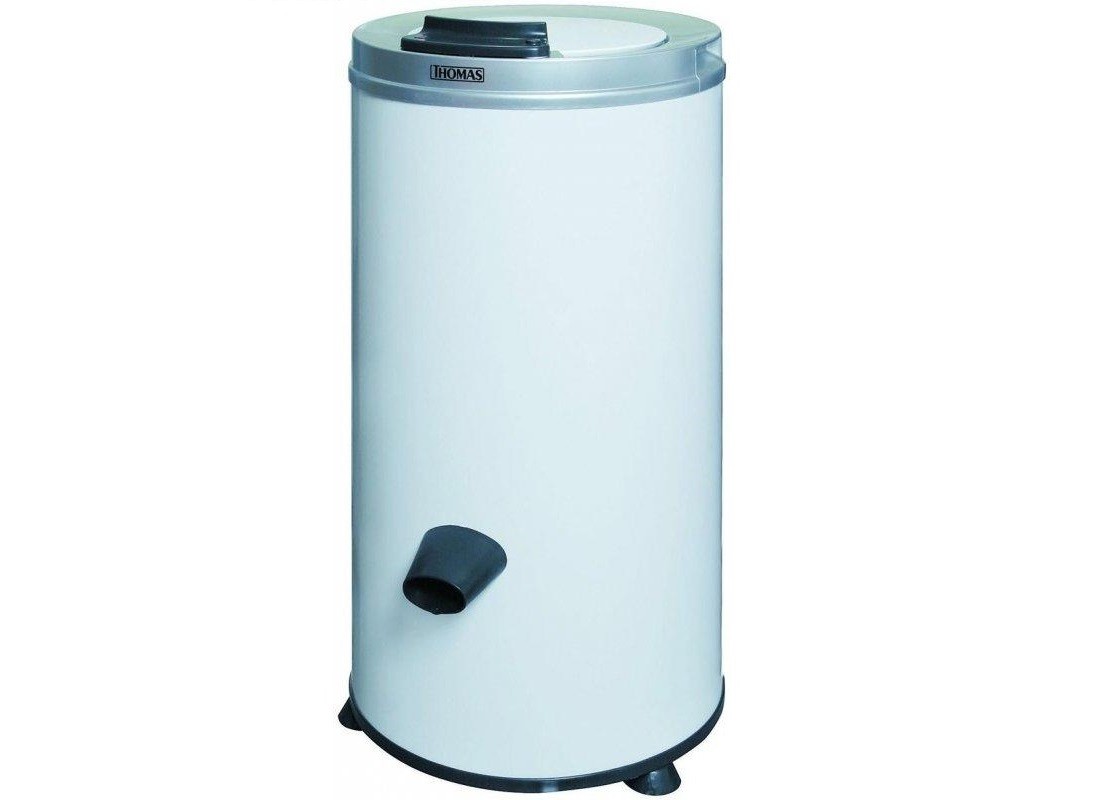
- The Thomas 776 SEL earned second place because its capacity is 4.5 kg, but its spin quality is significantly lower—the stated residual moisture content is around 40%, although the test showed a reading of 36%. The build quality is excellent, and the price is a little lower – about $160.
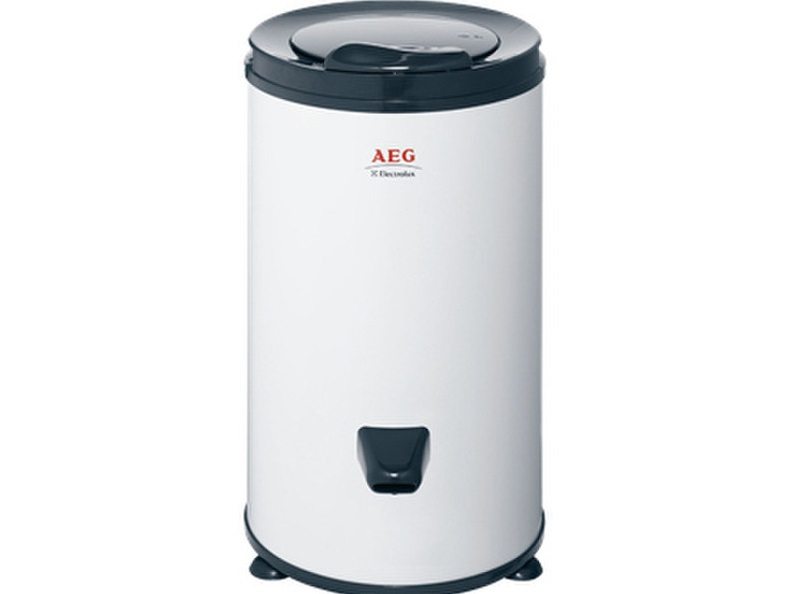
- The AEG SV centrifuge from a renowned German brand ranks third. Although its technical specifications are relatively modest, its unrivaled quality more than makes up for it. It has a 4 kg capacity, a 2800 rpm spin speed, and a residual moisture level of 40%. The average price as of March 2017 was $230.
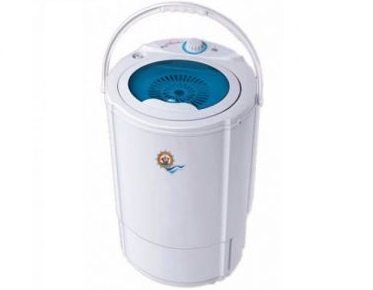
- Nevka 7. A centrifuge with a rinse function from a domestic manufacturer. The relatively low quality of the workmanship and materials (frequent repairs will be required) is offset by a large load capacity of about 6 kg, light weight, and ease of use and portability. Furthermore, the Nevka 7 consumes little energy and is quite affordable at $95. The spin quality is decent, with residual moisture at around 45%.
- The Rada C35. This Russian-made centrifuge with a 3.5 kg drum capacity rounds out our rating. The quality of the components and assembly is quite satisfactory, and the residual moisture content of laundry is around 70%, which is comparable to the levels achieved by Soviet-era centrifuges. This machine is very inexpensive at $56.
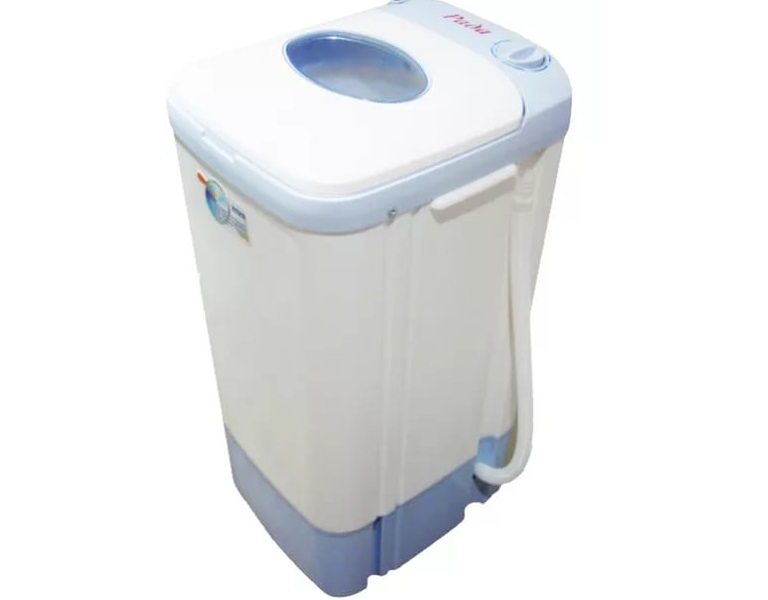
Of course, we could expand the ranking a bit by adding a couple of additional models. But there's no point in doing so, since the other centrifuges are essentially identical to those listed above.
How to use?
Any household centrifuge is very simple in design. A round or square body conceals a vertically positioned drum into which the laundry is loaded. The drum spins at high speed, creating centrifugal force that causes water droplets trapped in the fibers to fly out and flow down the walls of the drum. Water doesn't accumulate inside the centrifuge, but flows directly through a special channel into a container pre-installed next to the body of the device.
To use the centrifuge, open the top lid and remove the protective cap. Fill the drum tightly with laundry.
If you put too little laundry in the centrifuge, the centrifugal force will start to shake the device from side to side, risking it tipping over.
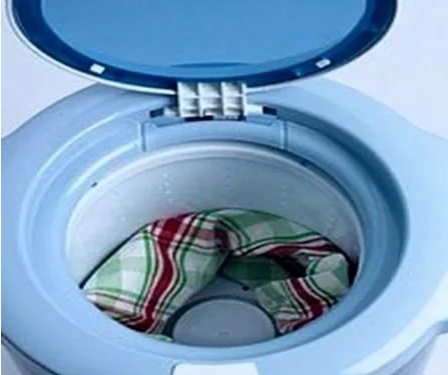 Next, replace the protective cap, close the hatch, place a container under the spout to catch the water, and plug in the appliance. Then, use the mechanical timer to set the spin time and start the centrifuge. On some models, a start switch is installed separately, in which case it needs to be turned. After the spin cycle is complete, turn off the machine, remove the laundry and hang it up to dry.
Even a good centrifuge vibrates heavily during operation. To dampen this vibration, at least partially, you can use anti-vibration mats for washing machinesFor our purposes, these devices are ideal.
In conclusion, although centrifuges aren't as popular today as they were 30 years ago, interest in them hasn't completely died down. There are many reasons for this, but as the saying goes, where there's demand, there will be supply. We hope this has answered the question of which centrifuge is best. Happy shopping!
Interesting:



5 reader comments
Add a comment
Headings
Washing machine repair




For buyers




For users


Dishwasher




Of course, no washing machine, even a modern one, will produce the same results as a centrifuge, whether front-loading or top-loading. It's a necessary household item. Most importantly, it saves time!
Our first centrifuge was a Centa, not counting the Sibir combined in a washing machine, the most successful model. It didn't require careful stacking of laundry, spun it in a single wash, and lasted 23 years. They don't make them like that anymore. The modern ones, with their plastic housings and built-in shock absorbers, are completely different: if you stack the laundry slightly unevenly, the drum rattles in the housing. We had a Fairy like that; the motor worked, but water ran everywhere; it was dangerous to use.
I have a Fairy, I took it from my parents. Apparently, the output is distorted. It's hitting the hull so hard. I don't know what to do anymore.
The key is to evenly distribute the wet items in the drum. This will ensure quiet, vibration-free operation.
The Fairy Small works fine. However, I had to disassemble it right away and modify a few things—the brake cable, the hose seal. If you don't put the plastic grid on top of the laundry, it distributes better and doesn't slam. We'll be looking for something larger now.