
How to seal a washing machine door seal
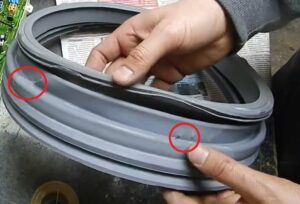 If you accidentally damage the rubber seal on your washing machine with a sharp object, or if your pet chews through it, do not use the appliance until you repair it. Otherwise, you risk flooding your floors and neighbors, as your "home helper" will begin to leak while in use.
It's best to replace the part completely rather than repair it, but this is time-consuming and expensive. Therefore, if you want to save money, consider a simple repair. This procedure is quite easy for a novice, as you can seal the door seal on your washing machine using household items you may already have around the house.
How and with what can damage be repaired effectively?
It should be understood that this recovery method is temporary, as it does not guarantee that the problem will not reoccur in the near future. That's why you should only resort to this cheap repair in exceptional cases. Also, don't try to use unsuitable products, such as regular glue, for repairs, regardless of its quality. In this case, the washing machine will likely only wash properly once before leaking again. This is because extremely hot water and harsh household chemicals actively destroy glue and other adhesives.
Since only high-quality silicone sealant can last in household appliances, it should be used for repairs. We'll also need a thin, curved needle and nylon thread. What to do with the cuff?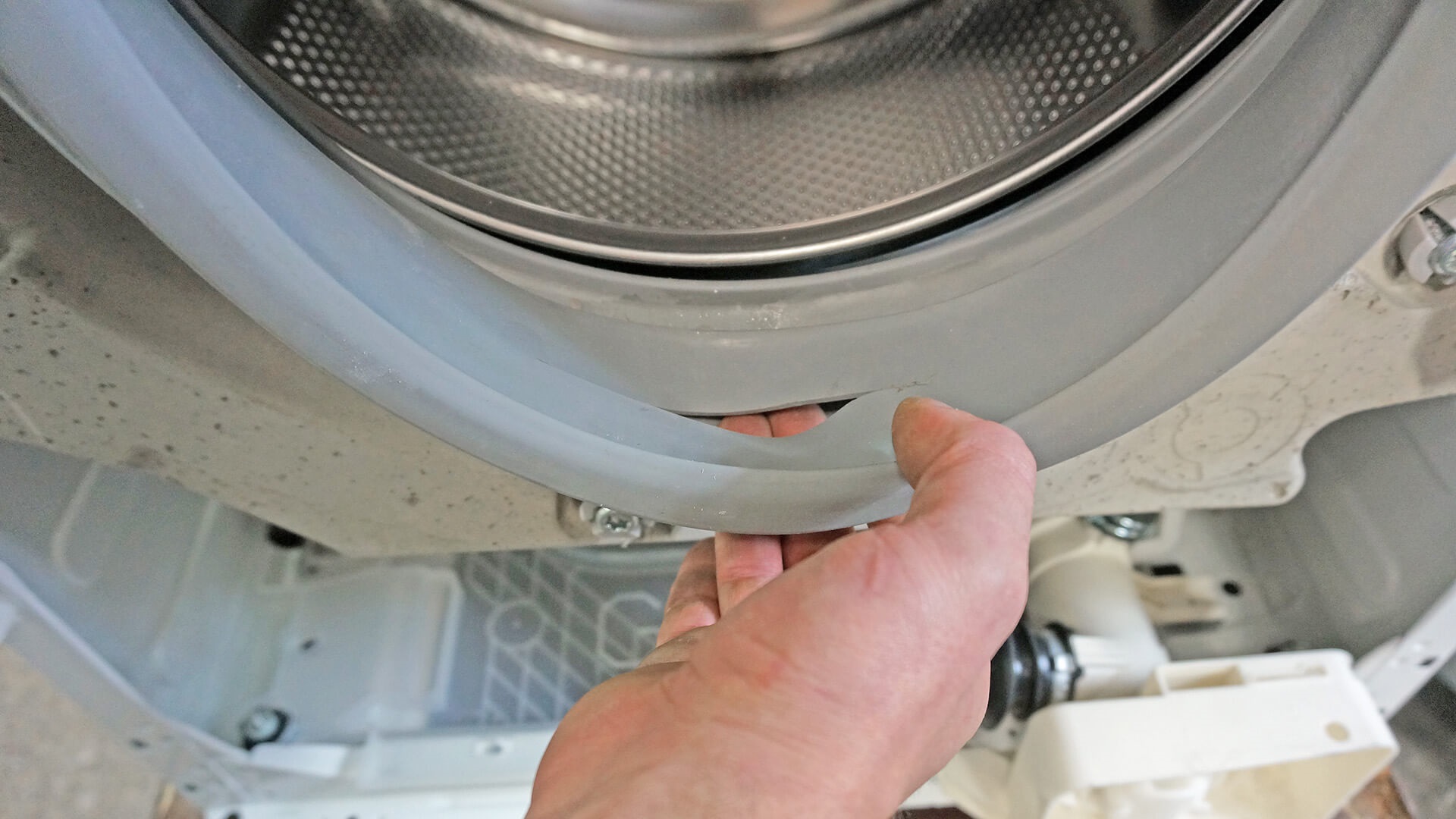
- First, carefully stitch the tear closed. Nylon threads work well for this. Use a football stitch.
- Next, seal the joint with Tramel glue.
- Leave the washing machine like this for a day to allow the element to dry completely.
- Run a test work cycle to evaluate the manipulations performed.
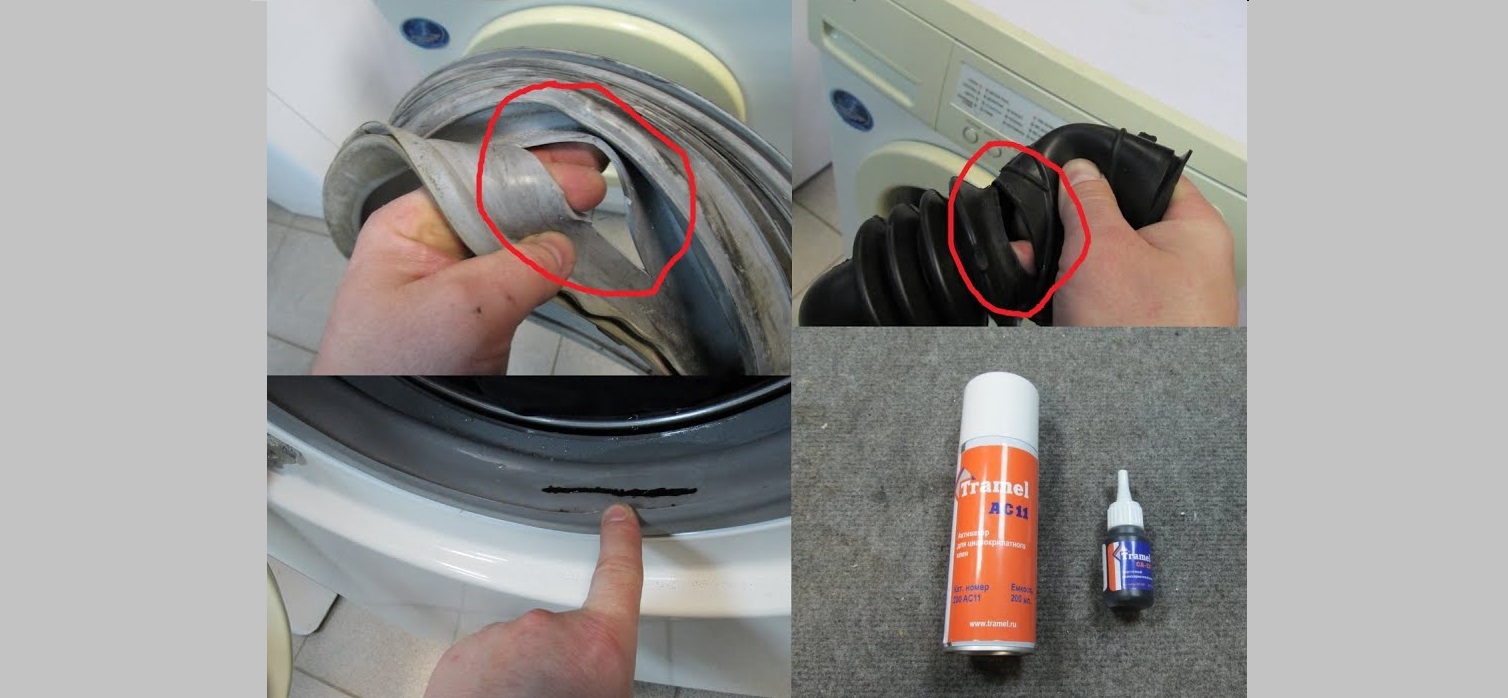
If the washing process goes smoothly, the repair is a success. However, this isn't a reason to relax, as the rubber seal typically fails about six months after such a repair. Therefore, write down or try to remember the scheduled repair time to avoid missing it and potentially suffering a flood. Treat the seal with adhesive twice a year to prevent the seal from deteriorating during heavy use of the washing machine.
If you have used Tramel glue for repairs, do not use washing modes in which the appliance heats the water above 60 degrees Celsius.
Another significant drawback of this type of repair is that it can be very difficult to access the damaged area. While you might be lucky if the seal is torn at the bottom, the damaged area could also be in the center groove, which is difficult to reach. If this happens, you'll have to remove the seal from its seat, repair it, and then reinstall it in the machine. If you have to spend time disassembling and then reassembling the element, it's much better to buy a new spare part right away and install it for safety.
Repair by turning over the cuff
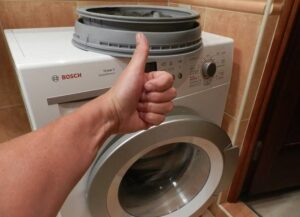
There is another original way to combat this problem, which is sometimes used by experienced repair service technicians. It is relevant in a situation where the rubber seal is slightly damaged, plus the damaged area is located at the bottom. In this case, you can simply turn the seal over with the damaged part facing up and continue using the washing machine as if nothing had happened. The secret is simple: during a wash cycle, the water level almost never reaches the top of the door, so a hole in the seal won't interfere with the operation of the appliance.
So, how do you properly flip the cuff? It's a mistake to think that brute force will do the trick, as the rubber seal is securely attached to the "home helper" by external and internal clamps. That's why you first need to loosen them, which will take some time. How do you do this correctly at home?
- Bend the edge of the rubber band at the very wall of the hatch.
- Find there a small plastic or metal clamp, the material of which depends on the model of your automatic washing machine.
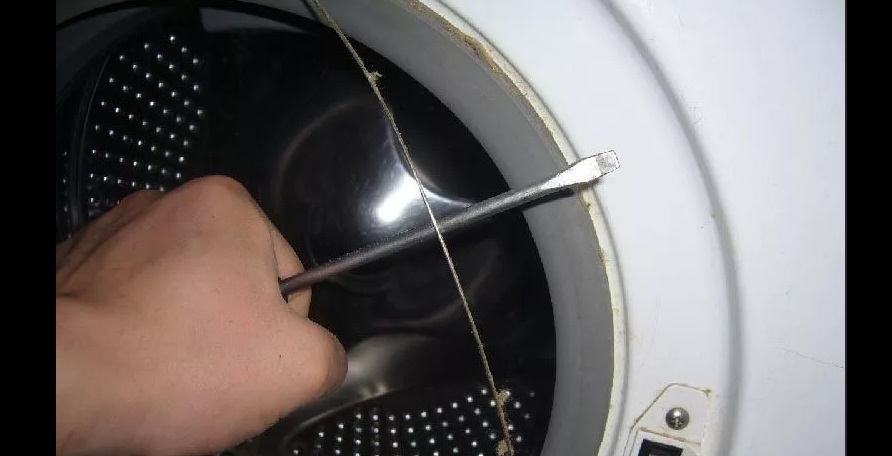
- Use a screwdriver to pry up the holder and then work along it to locate the mount.
- Loosen the fastener and move the clamp aside.
- Return the cuff to its normal position to find the inner clamp.
Removing the internal clamp is much easier after dismantling the front panel of the washing machine body, so it is better to remove it first.
- Use a screwdriver to pry up the clamp, then loosen it, but do not remove it, as it will not prevent you from turning the rubber band over.
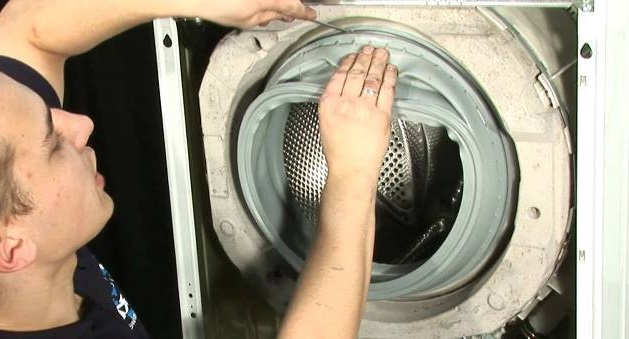
- Turn the seal so that the hole is at the top point.
- Install all the clamps in their places, unscrew the cuff, and also return the front wall of the machine if you dismantled it earlier.
At this point, you'll need to ensure the seal is securely in place and fastened with clamps. Try closing the appliance door—if it clicks shut, everything is fine. Feel free to run any cycle to ensure the washing machine is leak-free.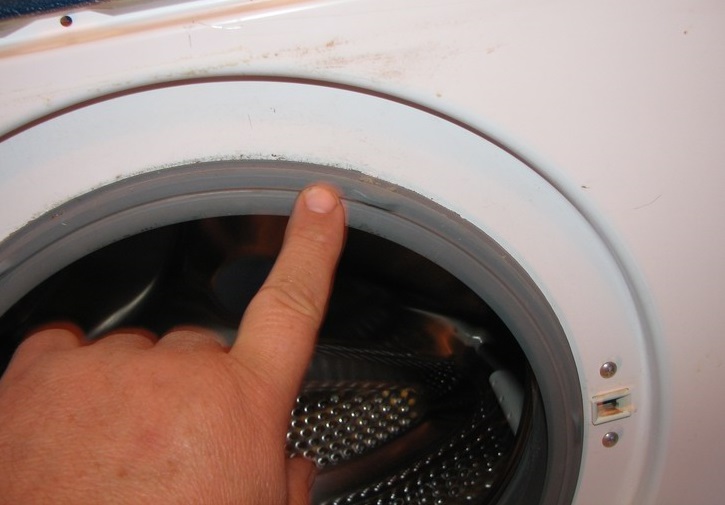
When repairing, avoid using sharp objects and be extremely careful not to accidentally damage the seal further. Also, avoid using force to turn the element over, as this can cause permanent damage. Use safe tools and carefully follow our instructions to restore your favorite "home helper" to working order.
Interesting:

Readers' comments
Headings
Washing machine repair




For buyers




For users


Dishwasher




Add a comment