How long does it take for water to heat up in a washing machine?
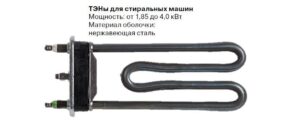
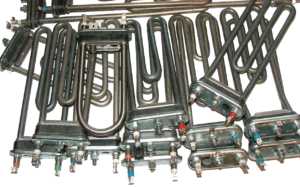
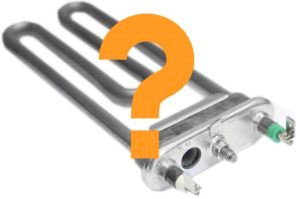
It doesn't take long for the water in a washing machine to heat up. This is primarily due to the high power of the tubular electric heaters (or heating elements) in modern machines. Furthermore, these machines draw much less liquid than older models. Let's explore how long it takes for water to heat up, why it heats up much more slowly over time than it did immediately after purchase, and how to fix this problem.
How fast does heating occur?
A properly functioning heating element with an average power rating in new appliances can bring the water temperature to 90 degrees Celsius in an average of 15 minutes. If the heater is particularly powerful, this happens much faster, in 5-7 minutes. However, the device will consume more electricity.
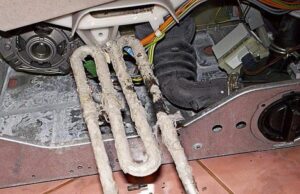
Some users note that even for a quick wash at 40 degrees, the water heats up too slowly. The reason for this is quite simple. Heating elements are fragile and susceptible to external influences. Lint sticks to the heating element, causing it to burn, and limescale deposits form. The thicker the deposits, the less heat output from the heating element.
Important! A scale-covered heating element operates twice as slowly, and over time, it stops working altogether, forcing the owner to replace the element.
To ensure proper and trouble-free operation, certain measures must be taken. First, it's important to use special water softening filtration systems. This is both safer and cheaper than specialized chemical solutions sold in hardware stores. Second, many experts recommend periodically cleaning the inside of the washing machine with a concentrated citric acid solution.
You need to be very careful with acidic compounds. When exposed to a heating element coated with a centimeter-thick layer of limescale, large pieces of hardened limescale fall off and can become stuck between the drum and the heating element. As a result, the machine will jam, and the heater will crack, break, and the device will stop working.
To avoid such problems, it's recommended to remove the heating element before cleaning. Clean it of any deposits and then reinstall it. Even after thorough cleaning, preventative measures should be taken (using filters and cleaning the drum with citric acid).
Finding the heating element
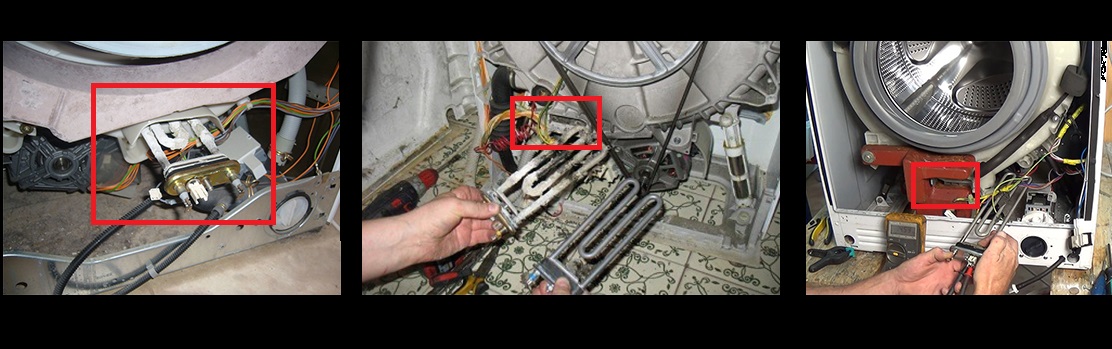
If the heater appears to be broken, you'll need to access it. To do this, consult the appliance's manual. Some washing machines have the heater located in the front, while others have it in the back. If a visual inspection reveals a large, removable part at the back of the machine, taking up almost the entire wall, the heater is most likely located there.
It also happens that the rear removable part is too small. In this case, it's unlikely that the heating element is located at the rear.
Depending on which side the heating element is located, either the rear or front wall of the machine is removed.
If you're unsure about the heater's location, it's best to first remove the removable element at the back. This is much easier to access than the front element. That's why experts recommend opening the back cover first and carefully inspecting the insides.
An alternative method is also suitable. There is a list of washing machine models with a rear-mounted heating element: Zanussi, Candy, Electrolux, Ariston, Indesit, Ardo, and others. In Hansa models, the element can be accessed through the base panel. If the machine is a top-loading machine, the heating element is usually accessed through the side of the machine.
Replacing a part
First, drain all remaining liquid from the tank. To do this, you can place the drain hose at floor level or remove the drain pump filter. It's important to place a large rag or basin underneath to avoid flooding the neighbors below.
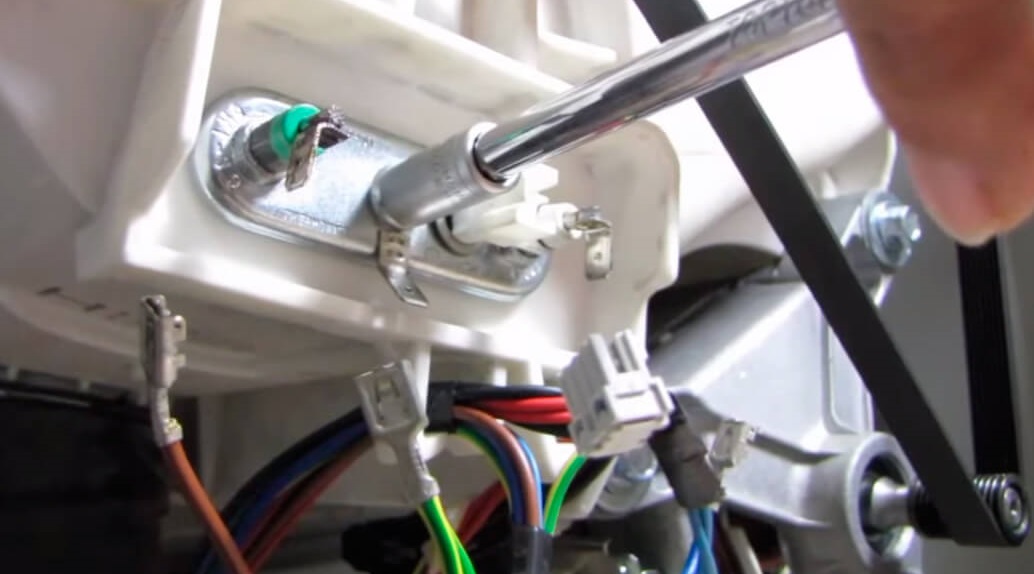
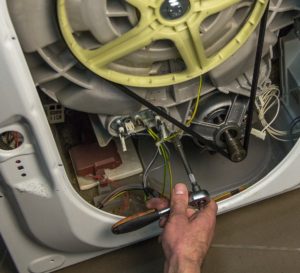
Then the wires that are attached to the heating element are disconnected. The nut located in the middle is partially unscrewed, and the threaded stud is driven inside. For this purpose, you can use a hammer to gently tap the surface. The electric heater is then secured with a sharp object (a knife or screwdriver) and carefully removed from the tank. Be very careful not to damage the seal.
After disassembling, check the heating element for proper operation. If it malfunctions, a new part must be purchased. It is inserted into a special hole, carefully monitoring its position. It must be exactly the same as the previous heater that failed. There must be no tilting or gaps. The next steps are as follows:
holding the heating element with your hand, tighten the nut;
do not tighten too tightly, otherwise you may push the heater out of its place;
secure the wiring.
Once all the steps are complete, run the wash cycle without loading anything. For example, you can set the program to 60 degrees Celsius. If everything is OK (the water in the washing machine will heat up), replace the removed housing. The machine is ready for active use again!

 It doesn't take long for the water in a washing machine to heat up. This is primarily due to the high power of the tubular electric heaters (or heating elements) in modern machines. Furthermore, these machines draw much less liquid than older models. Let's explore how long it takes for water to heat up, why it heats up much more slowly over time than it did immediately after purchase, and how to fix this problem.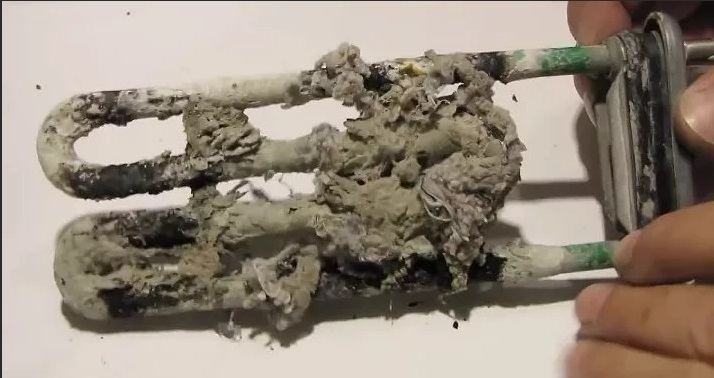














Add a comment