
Washing machine covers: pros and cons
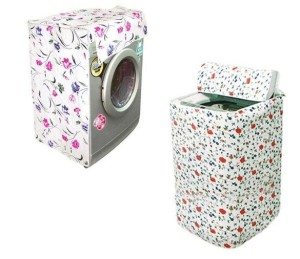 As with all appliance accessories, different people have different opinions on how necessary a washing machine cover is.
Some consider it indispensable in terms of functionality and quite useful, while others believe it's not only a waste of money but also more harmful than useful. Both points of view have a grain of truth. We'll explore this issue in more detail, but first, let's explore the different types of cases available.
Ready-made case
A wide selection of ready-made covers is available in stores. They are made primarily of polyester, whose key properties include durability, lightweightness, and waterproofness. The selection includes covers for both front-loading and top-loading washing machines. Prices range from $2 to $5. You can choose a cover that covers the entire machine or just the top.
Often, ready-made covers are equipped with pockets for small items, and they allow you to load laundry into the machine without completely removing the cover.
Cover sizes generally correspond to standard washing machine dimensions. If your model has non-standard dimensions, you'll need to have a custom-made cover or make one yourself.
DIY car cover
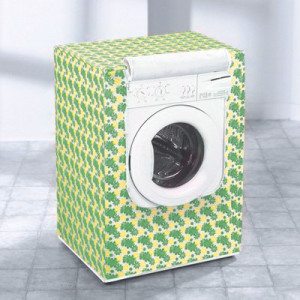 The downside of ready-made cases is, of course, the limited choice of colors and sizes. If you need something unique, you can make your own case. In this case, the options are unlimited.
A simple, practical cover can be sewn from polyethylene or oilcloth, and if its main purpose is decorative, then any thick fabric will do.
This cover will help you seamlessly integrate your washing machine into your interior, making it an original and unique detail. Everything depends solely on your imagination and desires. Your appliance can be transformed into a spaceship, a jeans pocket, a cheerful flowerbed, or something completely unusual.
The main thing is to correctly measure the dimensions of the car and build the pattern based on them. It's important to keep in mind that the back of the machine must remain open, so it's best to plan ahead for securing it using Velcro or rubber bands. Also, be sure to ensure easy and convenient access to the control panel and loading door.
What is the purpose of a washing machine cover?
First and foremost, the cover serves a protective function, protecting the washing machine from dirt, scratches, etc. This is especially important if the washing machine is located in the kitchen, where it can be exposed to splashes of grease, sauce, food scraps, and other organic debris. Furthermore, the risk of scratching the washing machine in the kitchen is significantly higher, as people spend more time there than in the bathroom and are more active.
A waterproof case is essential for those who often get water on the control panel. This could lead to irreversible consequences, requiring expensive repairs or even complete replacement. In this case, a cover is simply irreplaceable.
Having small children in the house is often cited as a reason for purchasing this accessory. In this case, a cover is necessary to prevent them from playing with the machine, pressing buttons, or accidentally starting a wash cycle, which can be quite dangerous.
Finally, the cover can serve a decorative purpose. It will help blend the washing machine harmoniously into the interior, making it more discreet.
If your washing machine is located, for example, in the hallway and also doubles as a small storage unit, a cover is indispensable both as protection against damage, which is most likely here, and as a detail that allows you to integrate the appliance into an unusual location. If the cover is designed with imagination, it can even become a real decoration for your home.
What should you consider when using a case?
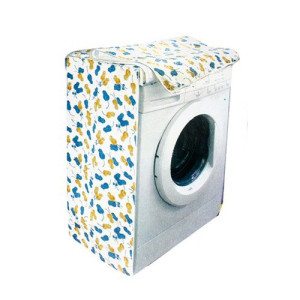 If you've decided you absolutely need a cover, you need to pay attention to the following details. Any electrical appliance with a heating element requires heat dissipation. This is why experts recommend removing the cover while the machine is in use, even if the door and control panel are accessible. Fabric can impede heat dissipation, which will certainly negatively impact the washing machine's performance.
Use waterproof covers with caution - it's best not to put them on the washing machine until it's completely dry. Accumulating moisture can lead to the formation of rust, which is detrimental to the operation of the electrical appliance.
Pros and cons
So, the advantages of a washing machine cover are:
- Protection from dirt and mechanical damage;
- Water protection;
- Child protection;
- Decorative function.
Cons:
- Difficulty in heat dissipation;
- Possibility of rust formation.
Interesting:




Readers' comments
Headings
Washing machine repair




For buyers




For users


Dishwasher




Add a comment