
How to clean a Bosch tumble dryer
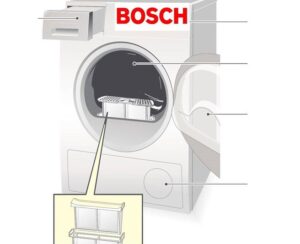 Dryer users rarely forget to clean the lint filters, as they're located right in plain sight—just behind the appliance's loading door. Therefore, even with the naked eye, you can spot signs that the lint filters are clogged. However, a thorough cleaning of a Bosch dryer involves more than just these filters; other key components of the dryer often suffer from dirt. Let's explore what else you need to clean periodically to keep it running perfectly.
Removing dirt from the heat exchanger
First of all, it is worth mentioning the heat exchanger of household appliances, which must be cleaned manually at least once a month. Cleaning it is extremely important, as foreign objects, dust and various contaminants directly affect drying, reducing its efficiency and increasing the duration of the cycle.
The frequency of cleaning depends solely on how often the owner uses the machine.
To perform preventative cleaning yourself, first unplug the appliance and wait for it to cool. Then, be sure to place old towels or other rags underneath the appliance to prevent any residual water from spilling onto the flooring. This completes the preparatory stage, and you can proceed to the cleaning process itself.
- Access the heat exchanger door, which is located at the bottom of the front panel of the dryer.
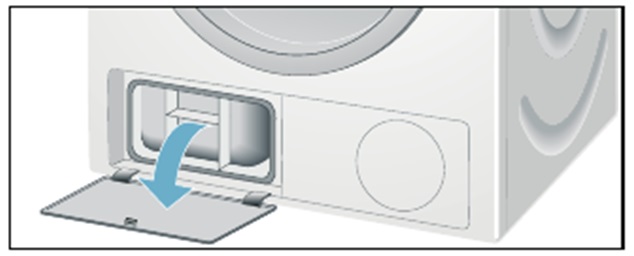
- The door can be located either on the right or left side under the loading hatch. This depends on the manufacturer and model of the appliance.
- Open the door and then turn both levers of the unit towards each other, which is necessary to remove the top cover of the unit.
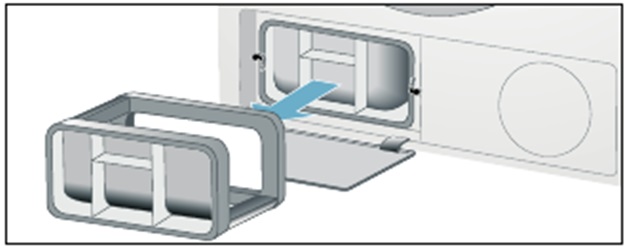
- Now carefully remove the element.
- Clean the part thoroughly using a strong stream of tap water.
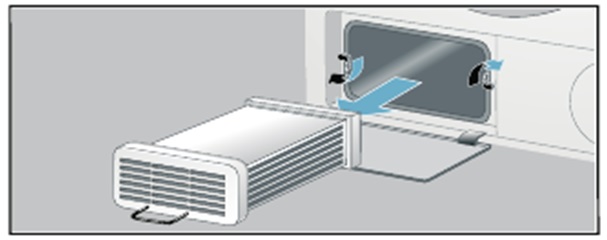
- If you notice any heavy dirt, remove it with soft sponges and cloths. Avoid using sharp objects or harsh tools with abrasive surfaces, as they can easily damage the heat exchanger.
- Don't forget to remove any lint and dirt not only from the main part, but also from the seal.
Don't wait for the element to dry completely—you can reinstall it immediately after all the liquid has drained. Carefully place the part in its seat, then secure it using the protective cover and the locking levers returned to their original positions.
Ultimately, cleaning a heat exchanger yourself is very simple, as you don't need any special tools or specialized appliance disassembly skills. This repair can be completed in about half an hour, so there's no need to be afraid of this process or put it off.
Where does dirt and dust come from in the dryer?
A monthly dryer cleaning is necessary because lint, threads, dust, hair, fabric debris, and other debris accumulate in the dryer along with your clothes. Dirt can get into your dryer even if your clothes have just been washed, so don't assume your dryer is completely protected if it only dries freshly washed clothes. Dust on clothes is easy to spot whether you dry them outdoors or indoors—the dust will slowly fall off the clothes, becoming airborne and visible to the naked eye.
But if you replace line drying with a household appliance, all that dust will end up in the dryer's lint filter, not in the air or your lungs. While this is certainly beneficial for the user, it poses a risk to an expensive appliance. Due to the abundance of fine dust particles on clothes, the lint filter can become clogged after just a couple of cycles. Furthermore, after just five cycles, it will require a complete cleaning.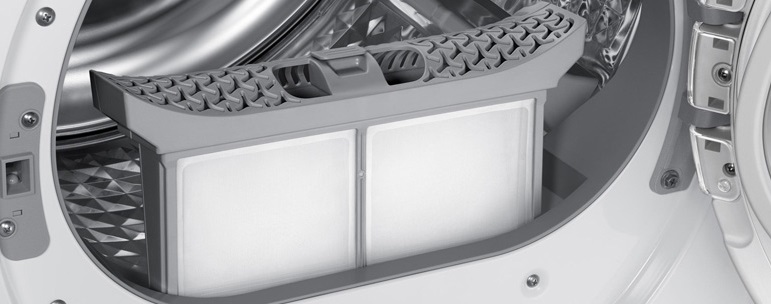
That's why the manufacturer recommends a thorough cleaning after each drying cycle, not just once a month, to prevent any negative consequences. Therefore, there's no need to worry about dust inside the dryer; it's perfectly normal. On the contrary, it's actually a good thing that dust clogs the lint filter rather than seeping into the apartment. This poses no health risks, and the dryer can be easily cleaned.
Try cleaning it yourself several times a month or more often – this will help your unit last longer. Cleaning is simple – just remove the lint filter, hold it under running water, gently clean it with sponges or brushes, and then replace it. You can combine this procedure with cleaning the heat exchanger and other components, saving time and optimizing maintenance.
We remove dirt from other elements
Bosch products feature a special moisture sensor that measures the moisture level of clothes during drying. This element is made of stainless steel, making it reliably protected from damage. However, it still sometimes becomes coated with limescale, plus particles of household chemicals, which should be removed from time to time so that the deposits do not affect the performance of the sensor. This is very important, because if the part's parameters are incorrect, it will directly affect the drying quality.
To clean it, simply open the door, access the sensor, and gently wipe away any dirt with a damp cloth. Do not clean the sensor with harsh brushes or other abrasive tools, as these could damage it just like the heat exchanger.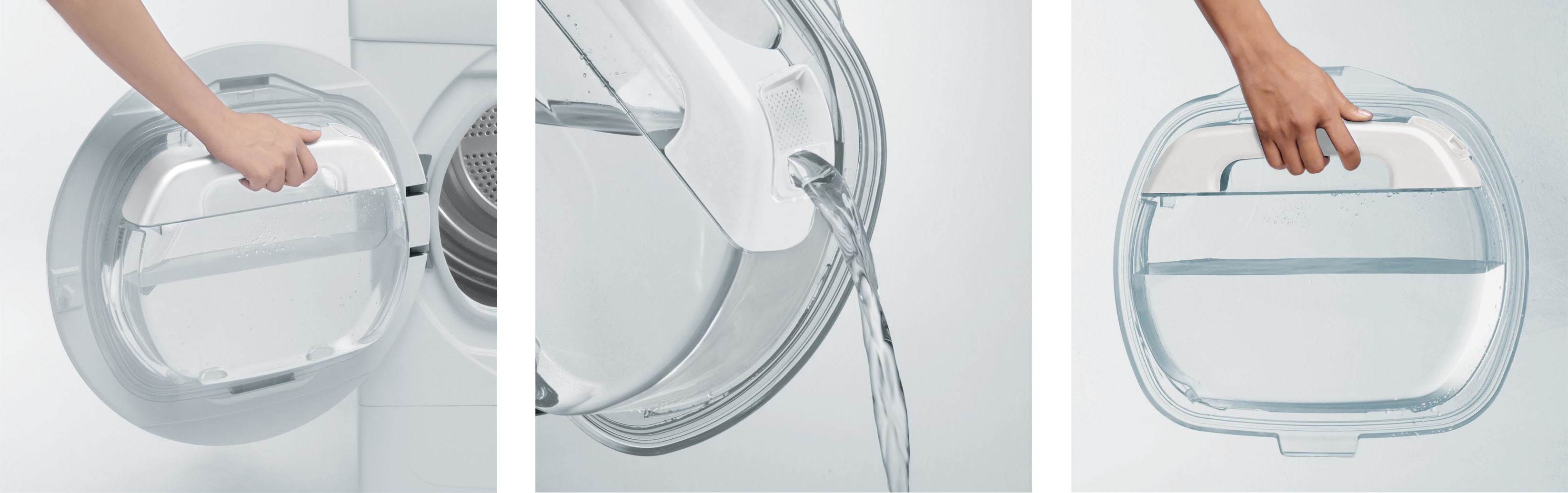
Finally, it's important to keep an eye on the condensate container, remembering to empty it after each drying cycle. Forgetting this special container can cause your dryer to fail to start the cycle because it has nowhere to drain the condensate that forms during the drying process. Emptying the container is very simple: simply remove the container, holding it horizontally, drain all the condensate, and then replace the compartment, ensuring it's securely in place. A thorough cleaning of the dryer takes less than half an hour, so it's simply unwise to ignore it, given how essential it is to the appliance.
Interesting:


Readers' comments
Headings
Washing machine repair




For buyers




For users


Dishwasher




Add a comment