Household appliances such as a microwave oven, stove, refrigerator, and washing machine need to be cleaned and maintained in a timely manner.
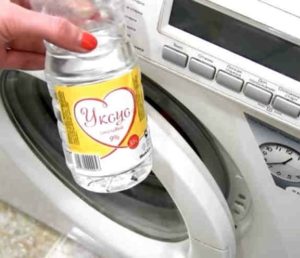
There are a ton of specialized products lining the shelves of household cleaning stores. However, experienced homemakers recommend not rushing into buying anything, but rather trying vinegar first—a handy remedy found in almost every home.
Let's figure out how to use it correctly to clean a washing machine.
Cleaning your washing machine: step-by-step instructions
Warning! Some visitors to our website have reported that acetic acid can damage their washing machine! You are solely responsible for any use of this product. You can read reviews of this product in the comments below.
Wet a cloth in a weak vinegar solution (50 ml of vinegar per liter of water) and wipe the drum and rubber cuff.
Run a short wash cycle without any detergent or cleaning agent to ensure that all remaining limescale and vinegar particles are removed.
Wipe the internal parts of the machine, including the powder tray, with a dry cloth.
Note! To obtain 200 ml of 9% vinegar from 70% vinegar, take 24 ml of vinegar (5 tsp) and add 176 ml (12 tbsp) of water.
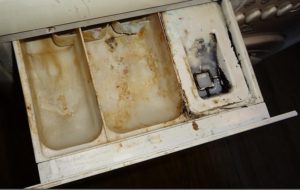
You can also use vinegar to clean the detergent drawer from limescale and stone deposits. To do this, pour hot water (900C) and add 250 ml of 9% vinegar. Place the tray in this solution and leave overnight. Choose a container that fits well and the water completely covers the tray compartments. After soaking, the container can be cleaned with a sponge, then rinsed and wiped with a dry cloth.
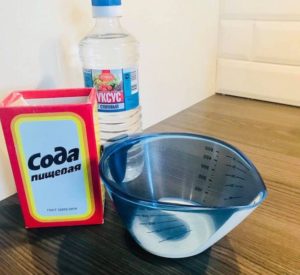
To clean the litter box, you can use a paste of baking soda and vinegar. Leave the paste on for a while, then use an old toothbrush to scrub away any residue and rinse the litter box. Wipe it dry and replace it.
Cleaning with vinegar: pros and cons
Cleaning your washing machine with vinegar has its pros and cons. Vinegar is a powerful cleaning agent. Its advantages are:
It does a good job of removing scale from the internal parts of the machine;
eliminates unpleasant putrid odors and the smell of stagnant water;
costs several times less than specialized cleaning products.
The main disadvantage of using vinegar is its pungent smell. Therefore, to ensure better rinsing, you can set the extra rinse cycle. The room where the washing machine is located should be well ventilated. Also, be careful when using vinegar. High concentrations of vinegar can negatively affect the rubber seals, causing them to harden and eventually break.
Alternative cleaning methods
Vinegar isn't the only way to clean limescale and scale from a washing machine. Citric acid is a good alternative. Housewives even prefer citric acid over vinegar. Cleaning a machine with citric acid is just as easy as with vinegar. However, citric acid can be added not only to the detergent drawer but also to the drum itself. The entire process is described in detail in the article on... How to clean a washing machine with citric acid.
Another effective and inexpensive product that helps clean the tray, drum and cuffs of the washing machine is baking sodaIt helps kill mold and mildew. Cleaning with baking soda also eliminates unpleasant odors.
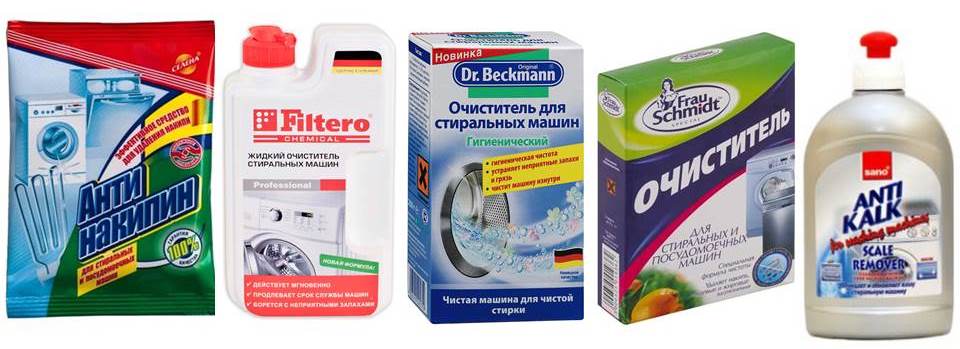
To clean an automatic washing machine, you can use specialized products such as:
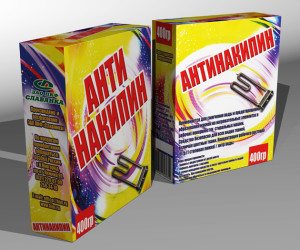
Antiscale;
Filtero;
Dr. Beckmann;
Descaler;
Frau Schmidt cleaner;
Five Plus;
AntiKal.
This is just a small list of products you can use to clean your washing machine. Today, manufacturers offer their own cleaning products, such as descaling solutions from Bosch, Electrolux, Candy, and others. Cleaning with these products must be carried out strictly according to the instructions indicated on the packaging. As for the effectiveness of each of them, the only way to know for sure is to try the product. And only through trial and error can you find one that suits you in terms of both quality and price.
So, cleaning your washing machine with harsh chemicals, including vinegar, should be done every six months. However, for preventative maintenance, certain products can be used with almost every wash cycle, such as: Calgon Or Alfagon. Keep your machine clean, and it will last much longer.
What "salumin"? A lousy "Master"! Maybe it's Silumin, an alloy consisting of aluminum, silicon, and a small amount of impurities? Chemical composition: 5-23 percent Si, mostly Al. P.S. After using a 9% vinegar solution, simply rinse the washing machine thoroughly. In 30 years of repairing dishwashers, I've never encountered a breakdown due to "acid eating the aluminum"!
Lately, I've been adding 9% vinegar to the rinse aid compartment. It holds a maximum of 100 ml. Today, there was some water left over from the previous wash, so I added about 1 teaspoon of essence. After the wash was finished, when I opened the compartment, there was smoke coming out with a burning smell. Can anyone tell me what I might have dissolved with such a small amount of vinegar that it was smoking? 🙁
My washing machine has started leaking during washing. It's also malfunctioning, as I constantly add Calgon to my laundry. What's wrong with it? What can I do at home?

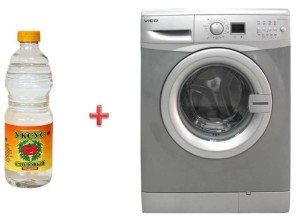 Household appliances such as a microwave oven, stove, refrigerator, and washing machine need to be cleaned and maintained in a timely manner.
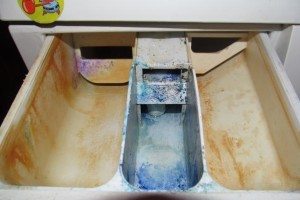 You can also use vinegar to clean the detergent drawer from limescale and stone deposits. To do this, pour hot water (900C) and add 250 ml of 9% vinegar. Place the tray in this solution and leave overnight. Choose a container that fits well and the water completely covers the tray compartments. After soaking, the container can be cleaned with a sponge, then rinsed and wiped with a dry cloth.
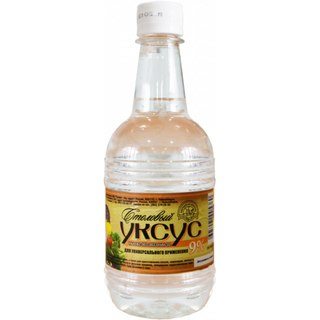 Cleaning your washing machine with vinegar has its pros and cons. Vinegar is a powerful cleaning agent. Its advantages are:
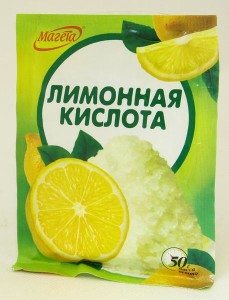 Vinegar isn't the only way to clean limescale and scale from a washing machine. Citric acid is a good alternative. Housewives even prefer citric acid over vinegar. Cleaning a machine with citric acid is just as easy as with vinegar. However, citric acid can be added not only to the detergent drawer but also to the drum itself. The entire process is described in detail in the article on... How to clean a washing machine with citric acid.
 This is just a small list of products you can use to clean your washing machine. Today, manufacturers offer their own cleaning products, such as descaling solutions from Bosch, Electrolux, Candy, and others. Cleaning with these products must be carried out strictly according to the instructions indicated on the packaging. As for the effectiveness of each of them, the only way to know for sure is to try the product. And only through trial and error can you find one that suits you in terms of both quality and price.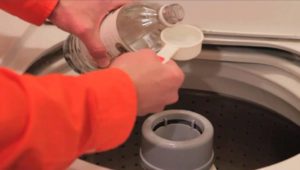















Acid eats aluminum, it's the tank crosspiece, $0.02–$0.15! Cleaned it properly!!!
What "salumin"? A lousy "Master"! Maybe it's Silumin, an alloy consisting of aluminum, silicon, and a small amount of impurities? Chemical composition: 5-23 percent Si, mostly Al.
P.S. After using a 9% vinegar solution, simply rinse the washing machine thoroughly. In 30 years of repairing dishwashers, I've never encountered a breakdown due to "acid eating the aluminum"!
Good evening, can anyone tell me if vinegar will have any negative consequences for the washing machine?
These "masters" should be wiped out! Or shot with a slingshot. Excellent article!
What idiot wrote this advice? Your vinegar split my heating element! Replacement costs 3,000. Thanks, damn it!
Why is this heating element so expensive? I replaced it a week ago, it costs $4.50, and it takes 10-20 minutes to do it yourself.
The heating element split from the vinegar?! 🙂 Either he was already dying, or you're a storyteller 🙂
Lately, I've been adding 9% vinegar to the rinse aid compartment. It holds a maximum of 100 ml. Today, there was some water left over from the previous wash, so I added about 1 teaspoon of essence. After the wash was finished, when I opened the compartment, there was smoke coming out with a burning smell. Can anyone tell me what I might have dissolved with such a small amount of vinegar that it was smoking? 🙁
My washing machine has started leaking during washing. It's also malfunctioning, as I constantly add Calgon to my laundry. What's wrong with it? What can I do at home?