
What can I add to my washing machine for bleaching?
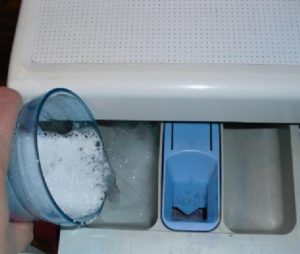 The modern automatic washing machine has become an indispensable household assistant. It can not only wash, but also spin, rinse, soak, and even boil or bleach laundry if needed. Some models can even dry clothes—all you have to do is empty the drum and put everything away.
Some housewives are wary of using bleach in their washing machine. This is a shame, as bleach doesn't harm the appliance, even if it contains chlorine. Let's explore what you can add to your washing machine to whiten light-colored fabrics.
Oxygen bleaching compounds
Products based on sodium carbonate peroxyhydrate are very popular. Oxygen bleaches are the safest, do not destroy fabric fibers, do not fade colors, and remove the most difficult stains. They also contain soda, which softens water, which means it cleans the material more effectively and reduces the risk of scale buildup on machine parts.
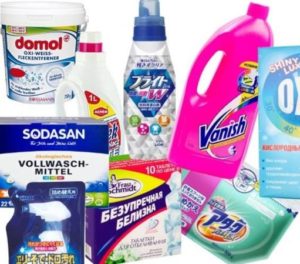
Let's present a rating of the best whitening products with active oxygen.
- ECO-Way OXYGEN oxygen bleach and stain remover. Suitable for both white and colored items, this powder can be used both during soaking and as an additive to the main detergent during washing. Easily removes greasy stains, grass stains, makeup, wine, and blood. Phosphate-free. Suitable for all fabrics, including delicates. A 600-gram package costs approximately $3.20.
- Lion Clean Plus is a Korean oxygen bleach designed for removing tough stains. It effectively removes fruit, juice, rust, and grass stains, and helps remove gray and yellowish tones from white clothing. It contains enzymes—natural enzymes that break down the molecules of various stains. It is hypoallergenic and can be used for washing children's clothes. It is equally effective on both light-colored and colored fabrics. It is chlorine-free. The average price of a can of powder is $7.
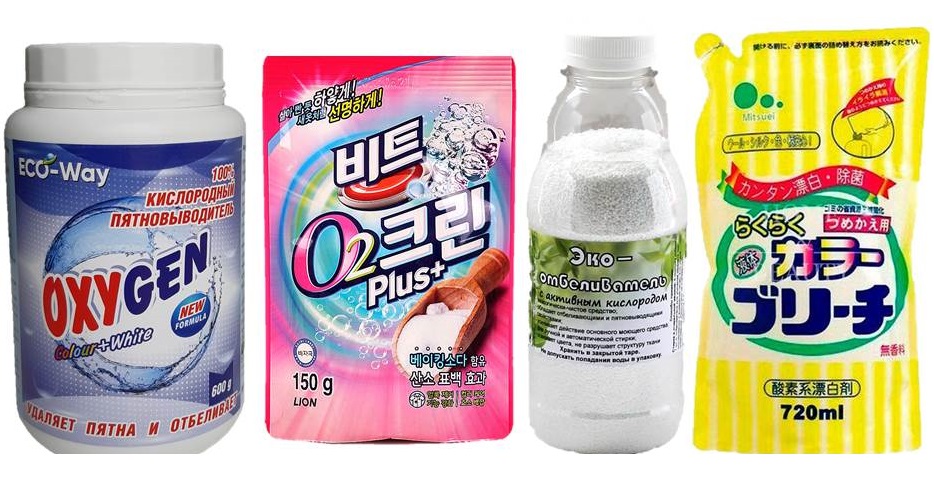
- Elibest Eco-Bleach with active oxygen based on sodium percarbonate. This product gently cleans fabrics without damaging the fiber structure, has a disinfecting effect, rinses completely from the material, and combats various stains. It's economical to use—for machine washing, you only need to add a spoonful of bleach granules to your laundry detergent. A 1.2 kg bottle costs approximately $3.60.
- Mitsuei Colored Bleach. The key feature of this Japanese product is that it removes tough stains without damaging the pigment. It works effectively even in cold water, below 30°C. In addition to its cleansing properties, it neutralizes unpleasant odors and has antibacterial properties. A liter bottle costs about $3.50.
- Persol Extra, an affordable oxygen bleach from a Russian manufacturer, is chlorine-free and suitable for washing all fabrics except silk. It easily removes stains from berries, coffee, blood, wine, and cosmetics. It can be used as an additive to your regular detergent. Simply add 1 tablespoon of granules to the bleach compartment along with your laundry detergent and run the cycle. Suitable for whites only. A 200-gram package costs approximately $1.20.
Bleaching agents with active oxygen do not contain chlorine, are safe for clothes and human health, and rinse out well from fabric fibers.
Oxygen bleaches can be used at home to clean heavily soiled delicate fabrics and refresh items. Housewives are very pleased with the results of using sodium percarbonate-based products.
Optical brighteners
The principle behind this product is simple: its particles penetrate and remain in the fibers of the fabric, subsequently reflecting light rays. This creates the illusion of a snow-white finish when light hits the garment. After soaking or washing with optical brightener, the laundry appears several shades whiter.
The main drawback is that the composition cannot be rinsed out of the material, so it can cause an allergic reaction. Optical brighteners are prohibited for use on children's clothes and are not recommended for use on bed linen.
Among the products with optical components, the following can be distinguished:
- Dr. Beckmann "Dazzling White" Bleach helps refresh whites that have acquired a gray or yellow tint due to frequent washing or long-term storage. Its optical components reflect light in the 300-400 micron range, making clothes appear pristine white. Suitable for washing all fabrics, including delicates. An 80-gram packet costs approximately $1.30.
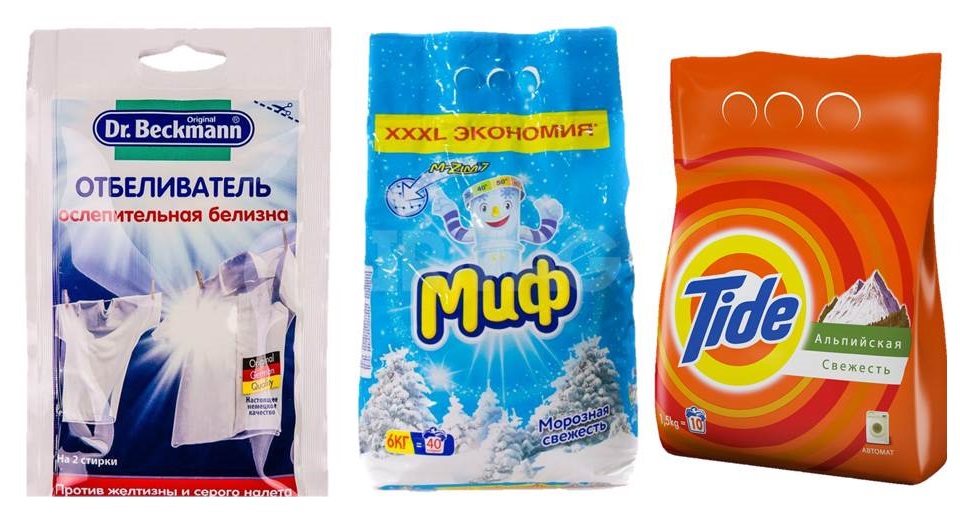
- Myth "Frosty Freshness" laundry detergent. Suitable for both machine and hand washing. Effectively removes stains while maintaining the fabric's brightness. Enzymes help quickly remove stubborn stains, such as lipstick, coffee, chocolate, and berry stains. Washed laundry acquires a delicate, subtle scent. Optical brighteners create a sparkling white effect. A 6 kg package costs approximately $5.50.
- Tide "Alpine Freshness" is a laundry detergent with optical brighteners. Suitable for cotton and synthetic fabrics of all shades, it removes a variety of stains, leaving clothes spotlessly clean. Contains enzymes, which enhance the product's effectiveness in removing stubborn stains. A 6 kg package costs approximately $6.70.
Thus, optical brighteners provide only a visual effect—in sunlight, items appear snow-white. It's important to remember that particles of the substance remain in the fabric fibers and are in constant contact with the skin. This can cause an allergic reaction.
Chlorine bleaches
The use of chlorine-containing products is widespread. These compounds have many advantages, including low cost, a long shelf life, effectiveness even in cold water, and fast action. Disadvantages include a distinctive unpleasant odor and the need to exercise caution when bleaching.
Among the chlorine-containing bleaches, I would like to highlight several.
- Mitsuei is a liquid chlorine bleach for cotton and synthetic fabrics. It can only be used on white items. It removes stubborn stains and helps combat yellowing on fabrics. A 720 ml bottle costs $2.20.
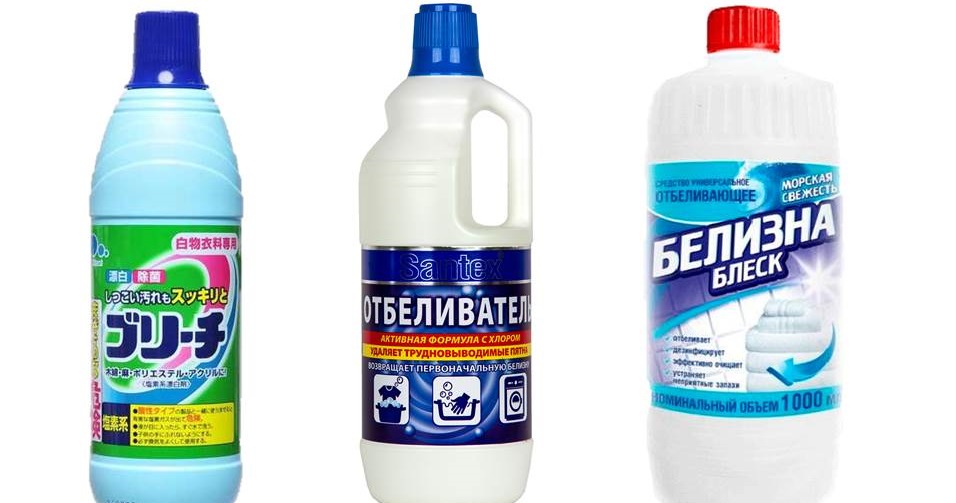
- Santex bleach restores your clothes to their original whiteness. Its active chlorine formula quickly removes stubborn stains. Suitable for soaking, hand washing, and machine washing. A 1-liter bottle costs just $0.65.
- Bleach is a familiar product. It's designed to remove stains and restore color to white cotton and linen fabrics. It quickly dissolves and removes stains, completely rinsing from the fibers. It's for hand washing only. A liter bottle costs about $0.75.
Chlorine bleaches can only be used on white items.
Chlorine-containing compounds are as effective as expensive antiseptics, providing a similar disinfecting effect. However, continuous use of such bleaches can weaken the fabric.
Which compartment of the tray should I pour bleach into?
Housewives who decide to remove old stains or bleach items at home in an automatic washing machine often wonder where to pour the cleaning agent. The drawer of a modern washing machine consists of three compartments. Choosing the right compartment will determine the quality of the wash.
The smallest compartment in the dispenser is for fabric softener or antistatic agent. The machine uses these products at the end of the wash cycle, during the rinse phase. Manufacturers mark this compartment differently. Some models have a blue container, others have a snowflake or flower symbol, and still others have the word "Softener" written on the label.
The medium-capacity compartment is marked with the symbol "A" or "I." Fill this section if you plan to soak items or run a prewash cycle.
The largest compartment is for detergents used for the main wash. Into the powder receiver cell marked with the symbol “B" or "II" and bleach is loaded. Therefore, it is important to remember that the most capacious section of the drawer is intended for both regular washing powder and bleaching agents.
Interesting:



Readers' comments
Headings
Washing machine repair




For buyers




For users


Dishwasher




Add a comment