
DIY projects from a washing machine pump
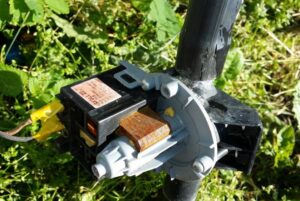 Don't rush to throw away that working pump from an old washing machine. It can be used to create some very useful DIY projects that any car owner will love. Essentially, a drain pump can be used to pump any liquid: water, motor oil, antifreeze, gasoline. The device runs on a regular power source, so we'll show you how to use it in your garage.
Device for washing car heaters
DIY projects using individual washing machine parts, such as the motor or pump, are very popular among handymen. What can you make from a drain pump? It's actually quite useful for car enthusiasts.
Using a pump from an automatic washing machine, you can quickly and easily flush your car's heater.
Every car owner faces the need to clean their heater every year. To keep the cabin warm and comfortable, it's recommended to "flush" the unit before winter. The process is well-known: drain the antifreeze from the system, add a flushing solution, start the car, and let the engine run for 20-30 minutes. It's best to repeat the flushing process several times.
But if you think about it, there's simply no need to circulate the flushing fluid throughout the entire car. After all, there's no deposits in the rest of the engine's system. And not everyone wants to waste gas just to let the engine run for a good half hour. A washing machine pump can help you effectively clean your car's heater.
If you approach the process from an engineering perspective, you can improve it with a simple DIY project. What you need to do is: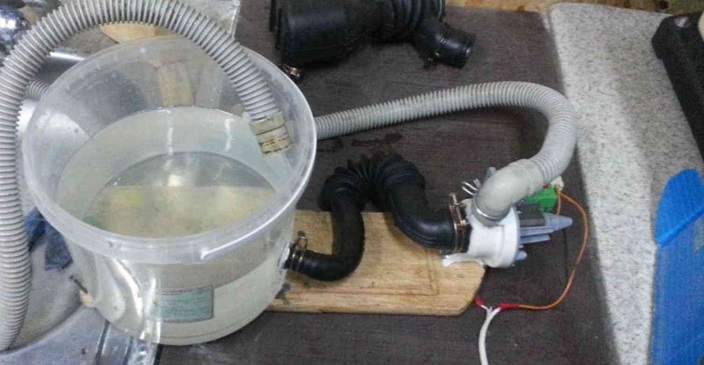
- drain the antifreeze from the system;
- disconnect both heater pipes;
- assemble the “chain”, namely connect the pump outlet hose to the heater, and place the pump inlet and outlet pipes from the “heater” in a five-liter container;
- mix hot water and washing mixture in the required proportions;
- pour the resulting solution into the pump-stove circuit;
- connect the cable with the power plug to the pump;
- install the element in the engine compartment, just above the car heater radiator;
- start the process by plugging the power cord into the outlet.
It is better to put a thin gauze over the outlet hose of the car heater - it will act as a coarse filter.
Nothing special will happen in the first few minutes, but things get interesting later. Various deposits will begin to come out of the heater, which will flake off under pressure. This cleaning will be much more effective than a regular wash. After fifteen minutes of pump operation, it's best to change the fluid in the container and restart the pump. The system will be flushed again with the clean mixture. After this, you should run distilled water through the circuit about 2-3 times.
Once you've finished cleaning the heater, all that's left to do is blow out any remaining liquid and debris and refill the system with antifreeze. Your car's heater will blow much hotter air than before. This simple DIY project will help you accomplish this task quickly and efficiently.
Mini car wash filling device
A car wash pump can be useful for making other garage chores easier for car enthusiasts. For example, if you constantly have to carry buckets of water and pour it into various containers, consider this cool idea. Using a pump from an old washing machine, you can "drive" water from one large barrel to different places, for example, to a mini sink and a wash basin.
Consider the power of the sump pump you have lying around in your garage. For example, a 34-watt pump will easily lift water to a height of over five feet. Based on this, consider what size barrel is appropriate for your situation.
Those who own a stationary mini car wash understand how much water it takes to "refresh" a car's body. It's not just one or two buckets. To avoid breaking your back every week, you can try setting up a "garage water supply" once a week. To connect the water to the mini car wash, you'll need: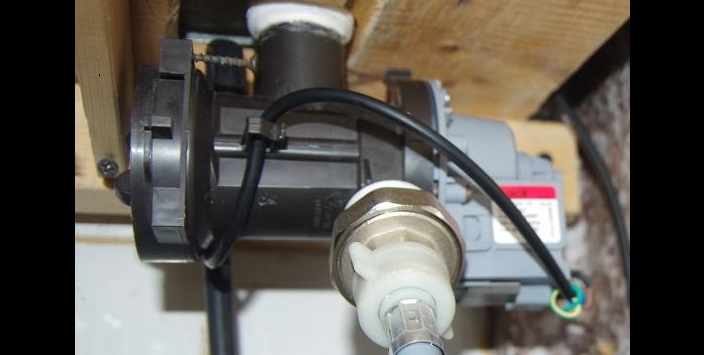
- Barrel. It's best to buy a 200-250 liter barrel right away;
- metal profile 20*40 mm for making a frame for a barrel and 1.1/2 inch pipes;
- A nipple for the pipe. You can buy a ready-made one of the required size or make one yourself from brass;
- drain pump from a washing machine;
- clamps for fastening the pump to a metal stand;
- tee tap;
- a hose of the required length (so that it reaches the mini-wash);
- power cord with plug.
The algorithm of actions will be as follows:
- Make a stand for the barrel from a metal profile. You can paint the "podium" if desired;
- install a fitting under the pump pipe into the bottom of the barrel;
- Secure the pump to a metal stand. You can use special clamps for this purpose;
- connect the pump pipe to the fitting screwed into the bottom of the container;
- Connect a tee valve to the pump outlet. This will allow you to turn the water supply on and off;
- screw a hose to the shut-off valve outlet;
- Connect the power cord and plug to the pump. It is powered by a 220-volt outlet.
If necessary, another hose can be connected to the tee tap and directed, for example, to the washbasin.
These DIY projects will definitely make life easier for car owners. So, if you have a washing machine drain pump lying around in your garage, don't rush to throw it away. It can be useful for both car maintenance and for setting up a dedicated water supply.
Interesting:
Readers' comments
Headings
Washing machine repair




For buyers




For users


Dishwasher




Add a comment