
What is Aquastop in a dishwasher?
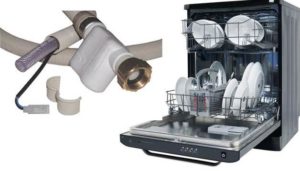 When reading a dishwasher's description, you might come across the "Aquastop" feature among other features. As the name suggests, this function shuts off the water supply to the system. Let's look at when this protection is activated and how it works.
What is this system for?
The pipes that supply water to apartments experience fairly high pressure. Furthermore, water hammer is common. All of this can trigger a leak. The Aquastop option in a dishwasher is necessary to protect the equipment from leaks.
The safety system in dishwashers operates on the same principle as, for example, in automatic washing machines. Upon detecting a leak, the appliance blocks the water supply and, in some cases, even initiates a drain. This helps prevent flooding in your apartment and your neighbors'.
Statistically, the Aquastop system prevents significant damage from leaks in 99.9% of cases. The likelihood of the system failing is very low. However, 100% protection cannot be guaranteed, so it's important to take every possible precaution against potential problems.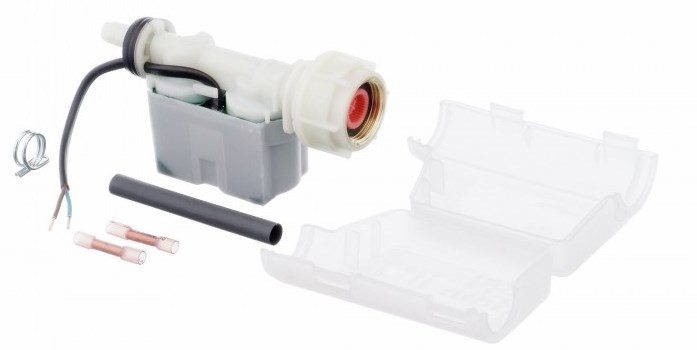
What measures should dishwasher users take to protect their appliance from leaks?
- Clean the dishwasher filter regularly.
- Wash the gel tray regularly to prevent clogging.
- Check the integrity of the sealing rubbers.
- Use only high-quality detergents designed specifically for dishwashers.
The Aquastop system in the PMM can provide full or partial protection against emergency leaks.
How can a safety system be designed? How exactly does a dishwasher detect a leak and block the water supply? Let's delve into the details.
Aquastop technical solutions
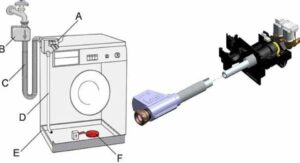
Today, almost all dishwashers have the Aquastop option. Budget-friendly models are equipped with a tray with a float, while mid- and high-end models also have an inlet hose with a special sensor. The former provides partial leak protection, while the latter provides complete protection.
Partial protection is the simplest option. In this case, a special tray with a float is installed underneath the dishwasher. An electric sensor is built into the foam. If water begins to accumulate under the machine, the ball will float. When it rises to a certain level, the protection system is activated.
The sensor immediately sends information to the control board. The dishwasher will stop working, interrupting the dish and mug cleaning cycle. The drain pump will then activate, draining the water from the appliance.
To continue using the dishwasher, you'll need to remove the drip tray and empty it. Then, be sure to identify and fix the leak. If you don't want to troubleshoot the appliance yourself, contact a service center technician for assistance.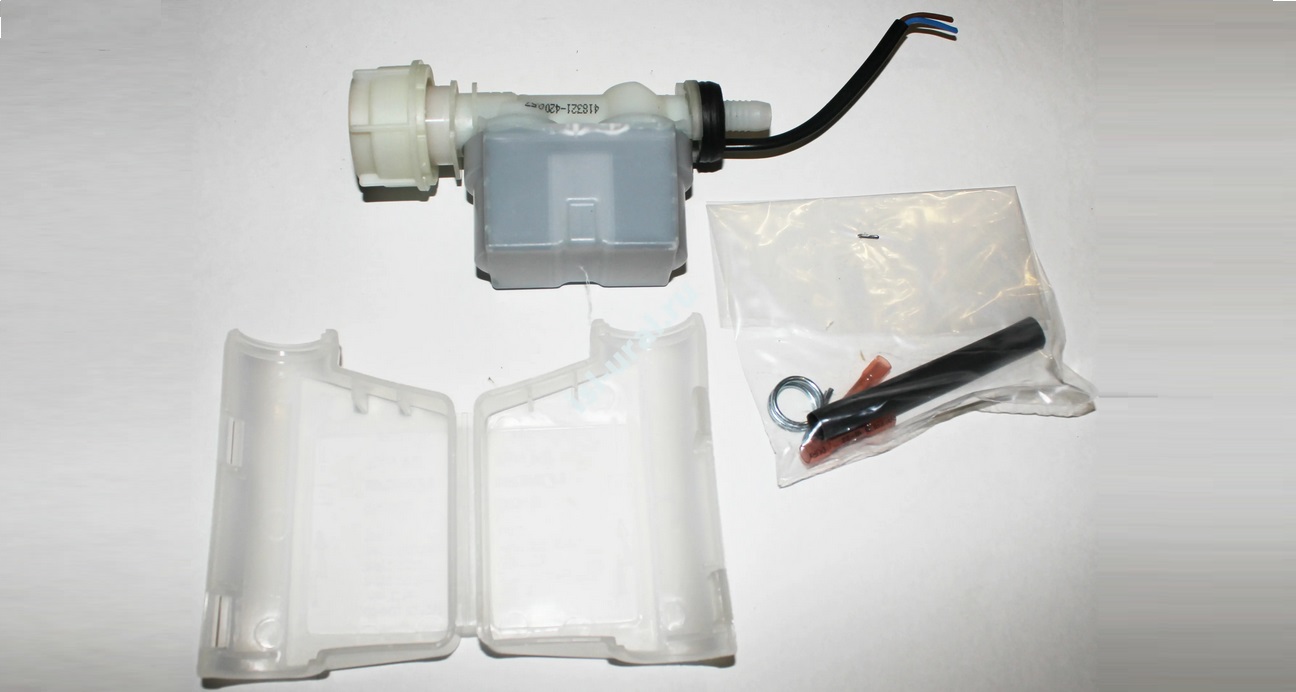
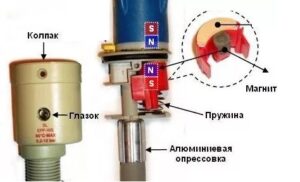
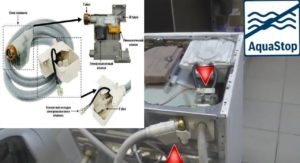
Absolute protection is recognized as the most advanced and can be found on mid- and high-end models. In addition to the tray, such dishwashers have an inlet hose with a special electromagnetic valve.
Magnetic valves open as water enters the chamber. When the machine reaches the desired level, a sensor transmits information to the module, and the inlet membrane automatically closes. This prevents overflow.
If the inlet hose becomes damaged, or the water level sensor or drain pump fails, the float pan comes into play. This is the second stage of the Aquastop system. Its multi-layered protection prevents leaks.
If the Aquastop function is activated, you'll also need to empty the drip tray and begin troubleshooting. Once you've identified the cause of the leak, fix it. Only then can you resume using the dishwasher.
Experts recommend purchasing dishwashers with complete, absolute protection against leaks.
Models equipped with an electromagnetic inlet hose and a drip tray provide both internal and external protection, minimizing the risk of overflow when filling the machine with water. Therefore, it's best to consider these dishwashers whenever possible.
What to do if leak protection is activated?
What should you do if the AquaStop in your dishwasher is activated? What should you do first? The protection system may be activated if:
- the drain pump is out of order;
- the sewer pipe is clogged;
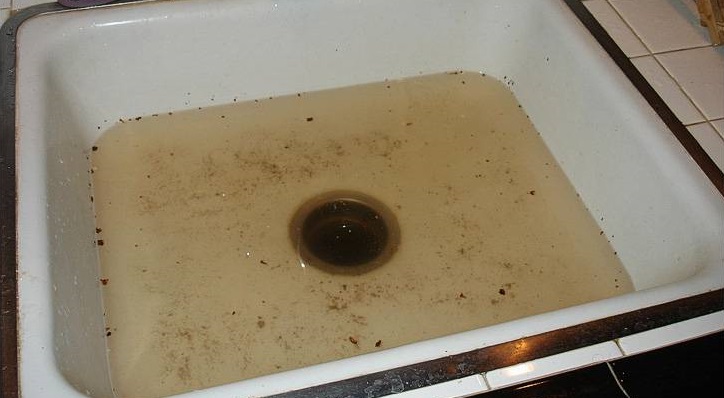
- the trash filter is clogged;
- water fills the machine in spurts (this may indicate that the inlet hose is pinched);
- the dishwasher chamber is not sealed properly;
- the car door broke;
- the impeller is damaged, etc.
If you notice that the Aquastop system has been activated, immediately disconnect the power to the dishwasher.
If a puddle has formed near the dishwasher, avoid contact with water. Stepping on a wet floor can cause an electric shock. If you can't reach the outlet and unplug the cord, turn off the power to the entire apartment at the circuit breaker. Next, turn off the water supply to the dishwasher. If there's a shut-off valve installed in the pipe upstream of the dishwasher, turn it off. If not, turn off the valve on the main riser.
Next, you'll need to drain the water from the tray and begin troubleshooting. If the filters are clogged, cleaning them will suffice. If the inlet hose is damaged, it will need to be replaced. Sometimes leaks are caused by poor-quality detergent, which creates excessive foam in the chamber. Once you've identified the problem, take steps to resolve it.
After repairing the dishwasher, you'll need to reset it. This will reactivate the Aquastop function. If the problem lies with the leak protection itself, it will need to be replaced.
Interesting:


Readers' comments
Headings
Washing machine repair




For buyers




For users


Dishwasher




Add a comment