
How to diagnose washing machines yourself – or how to identify a problem?
 A large number of different washing machines are produced today. And they can vary significantly in design, even if they are made by the same company. Some models from different manufacturers may share the same spare parts, while others may have little in common. Given the design features and differences between existing models, it is quite difficult to provide specific advice on how to diagnose washing machines yourself.
Again, it's certainly possible to examine each model individually and provide definitive recommendations on how to identify and fix problems specifically for it. However, describing all these models would be a very time-consuming task. Therefore, we will only discuss general recommendations below. These recommendations may apply to all washing machines in general. It's also worth keeping in mind that each individual model may have its own subtleties and nuances.
All types of machines have documentation and diagrams to simplify self-diagnosis of repairs. This information describes in detail the design, construction features, program and mode options, and other important information. These descriptions are typically available from various organizations, including those that professionally repair and maintain household appliances. It's also quite possible to find specific information about the washing machine you're interested in online. Now, let's discuss the most common malfunctions.
The water does not drain from the tank
If the water from the washing machine tank does not drain, there may be several explanations:
- First, the drain pump filter or the pump itself may be clogged. In this case, you'll need to clean the filter or pump. The filter is located at the bottom of the machine, hidden behind a special panel on the front.
- Secondly, the drain pump could simply be broken. Incidentally, this is one of the most common failures. If it is indeed broken, it needs to be replaced.
- A clogged drain hose or the one between the tank and the pump could also be the cause of this malfunction. Clearing these drains is essential to get the machine working properly.
The washing machine does not heat water.
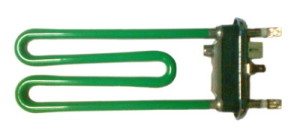 The heating element (TEN) heats the water in a washing machine. Heating element failure is also one of the most common problems. To diagnose this problem, set the wash cycle to a relatively high temperature—for example, 60 degrees Celsius. You can also set it higher.
Next, touch the door glass during the wash cycle. If it's significantly warmer than the room temperature, the heating element is fine. However, if the program is not running smoothly, or the door glass remains cold, it's possible the heating element is faulty. This malfunction can cause the following problems:
- The machine is filling with water.
- Then he begins to slowly rotate the drum.
- She waits for it to heat up, but it doesn't heat up.
- It just freezes and the wash doesn't continue.
In this case, you can continue washing in cold water. To do this, select a wash cycle without heat or set the temperature to zero. Alternatively, simply interrupt the wash cycle and replace the heating element.
The heating element is typically located at the bottom of the washing machine's drum. However, some models have it at the front, while others have it at the back.
The car is making noise
 It's also not uncommon to hear washing machine owners complain that their machines are excessively noisy. In this situation, there are several possible causes for the noise. Let's explore them:
- One of the most common causes of noise is a foreign object caught between the washer's tub and drum. Bra underwires are considered the most common type of foreign object. Other things can also accidentally get caught between the drum and tub, such as items forgotten in pockets or loose buttons. Determining whether a foreign object is the cause of the noise is easy. To do this, rotate the drum manually several times. If you hear a distinctive, loud noise, it's the foreign object. Foreign objects are removed through the opening in the heating element.
- It's also important to pay attention to when the noise occurs. If it occurs while the machine is draining, the culprit is a faulty drain pump. To fix the problem, you'll need to purchase and install a new pump.
- If your washing machine is making noise when the drum rotates, a foreign object or faulty bearings could be the cause. Replacing bearings yourself is not the easiest task, as accessing them requires disassembling almost the entire machine. If this amount of work isn't appealing to you, you can save yourself time and effort and call a professional.
- The noise could also be caused by improper installation of the washing machine or an uneven floor. To check this, push the machine from different sides. Be careful not to push too hard. If it's unsteady, you'll see it sway from one side to the other and hear the noise. To eliminate the noise, adjust the feet on the washing machine to ensure it's stable. The feet are located on the bottom of the machine. To adjust their size, simply twist them.
The washing machine drum does not spin.
There could be many reasons for this. For example, the drive belt could break, the module could be damaged, or the motor could fail.
- Let's start by checking the drive belt for damage. If you hear the motor running during the wash cycle, but the drum remains in place, the problem is with the drive belt. More specifically, it may be worn, slipped, or broken. To access the belt, you may need to remove the back cover. If your model has a non-removable back cover, remove the machine cover. If the belt is faulty, buy a new one and replace it.
- It's possible that the bearings are completely worn out or there's a foreign object between the tub and the drum. In this case, the drum will simply jam, making it impossible to rotate by hand. Of course, these problems will need to be corrected.
- If the motor or module is faulty, you won't hear the sound of the motor running. In these cases, it's best to contact a home appliance repair specialist.
Here we've covered the most common washing machine malfunctions, their diagnostics, and troubleshooting methods.
You can find more detailed information on these and other types of breakdowns in the section about washing machine malfunctionsGood luck in identifying the problems and repairing them!
Interesting:

9 reader comments
Add a comment
Headings
Washing machine repair




For buyers




For users


Dishwasher




Vertical washing machine ARISTON AVTL-83... Exactly 9 years of operation.
The belt broke. Not long before, I felt a slight burning sensation from the electrified water when draining. I replaced the belt and the heating element.
Now the washing machine's program knob (1,2,3,4,5=cotton, 6,7,8,9=synthetics, 10,11=wool, silk) works REVERSE!
I set it to 5 and the drain starts (this is exactly 180 degrees from 5).
I set the setting to 9, and program 1 starts (pre-wash, wash, etc.)
To start the SHORT WASH (program No. 9), I now set the knob to 1 (this is 180 degrees).
I haven't checked the heating element yet during operation.
What's wrong with me? Is something burned out on the power board? Or on the control board?
The machine is constantly leaking water after a dirty filter error. How can I fix it?
Presostat
Candy Activa Smart 1000 AA ASC 1040 washing machine. Malfunction: the drum does not spin. Cause: The temperature sensor seat is clogged with laundry, resulting in no signal indicating the heating element is operating. The sensor is located above the heating element. Without this signal, the drum will not spin.
The starter does not turn on in the Electrolux washing machine.
The washing machine washed for three hours, then rinsed for the same amount of time. I plugged it in, waited an hour, and then turned it back on. It rinsed again, but the wash light was still on. And when I filled the machine with water, it wouldn't hold. It just drained straight down the drain. What's the cause and what should I do?
Indesit washing machine. It just takes in water and that's it. None of the programs work. And it doesn't drain. During the last wash, I heard a crackling sound.
Bosch Classic 5. Won't start, won't lock. Rinse light flashing.
The car shakes at high revs