
The diameter of the hose thread for connecting the dishwasher to the water supply
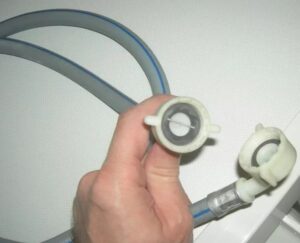 Every dishwasher has a drain hose and an inlet hose. The former is used to drain used water into the sewer after the cycle, while the latter is used to draw clean water from the tap before starting the wash cycle. To securely attach both hoses, you need to know the exact thread diameter of the hose. We'll explain the drain and inlet hoses in detail so you can easily connect your new appliance at home.
Thread and other parameters of the inlet hose
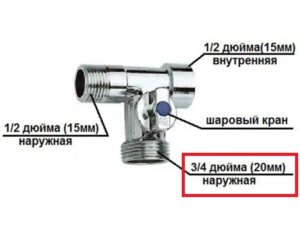
Immediately after purchasing a new dishwasher, it should be placed on a level surface and then connected to all utilities. Connecting to the power supply shouldn't be a problem, so let's move on to the inlet hose, which supplies water to the dishwasher's wash chamber from the system. The hose thread diameter is ¾ inches, so keep this in mind if you're planning any renovations or changes to your bathroom.
However, the inlet hose is needed not only to deliver clean water from the mains but also to protect against water hammer. Such an emergency can occur due to a sudden change in pressure in the pipes, so manufacturers equip the hose with additional dual systems for protection. This type of protection system is activated in emergency situations and prevents not only damage to expensive equipment but also flooding of floors, which usually entails equally expensive repairs and financial compensation to neighbors for the damage caused. The security system itself usually consists of the following elements: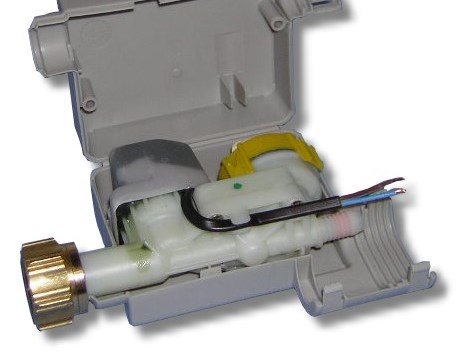
- an internal module called Aqua Control, consisting of a special float sensor;
- An external element called Aqua Stop, which is an inlet valve that promptly blocks the flow of water during emergency situations.
The inlet hose almost always comes with a technical data sheet, which allows you to check the permissible temperature range and water pressure, and use this data to select the hose for your system.
Inlet hoses are typically made of PVC, as it's the least expensive material for hoses. A dishwasher can also be connected to the water supply using a high-quality rubber hose. Hoses are always equipped with union nuts at the ends and can also be reinforced for increased reliability or angled for easy connection to the dishwasher.
In addition, hoses can differ in the temperature of the water they were designed to handle. The cold water hose can withstand temperatures up to 25 degrees Celsius, and the hot water hose up to 70 degrees Celsius. Elements also differ in the pressure they can withstand. For example, in an apartment, it's not necessary to purchase a hose rated for more than 20 bar, but in a private home, it's better to have a hose rated for around 22 bar or more.
A few words about drain hoses
Properly connecting a dishwasher to the water supply is only possible with the appropriate inlet hose and drain hose, the specifics of which we'll discuss in this section. This hose is typically made of polypropylene and often extends 5 meters or more. It won't be exposed to the extreme pressures found in pipes, so the main requirement for such a hose is that it perfectly matches the water supply fitting to ensure wastewater flows freely into the sewer.
Such a long hose is needed, among other things, so that dishwasher owners do not have to use extension cords even after moving the machine.
For the highest possible level of safety, an inlet hose with the Aqua Stop system can be used as a drain hose. It's considerably more expensive than a standard hose, but it's guaranteed to protect you, your home, and your dishwasher from leaks. It is worth remembering, however, that it is advisable to install an additional filtration system on the drain, both to avoid blockages and to increase the life of the emergency valve.
Extension of hoses
Unfortunately, dishwasher manufacturers often include rather short hoses with the appliance itself, which are insufficient to comfortably connect the appliance. In this unfortunate situation, you'll have to choose between purchasing a completely new, larger hose or extending the existing hose. Extending the hose is possible for both the drain and inlet fittings. This requires a special coupling, which can be purchased at any hardware store. The procedure for extending the hose is as follows: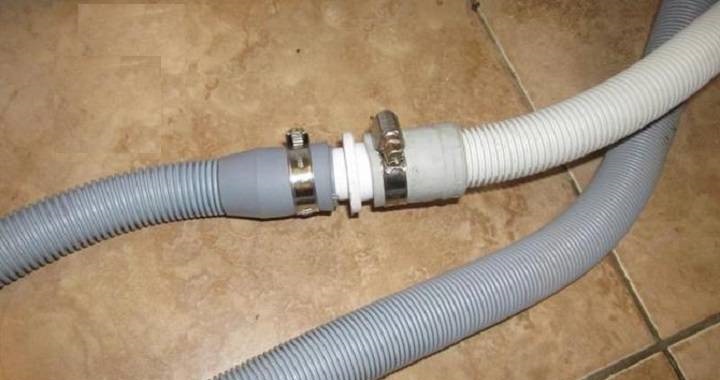
- disconnect the dishwasher from all utilities;
- connect the end of the hose to the coupling;
If possible, buy only brass couplings, as they are much higher quality and safer than plastic ones.
- attach an extension hose to the other end of the coupling;
- connect household appliances to utilities;
- Check the machine's functionality with a test cycle, during which pay attention to the extended sleeve.
The process of extending the hose itself doesn't take much time or effort. The most important thing is to securely fasten the coupling at both ends, making sure all clamps are firmly in place. This way, the hose can be extended to the desired length, even if it exceeds 5-10 meters. However, it's important to remember that extending the hose in this way creates additional leak risks, as it increases the number of connections. Therefore, experts recommend not extending hoses, but rather purchasing a single-piece hose.
Interesting:
Readers' comments
Headings
Washing machine repair




For buyers




For users


Dishwasher




Add a comment