What is the diameter of the washing machine drain pipe?
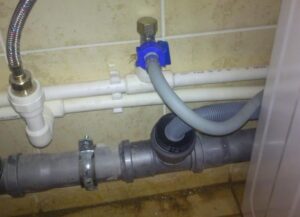
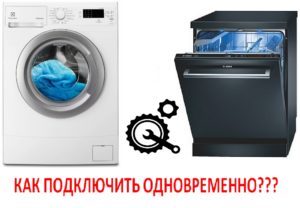
The sewer riser is usually small in diameter, but drainage is not a problem. Even running a washing machine and dishwasher simultaneously does not prevent wastewater from being pumped out. The only requirement is proper organization of the utility connections—selecting the right components and securely fastening the joints. It's a different matter if the diameter of the washing machine drain pipe is disproportionate to the hose—one is larger than the other. Will I need to consider adapters and their installation?
Are adapters needed for the sewer pipe?
Adjusting the drain for a washing machine or sink doesn't require installing any additional adapters. Moreover, all internal plumbing components are of the same diameter, ensuring easy operation and repair. Additional components, such as fittings, elbows, tees, and crosses, also follow the same dimensions. Manufacturers of vending machines take into account existing housing regulations and produce equipment that complies with them.
Modern washing machines are connected to the sewer system without adapters.
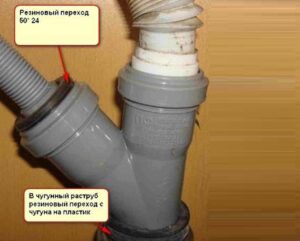
The only exception is the toilet. For obvious reasons, it is connected to larger-diameter pipes to minimize the risk of clogging. Thus, the outlet is mounted in a 110 mm tee, corresponding to the sewer riser. Then, a 100x50 adapter is attached, and then the standard plumbing is installed.
To connect a washing machine to the sewer system, you will only need a transition rubber cuff of the following dimensions:
internal diameter – proportionate to the inlet part of the drain hose of the machine;
external – equal to the circumference of the socket.
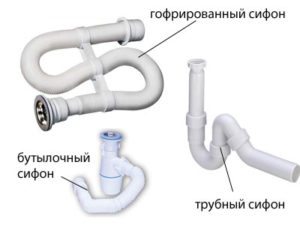
If you're installing a sink drain trap, a rubber adapter is not required. The corrugated pipe fits securely into the socket elbow or tee, which already contains a sealing ring. This sealing ring ensures the necessary watertight seal.
Internal sewerage wiring is carried out using pipes of the same diameter, which simplifies the connection and operation of household appliances.
We will take everything into account down to the smallest detail.
Setting up a washing machine's drain system involves more than just connecting the hose to the sewer pipe. Even a proper and secure connection to the riser doesn't guarantee effective waste removal—other details are also important. While experienced repairmen know all the intricacies of installing a drain, "newbies" often make mistakes during installation. As a result, the machine works, but often requires repair.
The differences in operating washing machines can be illustrated with a specific example. Let's say two machines, absolutely identical in functionality and power, are connected as follows:
the first one is located at a distance of 1 m from the riser and is connected via the included 1.5 m long drainage hose;
The second one is located 2.4 m away from the pipe and is connected to the sewer through an additionally purchased 3 m hose.
Both washing machines will last 7 years, but the difference will be obvious. The first machine will operate without breakdowns or malfunctions, while the second will require about 2-3 repairs. Most likely, the drain pump will fail first in the 4th or 5th year, followed by another 2 years later. The cause of these failures is obvious: with a long corrugated hose, the pump fails more frequently, as the load placed on it exceeds the manufacturer's specifications.
Before connecting your washing machine to the power grid, read the instructions carefully—they contain all the necessary conditions, regulations, and requirements!
Therefore, the first rule for connecting to the sewer system is to locate the washing machine as close as possible. A distance of up to 1.5 meters is considered optimal. Otherwise, the included hose won't be long enough, and you'll have to extend it or replace the corrugated hose. In either case, the user risks the appliance, reducing its trouble-free lifespan.
The second point concerns the stability of the washing machine. An automatic washing machine should be installed:
on a hard, flat horizontal surface (concrete);
with alignment using a building level;
with adjustable legs;
using special anti-vibration pads.
The third rule is to choose washing machines equipped with a check valve. This modern addition simplifies connection to utilities and protects the machine from the "siphon effect." It eliminates the possibility of wastewater being drawn in from the sewer system—only the standard drainage of water from the tank.

 The sewer riser is usually small in diameter, but drainage is not a problem. Even running a washing machine and dishwasher simultaneously does not prevent wastewater from being pumped out. The only requirement is proper organization of the utility connections—selecting the right components and securely fastening the joints. It's a different matter if the diameter of the washing machine drain pipe is disproportionate to the hose—one is larger than the other. Will I need to consider adapters and their installation?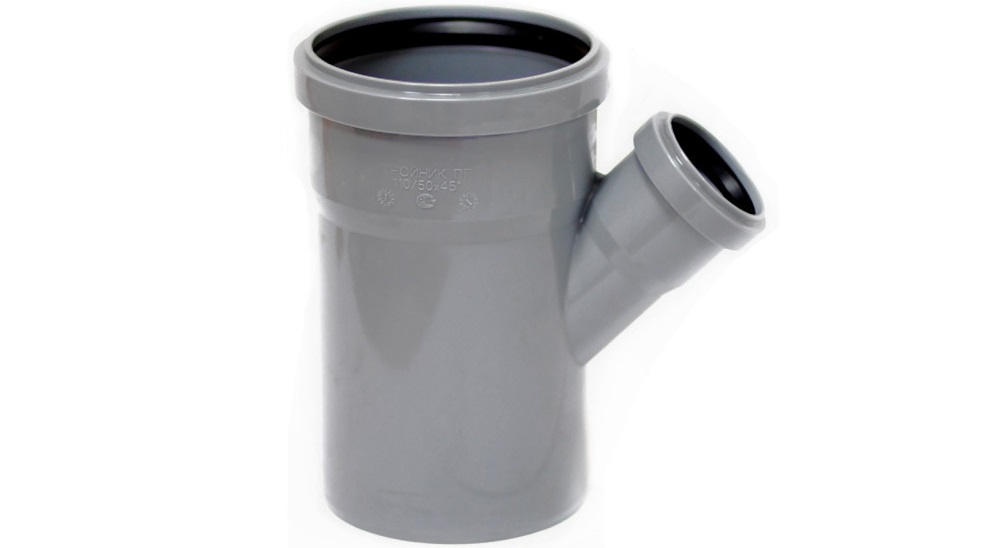














Add a comment