
Is there any savings when using a dishwasher?
 What housewife doesn't dream of offloading some of her household chores to smart appliances? An automatic washing machine will do a great job of cleaning laundry, a robot vacuum cleaner will pick up all the trash, and a dishwasher will effortlessly clean dirty dishes.
The husbands of the lucky ones readily agree to purchase an additional kitchen appliance, but some have to spend a long time persuading their spouses to buy expensive equipment, citing arguments about the extra time spent, the negative impact of detergents on the skin of their hands, and so on. Let's try to figure out whether a dishwasher is energy-efficient or better to wash by hand, and whether such an investment will be beneficial for everyone in the family.
How many minutes a day will we save?
Very often housewives complain that due to household chores they do not have time to spend more time with their family members. The first and main argument in favor of purchasing a dishwasher is the significant saving of free time. On average, three people can easily "dirty" 10-20 plates, a frying pan, a pot, several pieces of cutlery, and three mugs per day. This list can go on and on, depending on the family's lifestyle and habits. A good housewife can handle a couple of sinks of dishes in about 45 minutes, but if a child is involved, the time spent can increase to an hour per day.
How do happy dishwasher owners avoid wasting their time? Loading dirty dishes into the machine takes about 10 minutes, due to the need to remove food residue from the surfaces of plates, baking sheets, and other items. Thus, with some simple calculations, you can easily save up to 35-50 minutes of time each day, freeing it up for more enjoyable and productive activities.
The dishwasher will handle the dirtiest work itself. On average, a dishwasher completes the job in 2 hours, and in some cases, 4 hours. But it's important to remember that it's the machine that's doing the work, not you.
While some users may not find saving 35-50 minutes a day convincing, you'll save 17.5-25 hours a month, and in a year, you'll spend 212-304 hours standing at the sink doing what you love.
How about water?
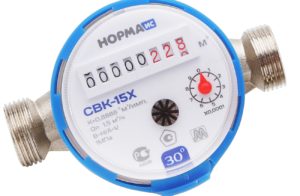 Today, utility rates force consumers to install meters for their homes that measure cold and hot water consumption. Generally, Russians aren't conditioned to conserve water. Traditionally, dishes are washed with the tap constantly running under a strong stream of water. Now imagine how many liters of liquid would "leak" in 60 minutes.
We'll share the results of an interesting experiment. An identical set of dishes was prepared. First, the cutlery was cleaned manually. During the process, 75 liters of hot and 35 liters of cold water were used. A dishwasher used 10 liters of cold water to clean the same amount of dirt. Water savings reach 90 liters per day! By looking at utility rates, you can calculate how much your appliance will save. A cubic meter of hot water costs much more than the same volume of cold water.
A dishwasher will not only save you time, but also reduce your water consumption, and consequently, your bills.
We count electricity
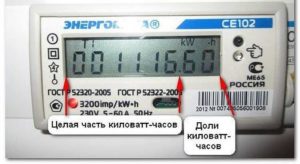 It's logical that using a dishwasher will consume electricity, as the appliance is electrically powered. When washing dishes by hand, we immediately turn on the hot water tap, while the dishwasher automatically heats the cold water to the optimal temperature.
For the experiment, water for manual cleaning was heated by an electric water heater. Energy consumption was 2.3 kW. Removing dirt from a similar volume of dishes consumed 1.5 kW of electricity. The measurements show that using a dishwasher is more cost-effective, even from this perspective.
The initial temperature of the water being drawn in definitely affects electricity consumption. It's warmer in summer and cooler in winter. This is why your dishwasher may use slightly more electricity in winter. Considering the cost of hot water used for hand washing and the electricity consumed by the machine, one can confidently speak of the undeniable benefits of this technology.
About powders, tablets, and capsules
The main cost of dishwasher maintenance is the selection of specialized dishwashing detergents. Purchasing cleaning tablets, capsules, and powders constitutes the largest expense associated with operating the appliance.
In addition, to maintain the dishwasher's functionality, it is necessary to periodically use salt, which is responsible for restoring the ion exchanger.
Your household cleaning costs will depend on the brand of cleaning products you choose. For the sake of this experiment, let's calculate how much you'll spend on dishwashing using Finish Powerball tablets. For the same amount of dishes, the experiment's organizers used two tablets and dissolved about one teaspoon of special salt.
A 65-tablet package of Finish will cost the user approximately $5. Therefore, the cost of two tablets is $0.155. Adding the cost of salt powder, we get $0.17. This is the amount you'll need to spend daily on cleaning your cutlery. In some cases, the cost of dishwashing detergent may exceed the energy and water savings, but these costs are still acceptable when compared to the other advantages of the machine.
What other benefits does the machine offer?
 Now that we've figured out whether washing dishes in a dishwasher is economical, let's talk about other advantages of this appliance that don't involve saving money. We won't dwell on unusual uses for a dishwasher, such as using it as a fish oven or a vegetable washing basin, but rather will highlight the more obvious advantages.
- The machine can be used to clean dishes by heating water to 90°C. This eliminates all bacteria from the surface of the dishes and sterilizes them. This feature is especially useful for families with small children.
- The appliance has a softening function for extremely hard water, which allows you to perfectly clean stains from glassware without leaving limescale stains.
Families of five or more people are better off purchasing large-capacity dishwashers. These appliances offer an optimal balance between the cost of a single wash cycle and the amount of dishes loaded into the tray.
Why do people criticize dishwashers?
 Housewives deciding whether to buy a dishwasher want to know not only the advantages of the appliance but also the potential inconveniences it may cause. Even such a useful device has its drawbacks. Let's explore these potential drawbacks.
- Fine abrasives, which are a necessary component of dishwasher detergents, can remove designs, coatings, and gilding from dishes.
- By purchasing an overly large dishwasher, you risk turning it into a storage area for unwashed dishes. This "storage" will lead to unpleasant odors in the kitchen.
It is very important to purchase a unit with a capacity that meets the needs of the family.
- To maintain the heating element's functionality, the water entering the system must be softened. Polyphosphate filters or special salt softeners can help with this.
- Not all kitchen utensils are dishwasher-safe. For example, a Teflon-coated frying pan that doesn't have a dishwasher-safe symbol may become damaged and unusable after a few washes due to damage to the coating.
- The machine requires special care. Periodically, it's necessary to clean all filters and the drain pump, and run the self-cleaning mode. It may be necessary to use special dishwasher cleaning capsules that contain strong chemical reagents.
- The unit doesn't remove all types of stains. Not every device can handle porridge burnt to the bottom of a pot or pasta fried in a frying pan.
There is also a specific list of household items that are not dishwasher-safe. These include:
- earthenware products;
- glazed painted utensils;
- aluminum pots, plates, mugs, spoons and forks;
- Glassware not marked machine-washable. Some types of glass, when washed in hot water, may become cloudy or cracked and become unusable;
- antique tableware;
- products with wooden or porcelain handles;
- tin and copper utensils;
- wooden kitchen utensils (cutting boards, spatulas, etc.);
- products made using the Gzhel or Khokhloma technique.
Special dishwashing rinses should be used with extreme caution. The stain-preventing agents are not completely rinsed out, but remain on the surface even after double rinsing. Therefore, people with high sensitivities to chemical additives, as well as families with small children, should avoid using dishwashing rinses altogether.
Tips for those who want to save money
We've determined how much water and energy a dishwasher can save. Now all that's left is to figure out how to get the most out of this expensive "home helper."
- When choosing a dishwasher, pay special attention to its capacity. It's important to realistically assess your family's needs. If the dishwasher is too small, you'll have to run it multiple times, which will lead to excessive water and electricity consumption. Conversely, you may simply not fill the dishwasher with the optimal amount of dishes, and the machine will still use the preset amount of water.
- Do not neglect the instructions for the device. Before using it, please read the user manual carefully and look at the pictures showing the correct layout of the dishes in the trays. By properly arranging your cutlery, you can squeeze as many items into the unit as possible while preventing water from pooling in plates and mugs and leaving streaks on the surface of your dishes.
- It's best to avoid using dishwasher capsules. Their filling is standard for both small and large machines. A homeowner can measure out the amount of detergent needed depending on how full the machine is and how dirty the dishes are, but capsules are not dosed. Therefore, using encapsulated detergents can be wasteful.
- If you or your loved ones suffer from chemical allergies, it's best to replace dishwashing detergent with regular baking soda and dishwashing liquid with a 6% vinegar solution. While baking soda and vinegar won't be as effective as specialized detergents, combined with high-temperature water, they can clean kitchen appliances.
The dosage must be calculated independently, taking into account the degree of hardness of the tap water.
- Pay special attention to keeping the polyphosphate salt reservoirs full. This substance is essential for the proper functioning of the dishwasher, extending its lifespan, and ensuring high-quality cleaning of dishes.
If your apartment has a dual-rate electricity meter, it's best to run your dishwasher at night. Kilowatts are several times cheaper at night, which will allow you to save even more money in your family budget.
Interesting:



Readers' comments
Headings
Washing machine repair




For buyers




For users


Dishwasher




Add a comment