
Electrolux washing machine does not spin
 We've all experienced a situation where our washing machine stops working completely or partially at the most inopportune moment. But there's an even worse situation: you buy a brand new machine, load it with laundry, and discover that one of its functions stops working. In this article, we'll look at what to do if that function is the spin cycle, using an Electrolux washing machine as an example.
Please select another mode
If you find your laundry is still wet after washing, don't rush to call a technician. The most common and common reason a washing machine won't spin is using a program that doesn't spin. Such programs may include:
- washing wool;
- silk washing;
- gentle wash.
To confirm this is the issue, consult your machine's manual (if you don't have one, find it online). If your cycle doesn't include a spin cycle, simply run it separately after the wash cycle. The advantage is that these problems are not related to technical malfunctions and can be fixed without repairing the car yourself or taking it to a service center.
The spin cycle can also be forced off even when it's set to "on." Make sure you're not experiencing this exact situation.
The laundry was laid incorrectly
Modern washing machines typically have an overload detection feature (this is when the load is too heavy for the machine to handle). If your machine doesn't have this feature, however, trouble can occur.
- The laundry is washed without any visible problems.
- When the spin cycle starts, the machine tries to rotate the drum, but this does not happen due to the large weight of the laundry.
- The attempts are repeated several more times.
- If the drum does not start spinning, the washing machine stops working, and you are left with wet laundry on your hands.
If the spin cycle isn't working for this reason, try removing the laundry at the end of the wash cycle and spreading it out evenly in the drum. This will prevent the laundry from forming a heavy clump and reduce the load on the drum.
There is a lot of water in the tank
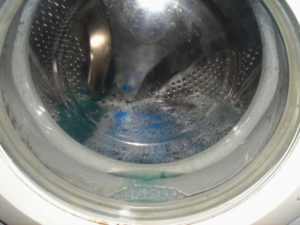 Another reason why your machine hasn't started spinning could be too much water in the drum. Before spinning, the washing machine drains water, and during the spin cycle, it also removes water from the laundry being spun. If you suspect this is why your machine has stopped spinning, try the following:
- unscrew the drain filter;
- check it for any unnecessary items, then clean it;
- Check for a blockage in the drain hose or the drain pipe leading from the tank to the pump. If there is a blockage, clear it.
- Put the hoses and filter back in place and check the machine's operation again.
If the problem persists, listen to the pump; it should hum. If it doesn't, the drain pump may need to be replaced.
The Hall sensor is not working
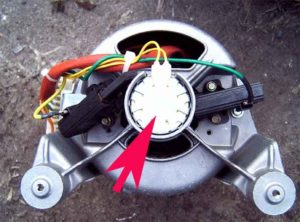 The Hall sensor, or tacho sensor, is a device inside the washing machine that detects and controls the drum's rotation speed. If it's faulty, the machine may not correctly detect the drum's rotation speed, resulting in either poor spin performance or no spin at all.
The main cause of tachometer failure is frequent loading of too much laundry into the machine. In addition, the Hall sensor may become loose or the contacts may come loose.
To check the tachometer sensor, you'll need to remove the motor. Afterward, check all the contacts, cleaning them if necessary, and tighten the fastening. If this doesn't help and the sensor itself is faulty, you'll need to buy a new one.
The engine broke down
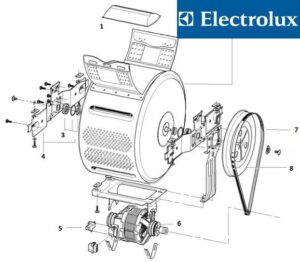
The main culprit behind motor failure or poor performance is worn brushes, which prevents the motor from accelerating the drum to a sufficient spin speed. If you want to try repairing the motor yourself, you'll first need to access it. To do so, follow these steps.
- Remove the washing machine body.
- Disconnect the belt from the motor and disconnect the wires.
- Unscrew the engine.
Since the tachometer sensor is located near the motor, you can check it at the same time.
Check the motor brushes, coils, and windings. If anything is faulty, replace it. If the problem is too extensive, the easiest solution is to replace the entire motor.
The control module has failed.
The control module is the washing machine's command center. All signals pass through it, and after processing, the necessary commands are sent to other parts of the machine. If you've checked the washing mode, the load weight, the water level in the drum, the tachometer, and the motor, the only option left is to check the module. Unfortunately, you won't be able to check it yourself, much less repair it—you'll have to call a technician.
Next, let's look at situations where the spin cycle is working, but there are some minor issues. If you hear unusual knocking sounds during the spin cycle or during washing, there are likely foreign objects lodged in the space between the drum and the tub. To correct the situation, it is necessary to remove the heating element and remove any foreign objects. Although this situation typically doesn't affect the quality of washing or spinning, it's not worth delaying: foreign objects in the machine can lead to complete malfunction.
Unusual noises in your washing machine may also indicate worn bearings. In this case, disassemble the machine and check for leaks. If you can't resolve any of the issues yourself, don't worry; not everything can be solved without specialized tools and knowledge. Simply contact a professional—it might cost you a little money, but it will save you time and frustration.
Interesting:


Readers' comments
Headings
Washing machine repair




For buyers




For users


Dishwasher




Add a comment