
What are enzymes in laundry detergents?
 In modern society, more and more people are trying to understand the ingredients of the products they use. The same applies to laundry detergents. However, it's not that simple: not every housewife can decipher some of the names on their own. For example, many people don't understand what enzymes in laundry detergents are, and whether they're harmful or safe. It's important to understand.
Let's understand the concept
So, let's start with the fact that thanks to these enzymes, detergent literally cleans your clothes. Have you ever wondered why, after washing, even the highest-quality soap sometimes fails to remove even fresh stains? Because the enzymes in laundry detergents break down various stain molecules.
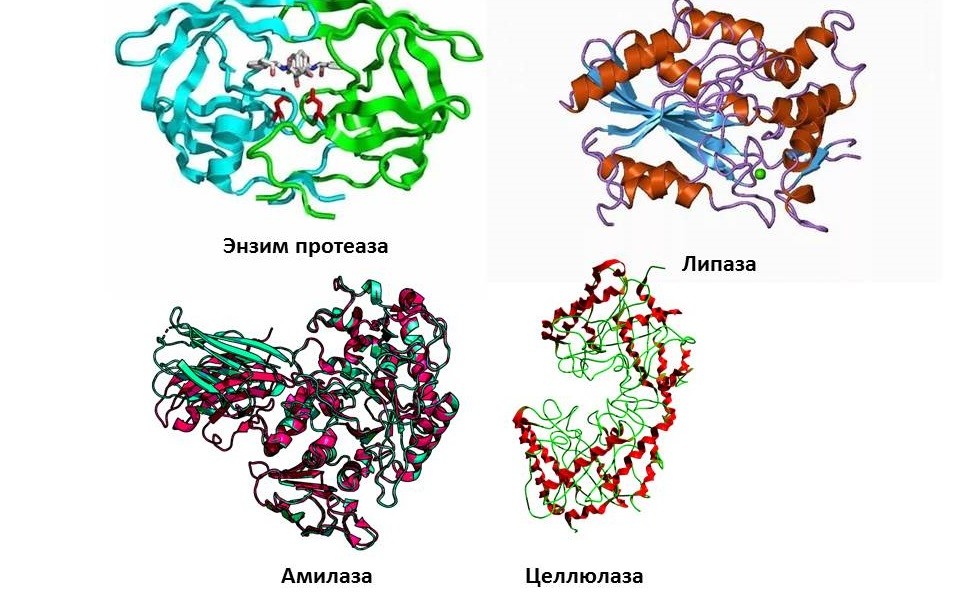
- Protease enzyme – removes protein stains.
- Lipase - fat.
- Amylase fights starchy stains.
- Cellulase performs a wide range of functions. Its main purpose is to remove lint, which causes fabric to curl. But that's not all. This enzyme can also preserve the brightness of fabrics, enhance the visible effect of bleaching, and impart softness and an unparalleled appearance. Cellulase is often added to specialized detergents, such as those for wool or delicate fabrics; it is truly indispensable.
Yes, enzymes cannot be called natural products, but without them, the washing we are all accustomed to would not be of such high quality.
First of all, modern laundry detergents contain all of the listed types of enzymes. This means the powder works on several fronts at once, allowing you to remove any stains from your clothes without damaging them and preserving or even improving their appearance.
Some enzymes are even added to baby care soaps, such as protease. The list of household chemicals that can't function properly without enzymes is extremely long. This raises the question: how safe is it to use enzyme-containing products?
Should we be afraid of enzymes?
You can breathe a sigh of relief: enzymes are completely safe for the human body. This means that if you're choosing a product and see one of the ingredients listed above, don't hesitate to use it.
The only harm enzymes can cause is damage to fabric if used improperly or if the instructions are not followed. Some types of enzymes are not compatible with certain fabrics, but you don't have to guess: manufacturers always warn users about this in the instructions.
Needless to say, enzymes are essential components of any laundry detergent. Perfectly balanced and completely safe for your health, they soften fabrics, enhance the appearance of items, enhance the effectiveness of bleaches, keep colors vibrant, and, most importantly, remove absolutely all types of stains, both new and old.
What is really harmful?
 To choose the right product, you need to know which components are harmful to humans, the environment, and other things. First and foremost, these are phosphates and phosphorites. They are present in most laundry detergents because they enhance the action of surfactants. What is a surfactant? A surface-active agent!
These elements have many more disadvantages. First of all, they adhere firmly to fabric and cannot be rinsed. To remove all the phosphates from an item, it must be rinsed at least a dozen times, which is both physically and time-consuming. Consequently, the next disadvantage is allergies. Phosphates cause severe skin irritation, as well as coughing, watery eyes, and itching. If children's clothes are washed with such a product, the situation is doubly worse.
The harm caused by phosphates doesn't end with allergic reactions. They pollute nearby bodies of water and promote the formation and growth of blue-green algae, which degrades water quality and has adverse effects on human health.
Optical brighteners are also not a good idea. They're essentially aggressive dyes containing fluorescent particles. They're completely insoluble in clothing, otherwise they wouldn't work. Clothes turn sparkling white precisely because of this dye. It's beautiful, but it's not safe. Primarily because of that same allergy. Human skin often reacts very negatively to contact with bleached clothing: redness, rash, terrible itching. Is it worth it?
Important! Many housewives also underestimate the harm of chlorine, preferring to use it everywhere as a disinfectant.
For some reason, there's a common belief that chlorine is the least dangerous of all household chemicals. But this is far from true. Primarily because it can damage internal organs, such as the lungs. This is because chlorine is volatile and evaporates quickly. Inhaling chlorine vapors puts people's health at risk.
Hair and skin are negatively affected, and the risk of cancer increases. During washing, dirt molecules react with chlorine, forming harmful organic compounds that remain on clothing, the inside of the washing machine, etc.
Fragrances are also at risk. While not as dangerous as chlorine, they can still cause allergic reactions, especially in children. As a rule, they are the first thing to avoid if itching, rashes, or other symptoms occur after contact with washed clothing.
Interesting:





Readers' comments
Headings
Washing machine repair




For buyers




For users


Dishwasher




Add a comment