
Dishwasher water filters
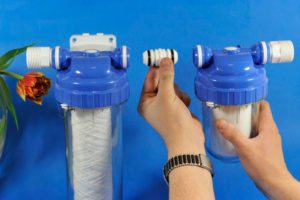 These days, few people would think of drinking tap water without further treatment. Even if there's no way to purify the water, people simply let it sit, or more often, use various filters. However, not everyone realizes that sensitive dishwashers also require water of the appropriate quality, which is where the question of purchasing a dishwasher filter arises. In this article, we'll explain what a dishwasher filter is and why it's needed, and also provide an overview of these filters.
Why is this necessary?
A standard modern dishwasher can partially protect its components from poor-quality tap water. At a minimum, it has a coarse filter on the inlet valve and an ion exchanger that binds minerals and impurities found in hard water, preventing limescale deposits. But how effective are these standard protections? In many areas of our country, tap water is so poor that it's the cause of dishwasher failure in approximately 15% of cases.
Often, so-called "rusty water" is the dishwasher's undoing. Standard dishwasher protection measures are powerless against it.
A simple flow-through filter can't protect against water containing high levels of heavy metals. And if the excess minerals in the water exceed the recommended limits by tens or even hundreds of times, no ion exchanger will be able to cope. There's only one solution: install another reliable barrier capable of purifying the water to an acceptable level before it reaches the dishwasher. A special water filter is needed.
This raises the question: how to choose the right filter? Indeed, installing a universal filter that removes everything from water is labor-intensive and expensive, and it's not really necessary. The main thing is to know what's wrong with your tap water, what impurities it contains, and then, based on that, you can purchase the right filter. How can you determine the quality of your tap water?
- Get a laboratory analysis. This is quite expensive, but the most reliable method. A single test is enough to select the right filter not only for your dishwasher but also for your drinking water faucet.
- Purchase special devices and test strips. Today, there are quite a few different devices and equipment available for sale that can determine water hardness, its pH level, and more, including measuring radionuclide content. The readings from these devices are not always completely reliable, but they will give you an idea about purchasing one filter or another.
- Gain information from your own observations. By observing how quickly limescale builds up on your kettle and how often the water from your tap has an off-color or off-odor, you can also draw certain conclusions. Observation is generally useful, as it saves time and money and helps maintain your health. Observation alone won't provide comprehensive information, but it can be sufficient for selecting the right filter.
Once you have enough information about the quality of your tap water, you can head to the store to buy a filter. But first, check out our review. We've already selected several of the best filters for various purposes to make your choice easier. Perhaps you'll find our advice helpful.
If you need to soften water
If your tap water contains a significant excess of minerals, but all other parameters are normal, an additional water softener filter is necessary. Hundreds of such filters are available on the market today, but we've selected just three examples.
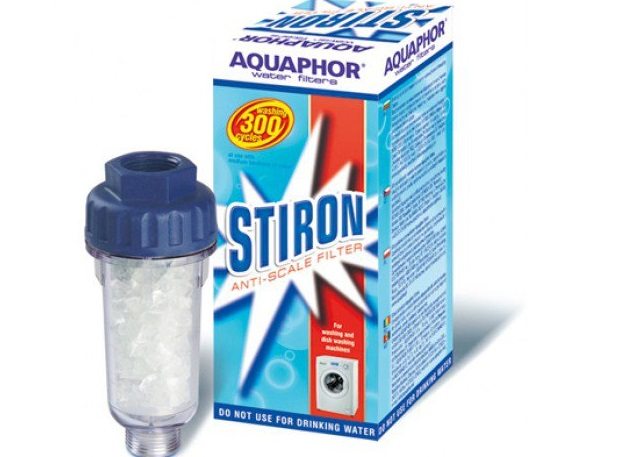
- Aquaphor Styron is a simple and inexpensive flow-through filter with a filter bed. The filter body contains polyphosphate salt, which needs to be periodically replenished. One fill is enough for 400 dishwashing cycles, or maybe more, depending on how much water your dishwasher uses. The filter is installed at the base of the inlet hose. It significantly softens the water, bringing its quality to an acceptable level. The cost of the filter with one fill of polyphosphate salt is $5.
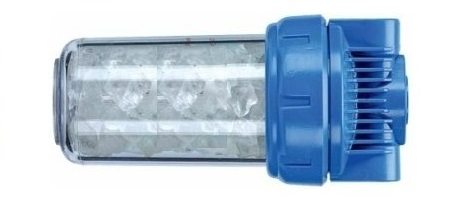
- Novaya Voda B120. This is a flow-through water softener with slightly higher performance than the Aquaphor Styron. It performs the same functions, softening water and also functions as a coarse filter. It traps large mineral particles and debris that can get into the water supply. Installation and replacement are done without special tools. Price: $16.
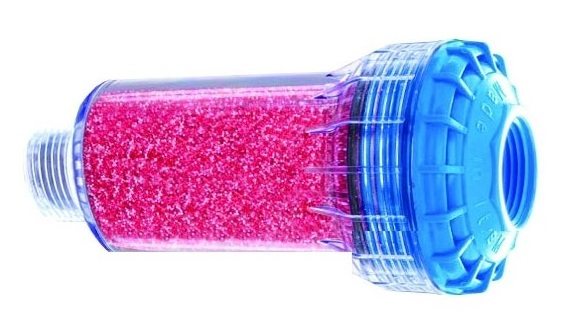
- Our Water. This is a pre-filter with a special filling. One cartridge lasts for 20,000 liters of water. It effectively softens water with mineral content 100-150 times higher than the recommended limit. It connects to a ¾-inch thread. The average price is $6.
Deeper water purification
If your tap water contains sand, rust, and other contaminants in addition to a high mineral content, you should consider an additional filter in addition to one of the above. In this case, the type of contaminant should be considered when choosing a filter, but the filters we've selected for this review are generally suitable.
- Aquaphor Gross 20. Fine pre-filter. Works perfectly in combination with the Aquaphor Stiron filter. Removes various impurities from tap water. Installed before the Aquaphor Stiron filter. Average price: $43.
- Barrier VM 1/2. An excellent domestically produced flow-through fine filter. Thanks to its 1-micron filter element porosity, it removes all impurities from water, including sand and rust, thoroughly preparing process water before it goes into the dishwasher. Price: $14.
- Honeywell FF 06 ½ AA. Latest-generation flow-through filter module. Used in conjunction with any water softening prefilter. Captures both large debris and the smallest particles of impurities of any origin. Used for water treatment in whirlpool baths, showers, dishwashers, washing machines, etc. Average price: $42.
When installing filter elements, monitor the water pressure readings. It is not possible for all filters and pre-filters to reduce water pressure to a critical level. In this case, the dishwasher simply will not be able to pump water and will not work.
So, does your dishwasher need a filter? The decision is yours. If you're willing to replace your dishwasher every 2-3 years, then you don't need to worry about filters. But if you want your dishwasher to serve you faithfully for many years to come, take care of the water it consumes. Also, consider the electrical system the appliance is connected to; you may need to purchase a filter. dishwasher stabilizer. Good luck!
Interesting:
Readers' comments
Headings
Washing machine repair




For buyers




For users


Dishwasher




Add a comment