
What is a front-loading washing machine?
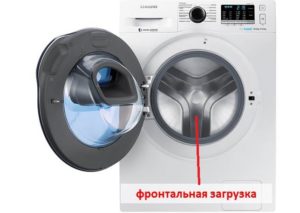 Sometimes, when buying a washing machine or researching the specifications of a particular unit, the question arises: what is a front-loading washing machine? After all, buying a machine without knowing exactly what its specifications mean is very reckless. In this article, we will try to answer this question.
Front loading machine
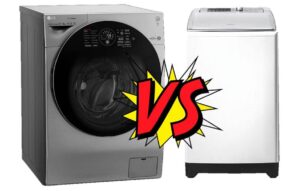
This is the most common type of washing machine. The door is located on the front wall and features a round transparent window that allows you to see the contents of the drum. However, some machines have a top-mounted lid. In this article, we'll look at the key features of both types and help you decide which one is best for your home.
Of course, it might seem that a front-loading washing machine is less safe than a top-loading one. After all, the risk of leakage immediately increases. However, the advantages of this arrangement far outweigh the disadvantages.
For example, people use the top wall of a front-loading washing machine as a shelf for detergent containers, laundry baskets, curling irons, hair dryers, and other household appliances that fit neatly and out of the way. Some even store additional washing machine accessories there, such as capsules, filters, instructions, and so on.
Important! Furthermore, there are many more front-loading units, meaning a wider selection.
You can base your purchase on price, brand, quality, weight, and even color, rather than buying something based on leftovers. And repairing these cars is much easier.
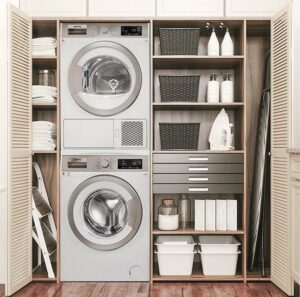
Another advantage of front-loading machines is their ease of installation in small apartments. They're not very tall, so they fit underneath other furniture. But you can’t put a vertical machine under the table, because otherwise it won’t be possible to open it. Moreover, vertical washing machines are generally freestanding. A front-loading washing machine, on the other hand, can be easily built into furniture. So, with careful planning, it won't require any additional space at all. A vertical washing machine, on the other hand, will require its own corner.
Top-loading appliances
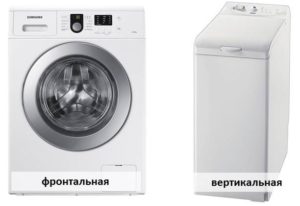 The dimensions of these machines are typically standard: 85 centimeters high, 60-65 centimeters deep, and 40-45 centimeters wide. These aren't the heaviest dimensions, and overall, the machine appears quite compact. However, this doesn't hinder loading. Typically, the drum holds the same amount of laundry as a front-loading machine: about 6-6.5 kilograms. First, let's discuss the main disadvantages of this type of washing machine.
- A small loading opening. This can make washing a heavy blanket or duvet, for example, extremely difficult, as the item will become even heavier and bulkier after washing, making it difficult to remove through the narrow opening. This is especially true if the machine is in a small bathroom, where there's already limited room to maneuver, and this additional difficulty can be added.
- The powder containers are non-removable, making them virtually impossible to clean, whereas all front-loading machines eliminate this problem entirely.
- Price. For some reason, these models are quite expensive, making them much more difficult to maintain financially.
Now let's talk about the advantages. Unlike the hatch of a front-loading machine, the hatch of this model is not equipped with any special sealing materials, but is made much simpler, because the device is not at risk of leakage from above. This means that if, for example, a rubber seal breaks on a front-loading washing machine, you'll have to shell out a pretty penny to replace it, whereas with a top-loading washing machine, you won't have to do that.
One of the obvious advantages of this model is the ability to pause the wash cycle and add a forgotten item, for example. With a front-loading washer, this is impossible, as you'd have to drain the water and perform a multitude of other operations.
Interesting:



Readers' comments
Headings
Washing machine repair




For buyers




For users


Dishwasher




Add a comment