
Fuzzy logic function in a washing machine

But progress doesn't stop there; washing machines are constantly being equipped with new features, such as fuzzy logic, eco bubble, stream wash, drying, and more. Sometimes it can be very difficult to keep up with all these technologies and understand them. That's why we decided to tell you about a washing machine feature called fuzzy logic.
How the function works
The phrase "fuzzy logic" is translated from English as "fuzzy logic." This term appeared in 1965 and had nothing to do with the modern washing machine.
This phrase doesn't fully convey the function's purpose; it's just a fancy name, according to the manufacturers. So, what does this function do, and how is it implemented?
A washing machine with this function has a number of built-in sensors that detect the weight of the laundry, its degree of soiling, water hardness, and more. All these sensors send a signal to the microprocessor, which, based on the received data, determines the washing time, amount of water and mode.
For example, a built-in optical sensor with an infrared beam determines the degree of soiling of laundry: the clearer the water, the cleaner the laundry. Furthermore, the nature of the soiling is determined by the rate at which the water is saturated with dirt particles. This is based on the greasiness of the soiling. The faster the water is saturated, the more greasy the soiling is on the clothes. Once this information is sent to the washing machine's microprocessor, the wash time is calculated.
Verbally this can be expressed as follows: "If the stains are heavy and greasy, then the washing time will be longer." The dependence of washing time on the degree of contamination and fat content can be presented in the form of a table.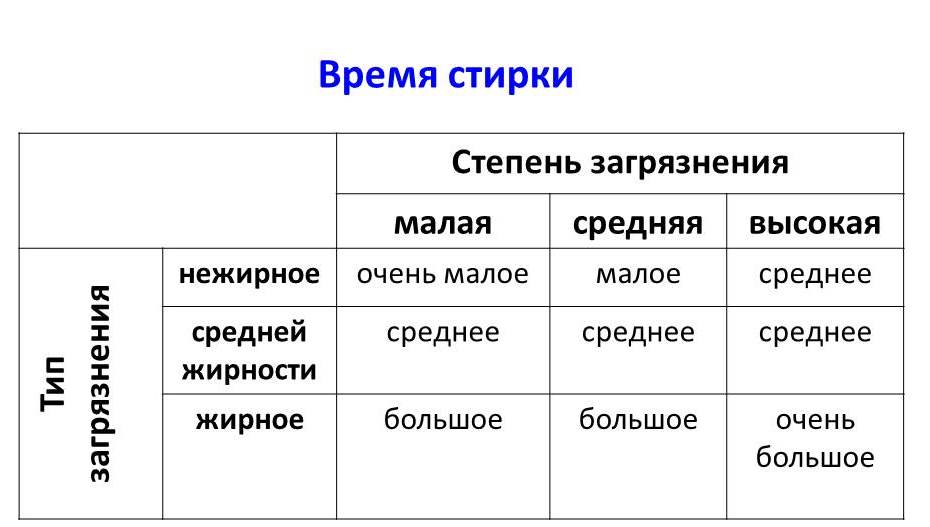
In this table, very short wash time means 8 min, short time means 12 min, medium time means 20 min, long time means 40 min, very long time means 60 min.
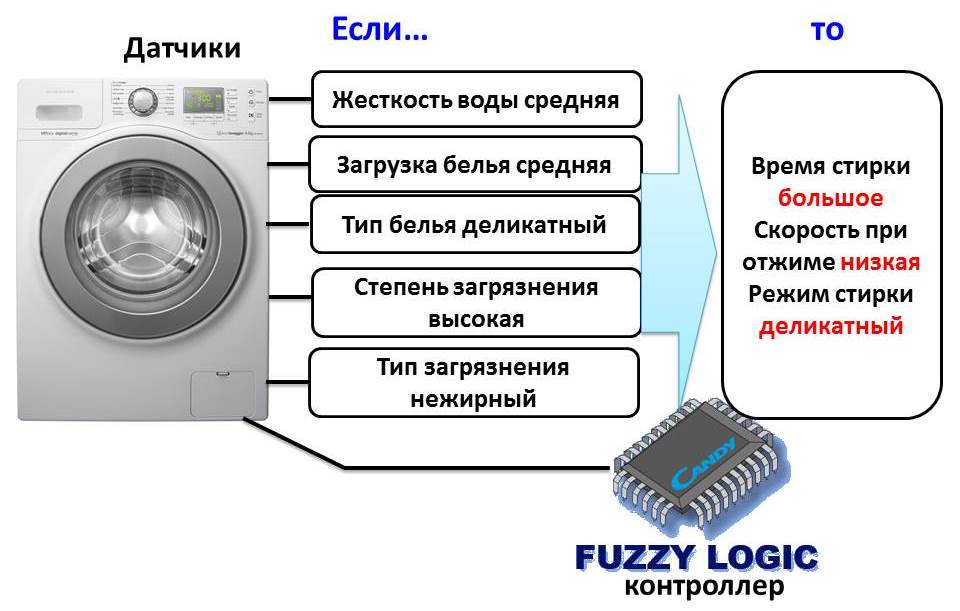
In modern models of automatic washing machines, in addition to determining the time, the fuzzy logic function determines water consumption, detergent consumption, and spin speed. Input parameters for calculating the wash cycle can include laundry type, water hardness, and other factors. This results in a program with multiple input and output parameters. When combined, the number of possible wash cycles can reach into the hundreds. This is the main difference between a machine with fuzzy logic and a conventional automatic washing machine.
The operating principle can be visually represented as follows.
Advantages and disadvantages
Based on the operating principle of this function, the following advantages of washing in a machine with fuzzy logic can be identified.
- Reduces washing time by determining the degree of contamination.
- Reduce water consumption by weighing laundry.
- Reduced energy consumption by reducing the volume of water that needs to be heated.
- Automate the washing process. This feature eliminates the need to manually set the spin speed, temperature, and other parameters.
Please note! Fuzzy logic technology comes at a premium, as cars equipped with this feature are more expensive than standard cars.
The shortcomings of this feature can be discerned from consumer reviews, as marketers can only praise their product. But does the machine actually perform its advertised job to the fullest? Here's what people say:
- the presence of complex electronics can reduce the durability of the equipment;
- Automatic adjustment of the program during washing is possible, which affects the accuracy of the program end time.
Overall, consumers who use a washing machine with a smart function note more positive aspects than negative ones. Technology enthusiasts say that the fuzzy logic function is the real electronic control of the washing process.Some compare machines without this feature to refrigerators without a self-defrost feature (no frost). Basically, there are as many opinions as there are people. Whether to use this improved technology is up to you.
A quick overview of fuzzy logic machines
The fuzzy logic function is available in washing machines of various brands, let's look at some of them.
- LG F1281TD is a washing machine with a drum capacity of up to 8 kg of clothes and 14 programs.
 The energy efficiency and washing performance ratings are top-notch. Unique features include a silent wash mode. In addition to the fuzzy logic feature, there's a built-in child lock and leak protection. Prices start at $270.
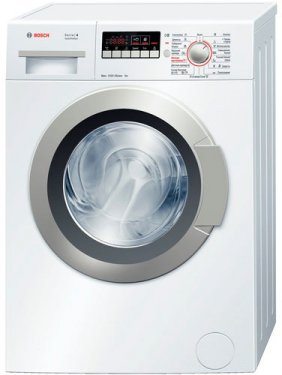
 - The BOSCH WLG20265OE is a slim washing machine with a drum capacity of up to 5 kg. Its unique programs include outerwear, shirts, and a night cycle. You can also add laundry while washing, and it features a built-in leak protection and child lock. Prices start at $230.
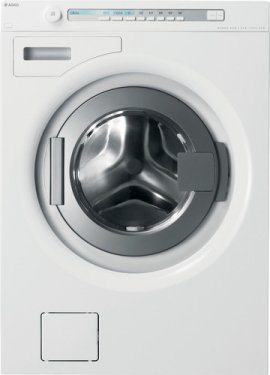
- The ASKO W6884ECO W is a full-size Slovenian-made washing machine with a drum capacity of up to 8 kg. It can spin at up to 1800 rpm. Of the 12 programs, the "White Lingerie" program deserves special attention.It features all levels of protection and automatic laundry weighing. Prices start at $950.
- The ELECTROLUX EWT1366HDW is a top-loading washing machine with a capacity of up to 6 kg. It features 7 wash programs, built-in leak protection, and a child-resistant lock. The maximum spin speed is 1300 RPM. Prices start at $420.
- The Samsung WF1802XEC is a full-size washing machine featuring Eco Bubble technology and the Fuzzy Logic function. It has an 8 kg drum capacity and nine programs. Additionally, the Eco Drum Clean function is a standout feature, allowing you to remove odors from laundry without washing it in water. Prices start at $330.
So, washing machines with fuzzy logic are available in low, mid, and high price categories. But this raises questions about the extent to which this feature is implemented in a mid-priced washing machine. Most such machines lack an automatic weighing system, which significantly influences the washing mode, water amount, and so on. Be careful when purchasing such an automatic machine, and carefully study all the specifications; fuzzy logic may just be a marketing ploy.
Interesting:


Readers' comments
Headings
Washing machine repair




For buyers




For users


Dishwasher




Add a comment