Where is the filter located in the washing machine?
The washing machine's drain filter serves an important function: it protects the pump from debris and foreign objects entering the drum. Because this element traps unwanted material, it needs to be cleaned periodically. Neglecting this rule will make it difficult for the pump to pump water, which can lead to machine failure. Let's find out where the drain filter is located, how to clean it yourself, and how often it should be cleaned.
Placement of filters by machine brands
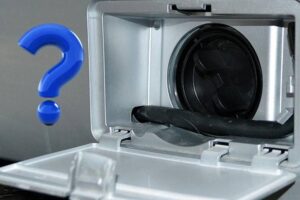
The first thing to do is figure out where the waste bin is located. Washing machines vary by brand, model, and load type. Despite the variety of types of automatic machines, the drain filter is always placed at the bottom of the housing, in close proximity to the pump.
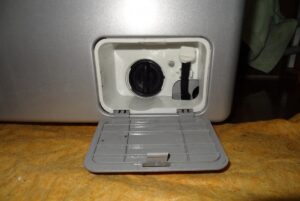
The waste filter is an internal component of an automatic washing machine. It's hidden behind a false panel or a service hatch door. To make it easier to find the filter element, we'll explain its location in machines from different manufacturers.
LG, Atlant – in the lower right corner, in front, behind a small door.
Indesit and Ariston - behind the lower false panel, also in the right corner.
Candy is on the left side, behind the technical door.
Bosch, Samsung, and Siemens – in the lower right corner. May be hidden behind a hatch or false panel.
Electrolux and Zanussi. The dustbin is located in the lower right corner and is covered by a small plastic hatch.
Most top-loading machines have a dirt filter located in the lower left corner.
Some manufacturers have come up with alternative locations for the drain filter. For example, in Electrolux and Zanussi vertical washers, the "dustbin" is built into the drum rib. The element can be removed by looking into the centrifuge.
How to clean properly?
Washing machine users should understand that the waste bin needs to be cleaned. Experts recommend washing the drain filter at least once every 3 months. The process doesn't take much time, and any homemaker can handle it. The steps are as follows:
Turn off the power to the washing machine. It is very important to begin using the washing machine only after it has been unplugged from the outlet;
close the shut-off valve responsible for the water supply;
Cover the floor around the washing machine with dry rags;
prepare a low, capacious container to collect the water that will flow out of the hole;
Open the service door or unhook the decorative panel from the body. The hatch cover is usually secured with several plastic clips; you'll need a screwdriver to remove them;
Tilt the machine back and place a container under the bottom to collect water;
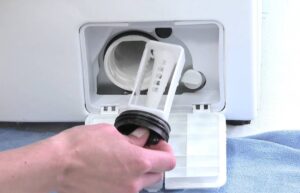
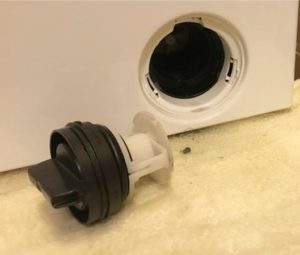
Loosen the filter plug half a turn first. Wait for the water to drain into the basin. Remove the entire "trash container." If the element is stubborn, try grasping it with pliers and turning it counterclockwise.
Some washing machine brands require you to remove the plug that shuts off the water flow before removing the filter. Examples include AEG, LG, Zanussi, and Electrolux machines. Many homeowners wonder where the water comes from in an empty washing machine. In fact, the pump empties the drum, and a small amount of liquid is always present in the drain pipes. After removing the filter, this liquid will flow out of the hole created.
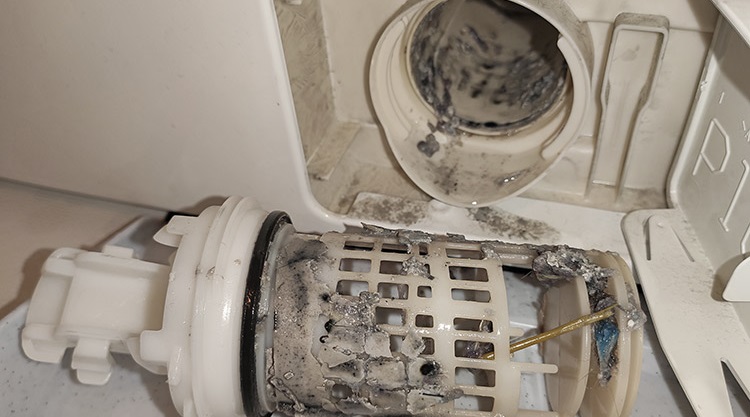
All washing machines are also equipped with an emergency drain hose. You can use it to "drain" the machine before removing the debris filter. To do this, remove the plug installed in the outlet. The tube is located right next to the plug. Once you've completed this removal, you can begin cleaning the filter element. Remove any tangled threads and hair from it and rinse thoroughly under the tap. The water should be warm. If the coil is heavily soiled, scrub the surface with an abrasive sponge.
Do not wash the drain filter in hot water, as the plastic may become deformed.
If the film on the filter surface is stubborn, you can soak the part for 2-3 hours in a solution of lemon powder. Dissolve 50 grams of lemon powder in warm water and place the filter in a basin. After soaking, clean it with a brush.
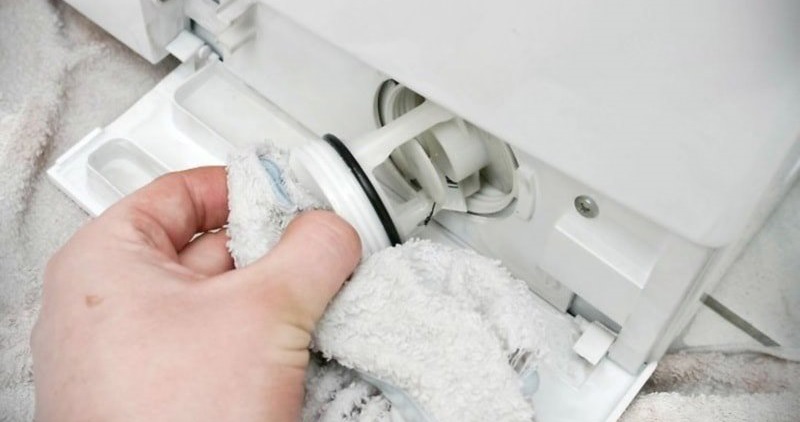
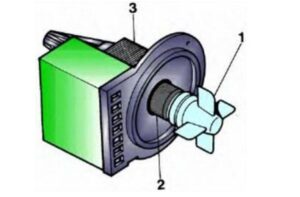
You also need to clean the hole where the filter is installed. Wipe its walls with a damp cloth and shine a flashlight inside. This will reveal the pump impeller. Remove any hair, lint, and threads that have become tangled around the blades. Once you've finished cleaning, you can replace the dustbin. Insert the coil into the hole as straight as possible, without skewing it, and tighten the plug from left to right. Then close the access door or replace the removed false panel.
After cleaning the debris filter, be sure to run a test wash program. If you insert the filter even slightly unevenly, it may leak. So, run a short cycle and monitor your "home helper." If there's no puddle under the machine, the cleaning is complete. The entire process for cleaning the dust filter is described in your washing machine's instructions. Therefore, you can consult the user manual to understand the process and the manufacturer's recommendations. Information is available in the "Cleaning and Maintenance of Your Automatic Machine" section.
When to repeat cleaning?
To ensure the debris filter can function fully, it must be cleaned periodically. Otherwise, the washing machine will malfunction and water will drain too slowly.
A clogged drain filter makes it difficult to pump water into the sewer and can cause the pump to fail.
That's why it's important to remember to clean the dust collector regularly. Washing machine manufacturers recommend servicing the drain filter every 2-4 months. It's best to do this more frequently if you wash wool or long-haired items. The dust collector also gets dirty faster if you have pets. Pet hair is constantly deposited on your clothes and accumulates in the coil. In this situation, cleaning should be done at least once a month.
If you're washing something particularly "dirty," like a wool blanket, a cat mattress, or a down pillow, clean the filter immediately after the cycle. It's actually a simple procedure; it only takes 10-15 minutes. Also, to prevent clogs in the drainage system, be sure to shake out the items before loading them into the drum. It's best to soak heavily soiled items in a basin before loading them into the machine. Don't neglect your pockets either—a paper clip or keys left in your pants can disrupt the machine's operation.

 The washing machine's drain filter serves an important function: it protects the pump from debris and foreign objects entering the drum. Because this element traps unwanted material, it needs to be cleaned periodically. Neglecting this rule will make it difficult for the pump to pump water, which can lead to machine failure. Let's find out where the drain filter is located, how to clean it yourself, and how often it should be cleaned.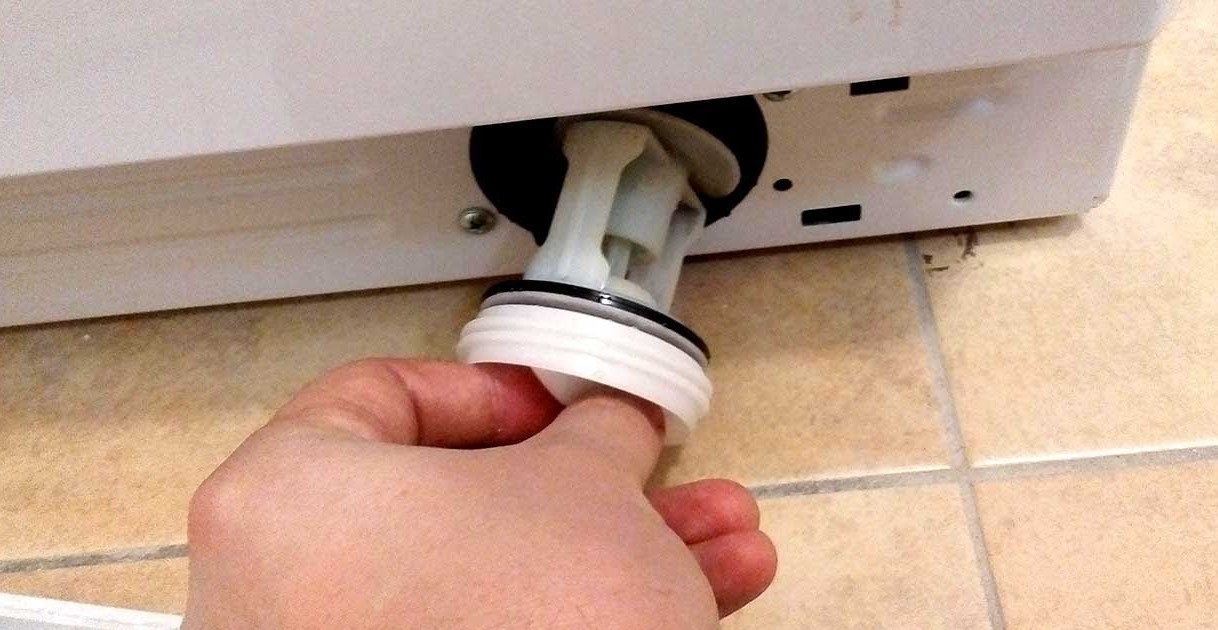














Add a comment