
Washing machine outlet location in the bathroom
 Connecting appliances to the power supply requires special attention, especially if you plan to place the washing machine outlet in a bathroom or other room with high humidity. In addition to standard regulations, moisture protection must be provided, otherwise the electrical outlet will be unsuitable for operating the machine. To avoid mistakes, you need to find a location, select an outlet, and provide a high-quality outlet before installing the appliance. Step-by-step instructions are below.
Finding a suitable location
You can't just cut a socket into the place you like - this is against safety regulations. It is necessary that the new line be laid in compliance with all current regulations. One of the main such documents is VSN 59-88, which outlines all the nuances of electrical equipment in residential premises and buildings. When choosing a location for a new outlet, it is necessary to consider:
- It is prohibited to install sockets under and above sinks, or next to water and sewer pipes;
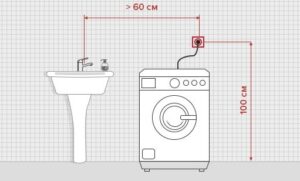
- the distance between the new electrical point and any riser must be at least 60 cm;
- The height of the socket is at least 60 cm from the floor (it is recommended to raise the point by 1-1.25 m).
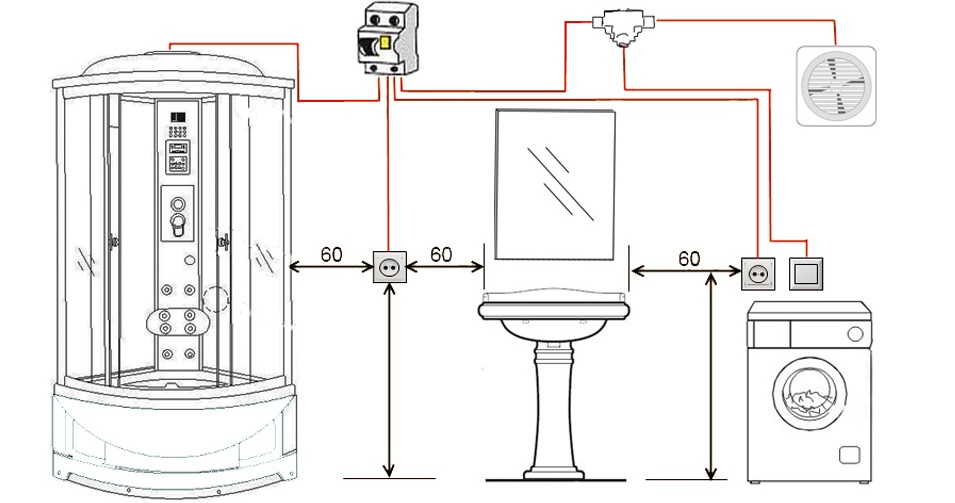
Established standards must not be ignored – they help ensure the safest possible operation of electrical equipment. For example, keeping outlets away from risers will prevent water from splashing onto exposed wires in the event of a pipe burst. Raising the electrical outlet above the floor will prevent short circuits if the room is flooded.
According to the electrical equipment regulations for residential premises VSN 59-88, sockets cannot be located next to the sink and risers.
Incidentally, there are no strict regulations regarding the outlet height. Experts recommend raising the outlet by 60 cm, but this can be adjusted higher or lower if necessary. This is especially true for consumers of above or below average height, as it's easier to choose a height that's more convenient. Accessibility is especially important. When connecting a washing machine to the power outlet, it's important to remember that the standard power cord length is 1.5-1.7 m. Removing the outlet further is not recommended, as this will require using extension cords or replacing the factory cable. Both options are risky, so it's best to plan the cord layout in advance.
A specially designed socket is required
When choosing a bathroom for your washing machine, consider its humidity. Everyone knows that water and electricity don't mix, so the outlet in the bathroom must be protected from moisture. There's no need to be creative—electrical equipment manufacturers have it covered. Outlets are protected from moisture in the following ways:
- a special “curtain” that is located inside the mechanism and, when the plug is pulled out, it drops down, blocking access to the contacts;
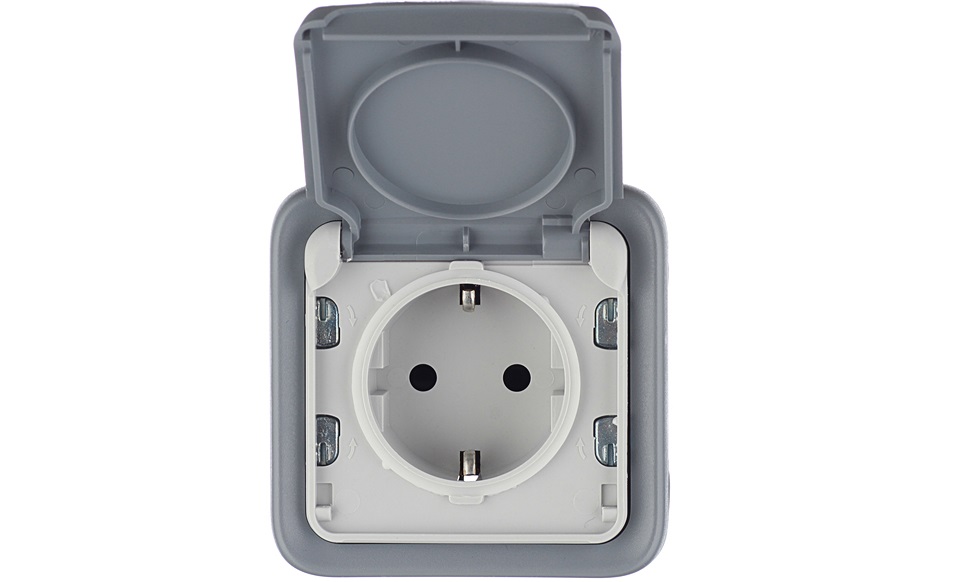
- a lid that closes after use thanks to a spring system;
- rubber seals located in the socket holes and blocking access to the contacts.
In the bathroom, it is necessary to install sockets with a protection class of at least IP44.
For user convenience, all sockets are grouped by their level of moisture resistance. This rating is always indicated on the label—the letters "IP" followed by two symbols. The first indicates the enclosure's protection against dust ingress, while the second indicates water resistance. When installing a washing machine, it is recommended to choose the safest option with IP44 rating or higher.
Wiring and circuit breaker
A washing machine is a very powerful power consumer, so its connection requires an appropriate power line. The first requirement concerns the wires, which must be three-wire. The third wire is necessary for grounding, which will protect the appliance and the user from electric shock in the event of a leak. When installing the power lines for the washing machine, several other requirements and rules should also be considered:
- a separate branch is allocated for the machine;
- the equipment is connected to an individual machine;
- the circuit breaker must operate at a leakage current of up to 30 mA;
- A stabilizer is included in the circuit to smooth out voltage surges in the electrical network.
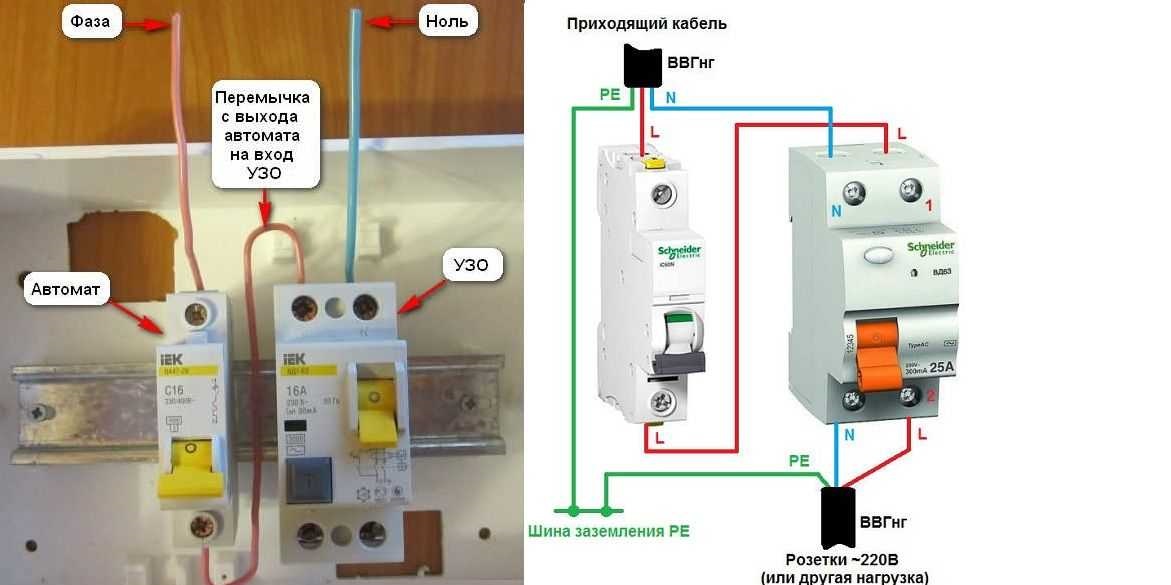
When setting up electrical communications, it is better not to save money. Thus, it is recommended to allocate RCDs or residual current circuit breakers with a rated tripping current of 10 mA for the washing machine. It's more expensive, but the risk of leakage is minimal—the device immediately responds to a power failure and cuts off the power supply. If you plan to install a circuit breaker, select a 16A device.
We also pay attention to the cable used for wiring. When connecting automatic machines, it is recommended to use copper wires and install them concealed. The cross-section of the wires depends on the power of the machine, but is typically at least 2.5 mm. Ideally, it's best to have some extra wire to avoid overloading the electrical system. This will ensure safer operation of the machine and reduce the risk of fire, accidental tripping of the RCD, or accidental breakdowns.
If your apartment has aluminum wiring with a cross-section of 1.5-2 mm, it's best to replace it with copper. Ideally, install the new line in compliance with all the standards described above. Otherwise, operating the washing machine will be dangerous: the cable will overheat from excessive load, and the insulation will melt. This could result in a fire with all the ensuing consequences.
We install a socket
Is the outlet installed incorrectly or too far from the washing machine? Is the wiring aluminum or undersized? In that case, it's best to play it safe and install a new line to the machine. Anyone can handle the task. Instructions for installing a new outlet:
- turn off the power to the bathroom or the entire apartment;
- mark the wall;
- install a socket box attachment on the hammer drill;
- drill a hole;
- cut a groove in the wall up to the electrical panel;
- install a new RCD;
- run the wire from the panel to the future socket;
- place plaster into the hole for the socket and secure the “glass”;
- secure the wire in the groove;
- bring the veins into the glass;
- insert the socket mechanism;
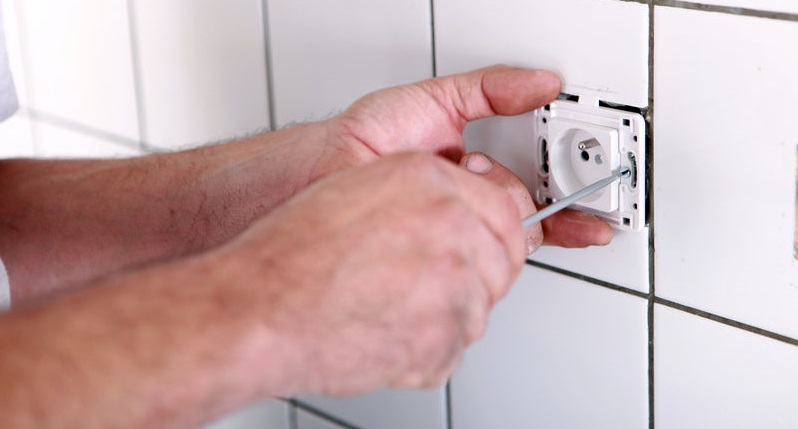
- connect the wiring;
- snap the socket housing into place.
A new outlet must be tested. It's best not to risk the washing machine; instead, connect a lamp or charger to the outlet first. Does it work? Then you can wash.
Interesting:


Readers' comments
Headings
Washing machine repair




For buyers




For users


Dishwasher




Add a comment