
Where is the power filter in the washing machine?
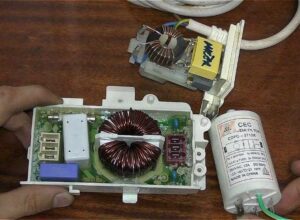 All automatic washing machines are equipped with a surge protector. This device blocks surges in the power supply, thereby protecting the machine from damage. If the surge protector fails, the washing machine will not turn on.
Users need to know where their surge protector is located. Knowing the component's location will allow them to diagnose it if necessary. We'll explain where to look for a surge suppressor, how to test it, and how to repair it.
Where is this part attached?
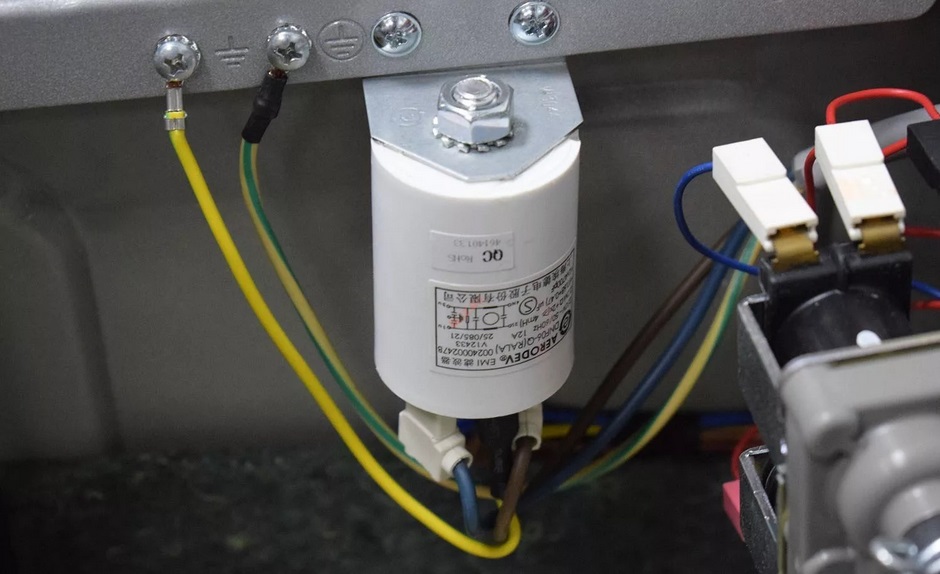
So where is this little detail “hidden” in washing machines? Most washing machines have a noise filter located at the base of the power cord. Finding it is very simple - just remove the top panel of the washing machine and find the place where the power cable enters the case.
A surge protector is a small plastic component with a circuit board inside. The shape of the component can vary from barrel-shaped to box-shaped. Finding the right device is easy.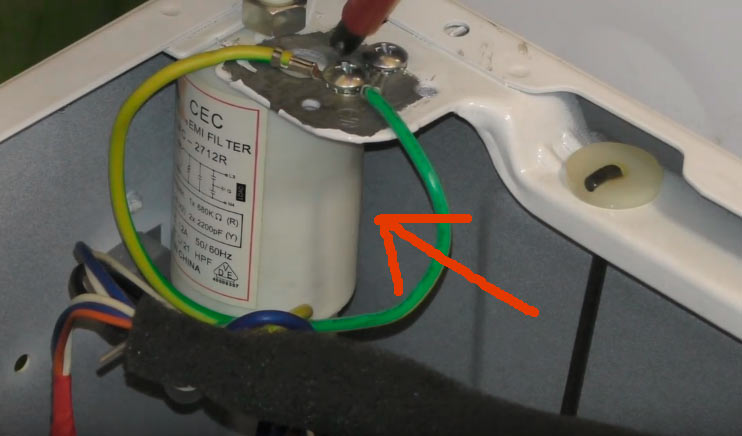
Some washing machines use a separate semiconductor on the control board as a surge protector. In this case, it's best to entrust diagnostics and repair of the interference suppression device to specialists. A novice might find it difficult to understand the components on the washing machine's electronic module.
Why do they put such filters in washing machines?
Every washing machine is equipped with a noise suppression filter. The filter protects the washing machine by neutralizing all frequencies above and below 50 Hz. This prevents power surges from damaging the equipment.
When the interference filter detects a critical voltage level, it will immediately shut down the washing machine. The cycle will be interrupted at any stage. If the detected fault was brief and minor, this will only result in the depletion of the FPS capacitors. If the surge is strong enough, the protective device will burn out.
A noise filter performs an important function. Without it, the slightest fluctuation in the power supply could damage the control module, motor, or drain pump. Asynchronous motors are most often affected by voltage surges—they stop working, but current continues to flow to the stator winding, ultimately causing the motor to burn out.
The interference suppression filter records and dampens voltage surges in the network, protecting the automatic washing machine from damage.
The FPS also serves to protect other appliances. Switching between wash cycles and starting the motor all involve changes in the DC current in the power supply. Without the interference filter, this would risk damaging all appliances connected to the line.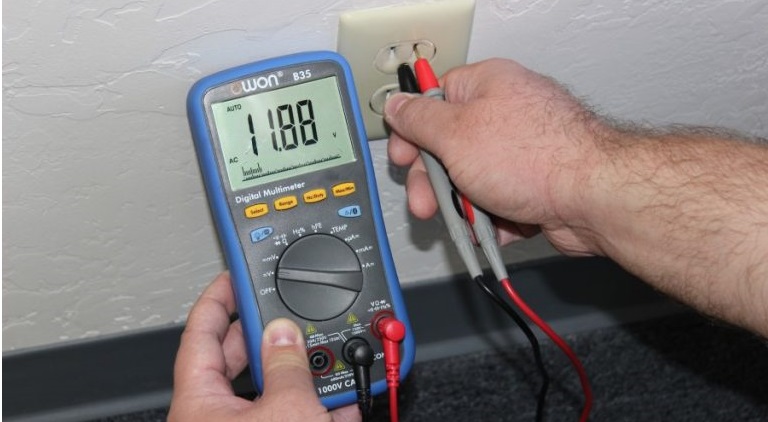
The surge protector captures all fluctuations, smooths them out, and discharges excess current. The interference suppressor is designed for a long service life and rarely fails. The main causes of surge protector failure are:
- reduction in capacitor capacity;
- "breakdown" of a part by a very strong voltage surge;
- abrupt shutdown of the washing machine (this happens when the cord is pulled out of the socket while the washing machine is running).
The interference suppression device cannot be repaired; the entire network filter must be replaced.
Before jumping to conclusions about a faulty surge protector and buying a new one, you should check the component. How do you diagnose a surge protector? What symptoms indicate a faulty component?
How do you know if a part is broken?
Modern automatic washing machines are well protected from external factors, so many simply won't turn on if the interference filter is broken. The intelligent system will shut down as soon as the FPS burns out. After this, the washing machine will stop responding to any user input.
Until the burned-out power filter is replaced, the washing machine will remain silent. Therefore, if your "home assistant" won't turn on, the power filter is often to blame. First, of course, you need to check the power cord, its plug, the outlet itself, and whether there's power in the house. Then, begin diagnosing the interference suppression device.
Typically, filter failure is accompanied by the following symptoms:
- the washing machine body is getting an electric shock;
- there is a burning smell, the insulation on the power cord is melting;
- The washing machine, although it turns on, operates with numerous malfunctions (suddenly “switches off” or changes the washing program).
To diagnose the interference filter you will need:
- multimeter;
- screwdriver.
The algorithm of actions will be as follows:
- turn off the power to the washing machine (make sure the power cord is unplugged);
- close the shut-off valve on the water pipe;
- Unscrew the screws holding the washing machine housing cover and remove the panel;
- Find the place where the power cord is connected to the machine;
- Find the noise suppression filter – it will be located inside the case, at the end of the cable.
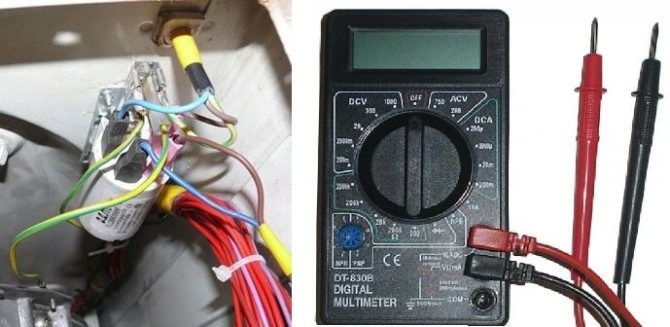
Next, you need to ring the filter. The multimeter is switched to the resistance measurement mode, the tester probes are alternately placed against all the terminals of the device, in pairs. The detected value is compared with the standard value – 680 kOhm.
Next, measure the resistance on the plug. It should also be around 680 kOhm. If the reading deviates significantly from the norm, it can be concluded that the interference filter is faulty.
Be sure to check the capacitors. This is a difficult task—the compound on them will hinder diagnostics. However, it's worth a try: touch the tester probes to different terminals and evaluate the readings. The normal reading is approximately 0.47 μF.
When a washing machine filter is obviously damaged, it needs to be replaced. This isn't difficult—just purchase a new part and replace the damaged one. The wires are connected as before.
Interesting:


Readers' comments
Headings
Washing machine repair




For buyers




For users


Dishwasher




Add a comment