
Where are Siemens washing machines assembled?
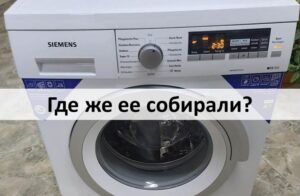 The policy of many modern manufacturers is to register their trademarks in one country, but assemble their products in another. Bosch and Siemens are no exception. Consumer opinions on the impact of assembly location on the quality of the final product are highly divided. Some believe that the lifespan of Siemens washing machines depends on where they are assembled, while others cite the brand's reputation. We'll tell you the truth.
There are factories everywhere.
Even the most honest manager would be hard-pressed to answer the question of where a specific washing machine was assembled. Household appliances often have two or three homelands. The company's head office is located in one country, the brand itself is registered in another, and assembly takes place in a third.
Important! Even the components themselves can be created in different places.
The historical reasons for this are clear: to increase revenue, manufacturers strive to minimize product costs. This is why they choose locations for renting factories where the cost of necessary materials and labor is lower. The mentality of potential buyers, accustomed to trusting the quality of European equipment, is also taken into account: for example, German-made devices are typically purchased more actively than their Chinese and Russian counterparts. Accordingly, companies choose a simple but effective scheme: registration in Europe, location of branches locally (in our case, in the Russian Federation), and assembly of goods in Asia.
It's hardly surprising that most washing machines are manufactured not in Germany, but closer by—in Slovakia, Poland, and even Russia itself, where workers are not only cheaper but also often have less stringent work environment requirements. However, companies try to conceal the fact that they are assembled in Poland or Russia, insistently labeling their appliances "Made in Germany." The fact is, customers react negatively to the idea of moving production to a less prestigious country.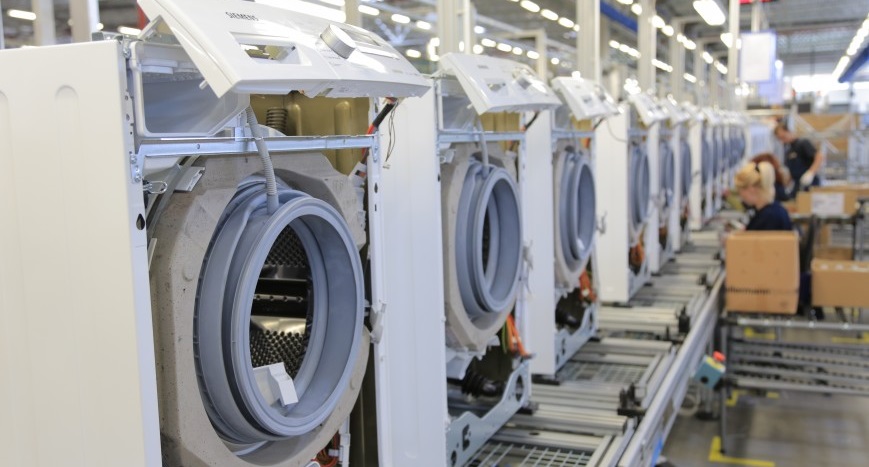
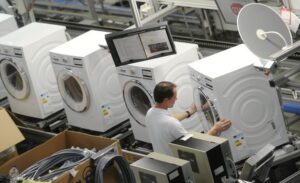
The manufacturer's reasoning is understandable: why build a new factory if another company already produces the required products? It's easier to order the required quantity and slap your own label on top. Take Siltal, Italy, for example. The group's nine factories produce up to 5,000 units daily. Siltal is trusted by 248 brands, including Bosch and Siemens. For the latter, they assemble slimline washing machines.
How did the company develop?
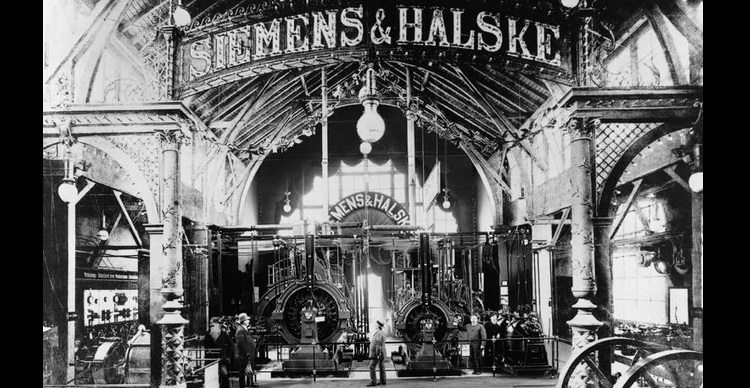
The history of Siemens began in the mid-19th century. Werner von Siemens, a German scientist and inventor, founded a company producing electromechanical products together with engineer Halske. Their work covered telegraphy, medical equipment, optics, and precision mechanics. The first Siemens washing machine appeared only 81 years later, but its production continues to be refined to this day. Modern Siemens washing machines include:
- components made of high-quality materials;
- ergonomics;
- wide functionality;
- intuitive interface, easy to use;
- saving water and electricity.
The company's products, whether German-made or not, are sold in 190 countries. In terms of geographic distribution, the concern is a leader alongside Coca-Cola. A further boost to growth came after the merger with Bosch. The products entered our market after the merger, and Russian consumers responded well to them. Due to stable demand, it was decided to establish production in Russia.
The assembly of large components is now well-established in St. Petersburg, so Russian-assembled products differ little from their German-made counterparts. The products are assembled exclusively with German spare parts, with a limited number of foreign companies involved in assembly. This explains the success of Bosch&Siemens equipment.
Is it worth thinking about the country of assembly?
Siemens leads the rankings for durability. No more than 5% of machines experience technical failures during the first ten years of operation. The rigor of control and testing is the same at both domestic and international facilities.
Important! Locations where genuine equipment is sold can be found on the company's official website.
Detailed manufacturer information is provided in the technical data sheet or on a special sticker. On top-loading machines, this sticker is located on the door or back. On front-loading machines, it is located on the inside of the door, on the top left of the front panel, and on the rear.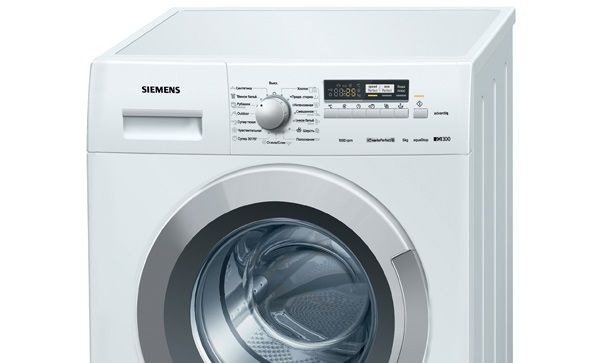
Building a small washing machine factory requires a billion dollars in initial capital. If you're buying high-tech equipment, the assembly location won't affect quality. Products of this caliber are simply counterfeit-proof. Therefore, the risk of purchasing a low-quality unit is minimized.
Today, Siemens products are manufactured in Germany and Spain, Turkey, and China. Russian-assembled models include the WS 12G240 and 10G240, as well as the silver WS 12G24S. But this isn't particularly important: B&S won't risk its reputation by shipping defective products, as the company maintains a warranty even for products manufactured in other countries. Furthermore, some of the equipment is sold in the European Union, where the ISO system dictates strict quality standards. Therefore, when purchasing, it's best to focus on the functionality of the chosen model rather than on the assembly location.
Interesting:
Readers' comments
Headings
Washing machine repair




For buyers




For users


Dishwasher




Add a comment