
Homemade laundry gel
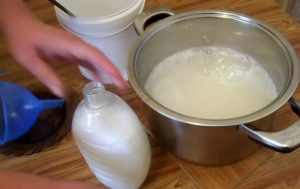 Modern housewives are increasingly consciously abandoning store-bought detergents and opting for homemade laundry gel. This isn't because store-bought options are monotonous or expensive: manufacturers offer a wide variety of packages and bottles at affordable prices. The point is that making a homemade version is easier and cheaper, while the ingredients are safer and more effective. Interested? Then take a look at the most popular options.
Super-effective gel with soda ash
This gel, made from baking soda, water, and soap, is excellent for removing even the most stubborn stains. Despite its heavy formula, it gently cleans fabrics, doesn't settle in fibers, and rinses out easily, leaving no white spots or streaks. This makes it suitable for washing virtually any item, regardless of the type or color of the material. The only exceptions are natural wool and silk.
Preparing a helium solution is easy:
- prepare 200 g of soap, 200 g of soda ash and about 2.5 liters of clean water (any soap can be used, but it is better to give preference to laundry or baby soap);
- Find a suitable container for preparing the gel on the stove (new cookware will not work, as it cannot be used for cooking afterward);
- grate the soap on a fine grater, pour into a container and add 1.5 liters of water;
- stir the soap solution, place on medium heat and, stirring constantly, heat, but do not bring to a boil;
- as soon as the soap is completely dissolved, you need to add a liter of water and mix thoroughly;
- add baking soda, stirring constantly: the powder should dissolve completely without forming foam;
- remove the homogeneous hot mixture from the burner;
- cool the gel at room temperature.
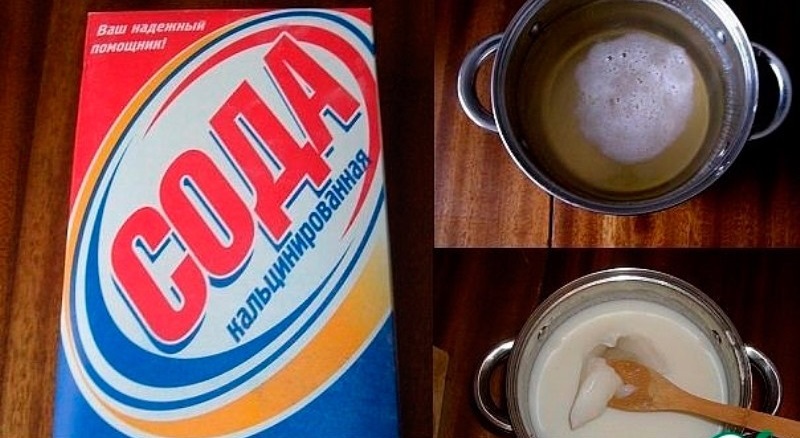
Afterwards, the homemade laundry detergent should be left to settle for at least a full day. Then, pour the mixture into prepared wide-mouthed containers. Ideally, the consistency of the liquid should resemble medium-fat sour cream. If the mixture thickens upon cooling, thin it by adding another 200-800 ml of water when reheating.
Gel with borax
You can also make a disinfectant at home that will not only remove stains but also eliminate mold and odors. To do this, combine laundry soap and borax. To enhance the effect, add baking soda, and for a pleasant aroma, add a few drops of your favorite essential oil. The detailed recipe looks like this.
- Prepare the ingredients: 5 liters of water, 300 g of soda, 300 g of dry borax and 300 g of soap (laundry, tar or antibacterial).
- Grate the soap on a fine grater.
- Pour half a liter of water into a saucepan, add soap shavings, place on low heat and heat, stirring.
You can’t add soap to hot water; you need to heat the soap solution slowly!
- Add dry ingredients to the boiled soap, stirring the mixture constantly.
- Pour the remaining 4.5 liters of water into the thick mass in a thin stream.
- Heat the solution to 30-40 degrees.
- Remove from heat and cool.
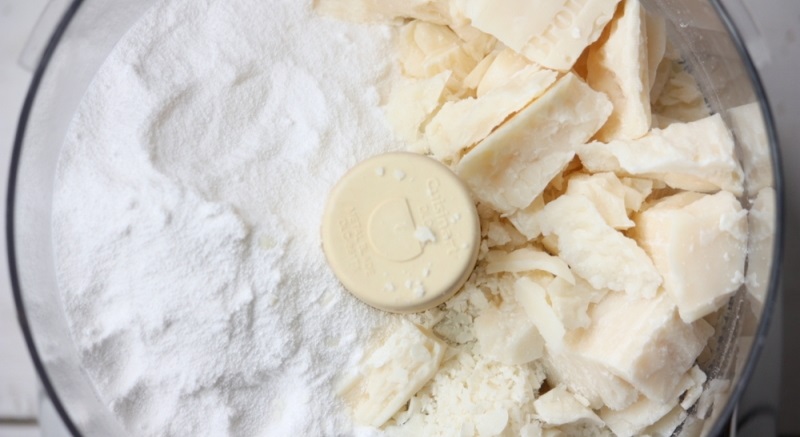
The finished gel also needs to steep, so place the saucepan in a dry place for 24 hours. Afterward, you can pour the liquid into bottles. Incidentally, the solution is gentler due to the borax and its low concentration, so add 2-3 tablespoons of the solution when washing. There are no restrictions on fabric type: it can be used regularly for washing any item, even the most delicate. Just be sure to use only baking soda, as baking soda will make the solution too harsh.
Gel with acetic acid
You can make your own laundry detergent and fabric softener, too. Just like store-bought fabric softener, a homemade version will leave your clothes smelling pleasant and feeling soft. What's more, your homemade version will boast a natural and safe formula.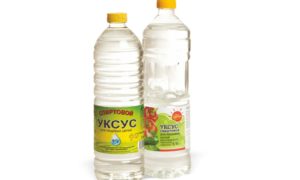
Making homemade conditioner is very simple, without any heating or cooking. Just follow a few simple steps:
- prepare in advance two glasses (500 ml) of white vinegar, 350 g of baking soda, 500 ml of water, 5-10 drops of any essential oil;
- find a container with a capacity of 3-5 liters, since a lot of foam will be released when mixing the ingredients;
- pour water into a container and dissolve soda in it, adding granules in portions and constantly stirring the solution;
- Pour vinegar into the solution once it has become homogeneous, stirring constantly;
When preparing a gel or conditioner at home, it is essential to follow the recipe strictly—changing the sequence will result in an incorrect chemical reaction!
- after the boiling and foaming has finished, add essential oil;
- Shake the solution and pour into containers.
It is recommended to use glass or plastic bottles for storing homemade cleaning products. They must be kept in a dry and warm place, protected from the sun and children. Do not allow the liquid to heat up or cool down excessively, otherwise the mixture will thicken and become less soluble in water.
Pros and cons of homemade remedies
The main advantage of homemade detergents is safety. All cleaning products contain surfactants, or surfactants, which are responsible for removing dirt from fibers. However, store-bought powders and gels contain much higher levels of surfactants: harsh concentrates remove the protective film from your hands during hand washing and negatively impact the fabric itself. Commercially produced detergents often contain phosphates, which are effective stain removers but have harmful effects on humans. All of this can have adverse health effects, including allergic reactions, damaged skin, and weakened immunity.
Homemade gels use only proven and safe ingredients. When following the recipe correctly, the risk is reduced to zero, resulting in a hypoallergenic and gentle formula. Also worth remembering are the other advantages of homemade cleansers: low cost, fragrance-free, and affordability.Among the advantages is the product's versatility, as it can be used on both white and colored items, and in both hand and machine washing.
Homemade gels are versatile, safe, and easy to make.
The main drawback lies in the preparation itself. You'll have to spend time and effort finding, mixing, and cooking the ingredients, even though most recipes are quite simple. The difficulty also lies in some accompanying nuances that need to be considered before using the gel. These include the following:
- Homemade soap gels do not dissolve well in cold water – they should be heated to at least 40 degrees;
- washing soda is effective in removing stains of any complexity, but with regular use it can discolor the product (baking soda is safer, but cleans a little worse);
- Homemade solutions do not remove greasy, coffee and old stains well (pre-soaking with a stain remover is necessary).
Any homemaker can make their own washing machine gel, and its final cost is unmatched compared to store-bought products. The key is to strictly follow the recipe, calculate the correct dosage, and ensure proper storage.
Interesting:

Readers' comments
Headings
Washing machine repair




For buyers




For users


Dishwasher




Add a comment