How to check if the washing machine is heating the water?
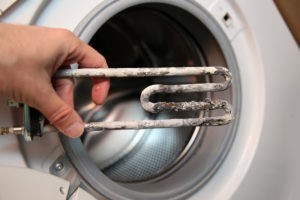
The heating element in a washing machine is responsible for heating, which can sometimes be essential for removing tough stains and running a delicate wash cycle. If you suspect the heating element isn't working, there's no need to try to stick your hand into the drum during the cycle. There are safer and more practical ways to tell if your washing machine is heating the water. Below, we'll discuss what you'll need for the simplest test and when to immediately sound the alarm.
Heats or doesn't heat: methods of determination
There are several ways to test a washing machine's heating element. There's no need to open the housing or search for a lot of tools—all you need is a timer and a free hand. The easiest way to test the heating element is as follows:
load a small amount of laundry into the drum to avoid empty washing;
select the “Cotton” mode or another program with a set temperature of 60-90 degrees;
press the "Start" button;
wait 15-20 minutes;
Place your palm against the glass of the hatch door.
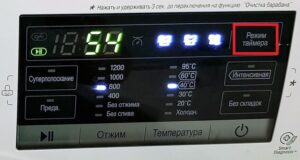
Modern machines can independently diagnose the system for faults and display the corresponding error (for example, H1, H2, HE, HC, E5, E6).
If your hand feels warm, the heating element has heated the water. However, an icy door doesn't always indicate a problem with the heater. It is quite possible that the time was calculated incorrectly; the machine has already switched to rinse mode and is taking cold water from the water supply.It's best to repeat the test and test it with your palm during the wash cycle. There are other methods for testing the heating element.
Feel the top cover of the machine, which also gets noticeably warm 15-20 minutes after a wash at 60 degrees Celsius. This works for both front-loading and top-loading machines. This is especially important for the latter, as the first method doesn't work due to the lack of a glass door.
Touch the drain hose while the wastewater is draining. This will require patience and waiting to determine the exact moment of draining. Then, simply hold the hose in your hand and feel if its walls are warm. A more revealing alternative is to loosen the clamp on the drain hose, let the water drain into the bathtub or sink, and measure its temperature.
Pay attention to the power meter. Seven to 10 minutes after starting the cycle, the washing machine will begin consuming power intensively due to the heating element activating, as indicated by a flashing light on the meter. It's important to turn off all other household appliances during the test to avoid interference.
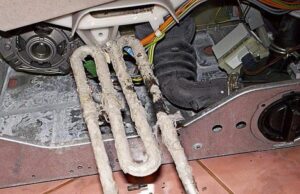
None of the above methods guarantees a 100% result. Ideally, the experiment should be repeated at least three times. Heating elements often malfunction due to accumulated scale and deposits, which causes fluctuations in water heating. A deviation from the norm is considered to be lukewarm wastewater, rather than heating to 50-90 degrees Celsius. If this is observed, the heating element must be cleaned or replaced with a new one.
Search for a part
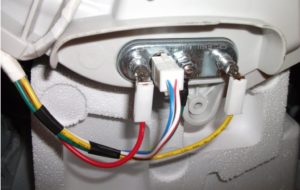
If you have any doubts about the heating element's functionality, you'll need to test it with a multimeter. First, you need to locate the element itself inside the machine. Its location depends largely on the brand. For example, in Indesit and Ariston, it's located at the back, while in Bosch and Siemens models, it's at the front.
Having a factory wiring diagram for the heating element in the washing machine can speed up the search.
If there are no instructions, then we look for the heater ourselves:
Inspect the back of the machine. A large panel often indicates a heating element located behind it.
We lay the case on its side or tilt it back to look into the bottom and try to locate the heating element near the washing tank;
remove the back cover and carefully inspect the space around the tank;
We take a flashlight, shine a light through the drum from the inside and try to determine the location of the heater by eye.
The task is simplified by the fact that the heating element is always located in the washing machine's tub. It's only necessary to specify its location. There is no need to remove the device – you can “ring” the heater without removing it. We will tell you exactly how further.
Heating element test
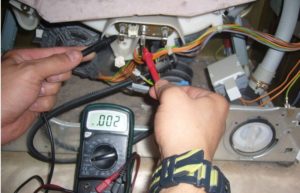
First, unplug the washing machine and turn off the water supply. Next, ensure easy access to the heater and, if necessary, remove the back panel or bottom. Next, grab a multimeter and begin testing.
We take photographs of the heating element to record the connected wiring and avoid errors during future installation.
We disconnect all connected wires.
We set the multimeter to measure resistance and set the selector to 200 Ohm.
We connect the probes to the contacts.
We evaluate the obtained result.
A functioning heater always displays a fixed value of 26.8 ohms. Slight deviations from the norm of +/- 5 are possible. If the screen displays "1," there is a break in the line inside the heating element and the part needs to be replaced. When the tester displays "0" or another value less than 1, a short circuit has been detected and the element has burned out.
Voltage fluctuations in the electrical network and hard water with an abundance of impurities can cause problems with the heater.
Often, checking the resistance is not enough, since even if the device appears to be in good working order, the dielectric inside can leak onto the housing and cause current leakage. To ensure safe operation of the machine, it is recommended to check the heating element for breakdown. Simply turn the tester on in buzzer mode, attach one probe to the contact, and the other to the multimeter body. If there's no high-pitched beep, everything is fine. Otherwise, replace the part immediately and do not use the machine until the repair is complete.
The heating elements are burning out. Two in a row. Two washes and the heating element dies. What could it be? Has anyone else had this? My Vestel washing machine.

 The heating element in a washing machine is responsible for heating, which can sometimes be essential for removing tough stains and running a delicate wash cycle. If you suspect the heating element isn't working, there's no need to try to stick your hand into the drum during the cycle. There are safer and more practical ways to tell if your washing machine is heating the water. Below, we'll discuss what you'll need for the simplest test and when to immediately sound the alarm.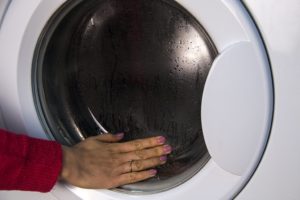















It doesn't heat well.
The heating elements are burning out. Two in a row. Two washes and the heating element dies. What could it be? Has anyone else had this? My Vestel washing machine.