Why does the washing machine's electric motor get hot?
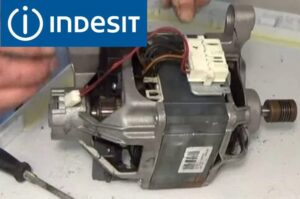
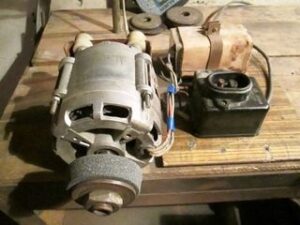
If your washing machine's motor overheats during operation, it's not a good sign. This means the motor becomes less efficient, increasing the risk of damage. Furthermore, an overheated unit can cause a fire, so this type of malfunction should not be ignored. Let's explore the possible causes of elevated motor temperatures and how to repair your "home helper" and get it back in working order.
Is there really overheating?
When using a washing machine, the user must follow all the rules and periodically check the condition of the "home assistant". The temperature of the electric motor is one of the main indicators that must be monitored. There is a feedback loop here: the less the engine heats up, the more efficiently it works.
Before drawing conclusions about engine failure, it is necessary to familiarize yourself with the operating technical characteristics of the motor specified by the manufacturer.
For some electric motors, even temperatures as high as +100°C are normal. Therefore, don't assume the motor is faulty just because it's very hot. First, consult your washing machine's manual and carefully study the section describing the motor.
In most cases, a temperature of up to 60-70°C is considered normal when the engine is running. If it rises by another 10-15 degrees, it's worth focusing on the problem and monitoring the engine. In this situation, engine diagnostics are entirely warranted. Poor cooling may be the cause of the problem, and improving it may be sufficient to resolve the issue.
If the electric motor temperature reaches 100°C, it's essential to seriously inspect the motor and identify the cause of the malfunction. If the temperature continues to rise above 100°C, the power must be immediately disconnected to prevent insulation damage and fire.
There are several ways to determine if your engine is overheating. We'll explain each method.
Manual. You need to touch the electric motor. If you can hold your hand on the casing for a few seconds, it has reached a maximum temperature of 60°C, and everything is fine.
Using a contact thermometer. A thermometer equipped with an external sensor is used for measurements. Temperature should be recorded in the center of the housing and in the bearing area. Overheating is more noticeable in these areas.
Using a thermal imager. By connecting the device to the motor, you can view all the hot spots on the device's screen. This method is the most accurate and convenient, but the cost of the measuring equipment is quite high and simply unaffordable for many.
Using built-in sensors. Some modern 220- and 380-volt engines have these thermistors built into the design, meaning they're installed at the factory. They allow you to monitor engine temperature in various areas. If you don't have these sensors, you can buy them and install them yourself.
If you decide to install the PTC thermistors yourself, it's best to ensure that the overheating response is automatic. This way, information from the sensors will be sent directly to the frequency converter, and then to the controller output. The protective device will promptly respond to the received information and behave as follows:
when the engine heats up to 70°C, it will send information about this to the operator;
When the temperature reaches 100°C, the device will switch off to prevent damage.
Of course, in domestic settings, manual methods or those using a thermometer are most often used. Thermal imagers and PTC thermistors are necessary for monitoring larger and more powerful electric motors.
Why does excessive heating of the electric motor occur?
If you notice that your washing machine's motor is overheating, it's best to immediately determine the cause. There could be several reasons. Overheating isn't always due to improper operation of the equipment. Any washing machine is subject to the merciless force of time—parts gradually wear out, and their normal performance is compromised.
The same is noted with the “heart” of the machine. After several years of operation, the engine components wear out, the internal wiring becomes damaged, and this leads to overheating of the device. Generally speaking, there are several main reasons for the increase in operating temperature.
Accumulated dirt. Dust and debris can get into the motor, clogging the contacts and windings. In this case, the electric motor may not start at all, only consuming kilowatts and humming. If the protective device fails to activate, the motor will overheat under the increased voltage. Cleaning the "internals" is the solution.
If an overheated engine continues to operate under increased voltage, it may catch fire.
Broken bearings. Wear on these components places the engine under constant increased load. This can lead to burnout.
The drive belt is either stretched or too tight. In either case, the load on the electric motor increases. It's best to have the washing machine repaired as soon as possible, adjust the belt tension, or install a new belt.
Systematic drum overload. Every automatic washing machine is designed for a specific amount of laundry. Exceeding the manufacturer's maximum load capacity will strain all internal components, including the motor. To avoid problems, load the machine only as much laundry as permitted and distribute the items evenly throughout the spin cycle.
So, sometimes repairs may not be necessary at all. For example, when the machine overheats due to consistently exceeding the maximum load capacity. In other cases, you'll need to slightly modify the washing machine by replacing bearings or the drive belt, or removing and cleaning the motor.
Only the rotor is hot
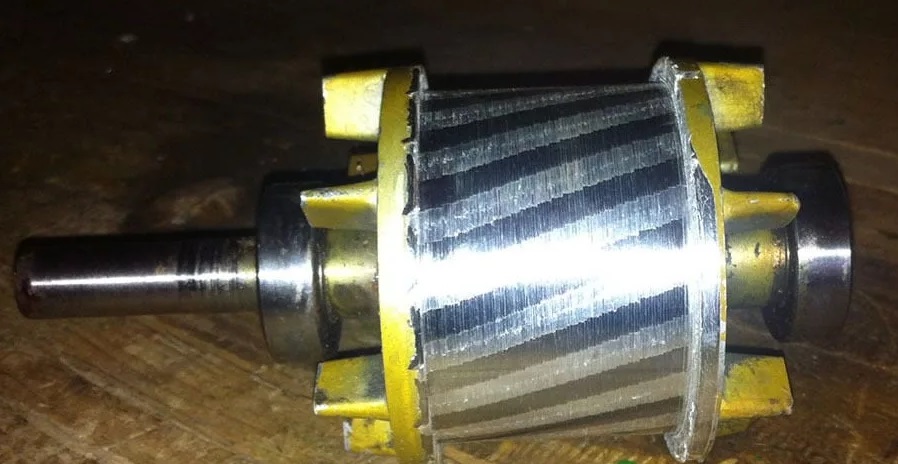
The rotating element of an electric motor is called a rotor. It is directly connected to the drive shaft. Rotor mechanisms vary in design and parameters, and differ depending on the motor model.
The engine rotor also tends to heat up. Typical causes of this include:
mismatch of rotor power with a specific electric motor;
rotor winding breakage;
capacitor with unsuitable capacity;
improper heat dissipation (the impeller stops performing its functions fully);
Bearing damage. The main symptom of this type of failure is the rotor shaft not turning manually. To resolve the issue, the components are replaced;
poor contact or break in short-circuited squirrel cage winding;
The motor shaft is jammed. In most cases, this malfunction trips the circuit breaker or blows a fuse.
To prevent the rotor from overheating, do not subject the engine to increased loads, and follow the operating rules and the established temperature regime.
You can test the rotor winding with a multimeter. If the readings on the screen are too high, the electric motor will need repair.
Only the condenser is hot
Users often notice that it's not the motor itself that overheats, but rather the capacitors built into it. The main reason for this is that the device's capacitance doesn't match the motor's power.
If the starting device overheats, purchase a new MBGO or MBGCh capacitor of the appropriate capacity.
These types of capacitors are designed for operation with alternating voltage and feature superior cooling. When purchasing a starting device, be sure to focus on the model and characteristics of your washing machine's electric motor. Instead of a single new capacitor of higher capacity, an additional device can be installed in addition to the existing one. The devices are connected in parallel to the operating and starting windings.

 If your washing machine's motor overheats during operation, it's not a good sign. This means the motor becomes less efficient, increasing the risk of damage. Furthermore, an overheated unit can cause a fire, so this type of malfunction should not be ignored. Let's explore the possible causes of elevated motor temperatures and how to repair your "home helper" and get it back in working order.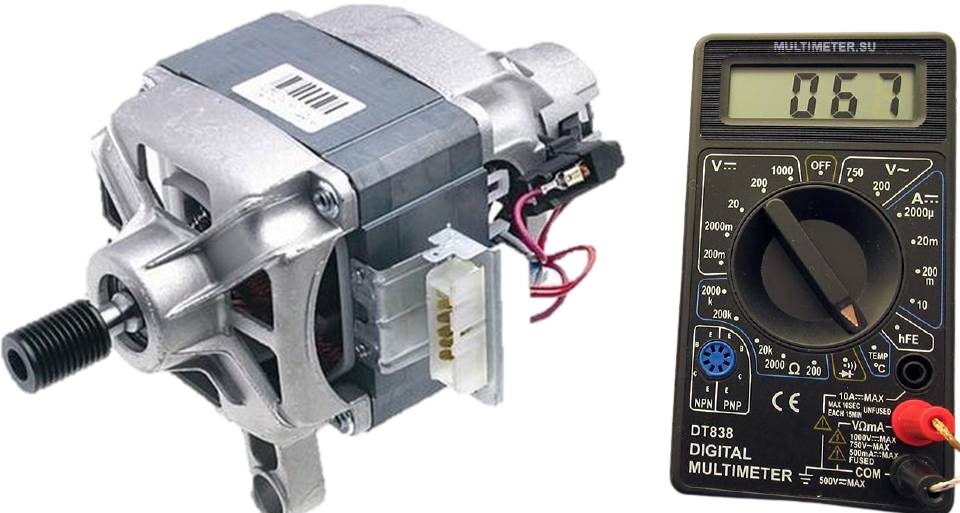















Add a comment