
Why does the socket get hot when the washing machine is running?
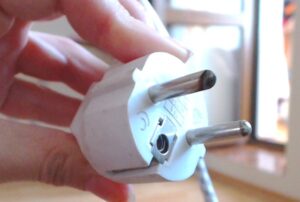 Washing machine outlets often overheat. Fortunately, fixing this problem is usually easy; an experienced electrician can do the job in just five minutes. Even someone unfamiliar with Ohm's Law can fix the problem themselves, as long as they follow safety precautions. Let's figure out how to fix a faulty outlet.
Let's inspect the power cord plug
Before starting work, be sure to turn off the power to the outlet. Failure to follow safety precautions can result in serious injury from electric shock. That's why it's so important to turn off the power either throughout the entire apartment or in the room where the washing machine is located. Sometimes the plastic cover gets hot because the plug in the outlet gets hot when the machine is running. This means the problem isn't with the electrical outlet itself, but with the plug itself.
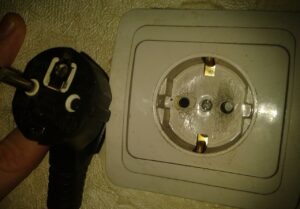
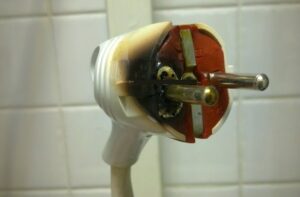
If the contacts inside the plug are broken, it heats up, transferring heat to the socket body.
Checking the plug is simple: plug the washing machine into a different outlet (you can even use an extension cord) and run a cycle. Wait 10 minutes and then touch the casing. If the new outlet also becomes hot, the problem has been identified. Another way to check the "suspect" outlet is to power another high-power appliance from it, such as a heater. If the plastic casing becomes hot, the problem lies with the outlet itself, as the plug is normally intact.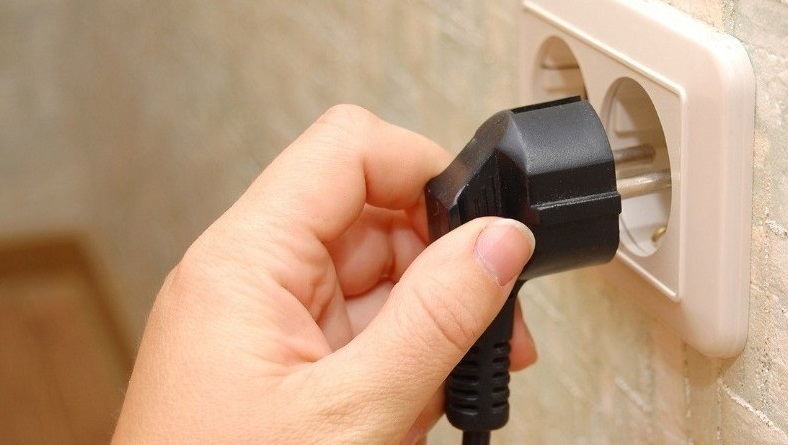
Overloaded socket
Before disassembling a hot washing machine, be sure to consider whether you've overloaded the outlet. Manufacturers always specify the load current at which the device will operate normally (for example, at up to 16 amps, this is approximately 3 kW). Therefore, if an automatic washing machine has a higher power rating, it's logical for the outlet to heat up. The same effect occurs when connecting to a multiple-use outlet and powering several appliances simultaneously, with a total consumption of over 3 kW (in our example).
When the socket is not suitable for the machine's power, it is necessary to arrange a new point for powering the washing machine.
Ideally, allocate a separate outlet for the washing machine and equip the line with a residual-current device (RCD) and a voltage stabilizer. This will prevent problems with the appliance overheating.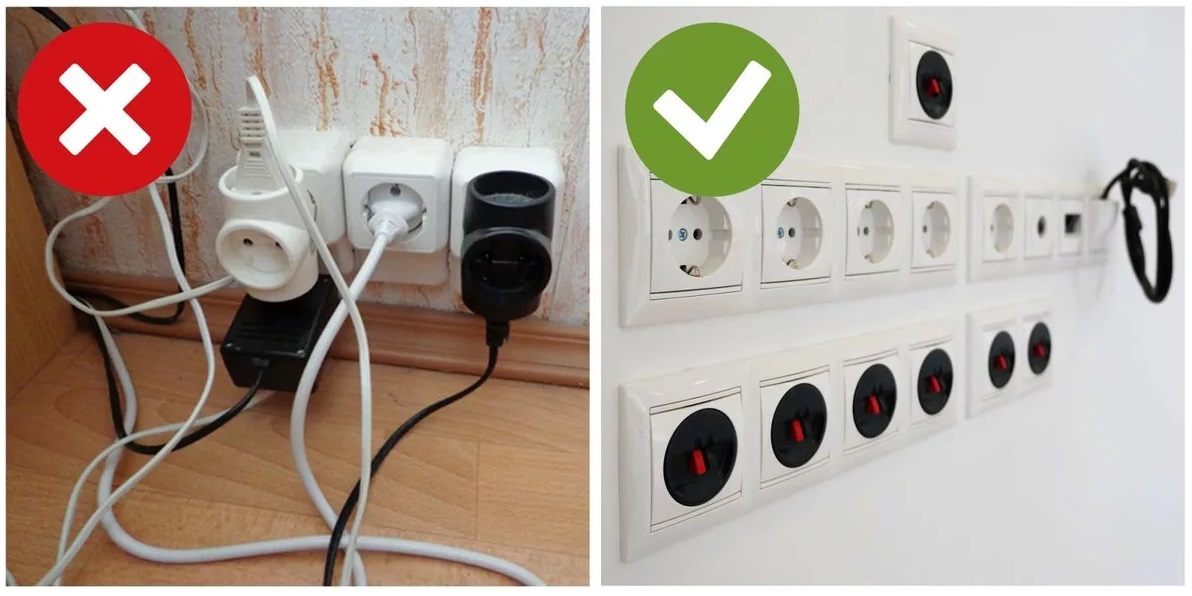
Socket chain
What to do if the problem is not with the plug and the maximum permissible power consumption is not met? Another possible reason for heating is a neighboring outlet connected to the “problem” cable. Sometimes, wires from the junction box enter and exit the first outlet, feeding the second, third, and subsequent outlets. Thus, current flows through the contacts of all points in the circuit.
If, for example, a washing machine is plugged into outlet #3, and the contacts at outlet #1 become loose, the device in question will begin to overheat or stop working altogether. To fix the problem, you'll have to repair the adjacent outlet.
Poor contact connections
This is the most common cause of overheating. If all the previously described problems have been ruled out, you'll need to disassemble the device's case and inspect the connections. Be sure to check that the screws securing the wires are securely tightened.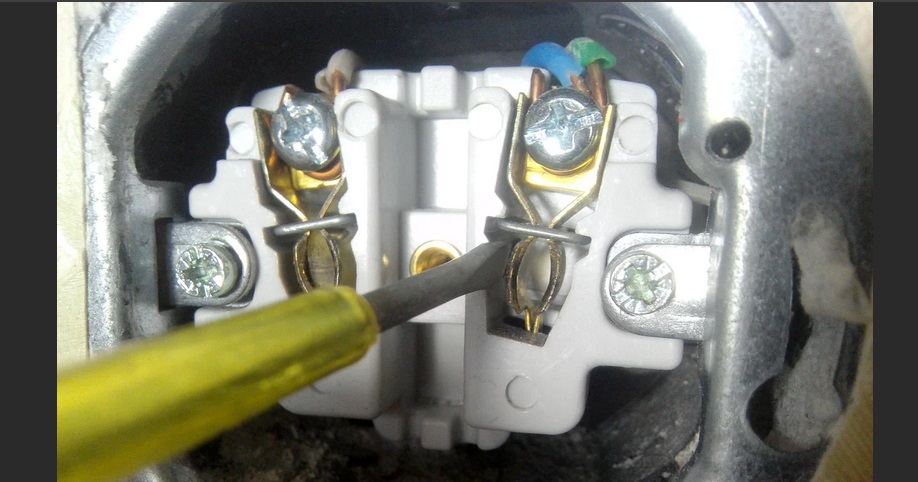
When the socket design doesn't include springs, the contacts don't grip the plug tightly. If you don't have time to install a new socket, you can try squeezing the device's "clicks" together. However, they will soon loosen again, and the problem will reoccur. Therefore, it's best to find the time and replace the old socket with a spring-loaded one. This way, the device's body won't overheat when you turn on the machine.
The carbon deposit created a conductive surface
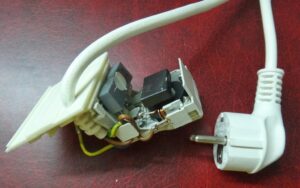
Heating can occur if the power point housing is made of low-quality plastic. This can cause carbon deposits to form inside, causing the plastic parts of the device to become hot, and the outlet to trip the circuit breaker.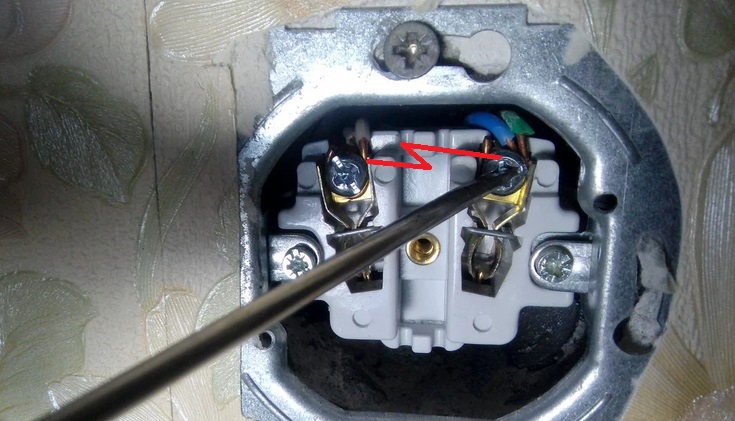
Generally, plastic isn't considered a conductive material. However, when exposed to high temperatures, it can begin to conduct electricity. The socket housing will become very hot when the washing machine is plugged in, which is unsafe. If you disassemble the housing and notice any burning inside, replace the socket as soon as possible. Powering the washing machine from it is too dangerous; it could cause a fire.
Interesting:


Readers' comments
Headings
Washing machine repair




For buyers




For users


Dishwasher




Add a comment