
Why does the washing machine cord get hot?
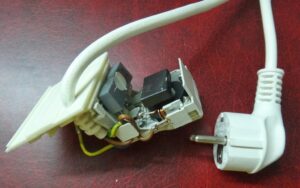 If your washing machine's cord is heating up, you can't ignore it. You must immediately unplug the appliance, or better yet, turn off the power to the entire room. Only after cutting off power to the machine and outlet can you begin troubleshooting. The next step is to figure out what's causing the insulation to heat up and how to stop the problem.
The wire is broken or pinched
The first step is to check the cord itself. If the cord is completely severed, the appliance won't work—power won't reach the control board. It's a different matter if the cable is pinched by a heavy object, for example, accidentally caught under the foot of a washing machine or in a door. This will disrupt contact at the point of pinching, causing the insulation to heat up first in the damaged area, then along its entire length.
Don't leave the wire pinched. The insulation could break at any moment, causing a fire. It is better not to take risks and if you suspect that the cord is overheating, check its entire length.
Do not operate a washing machine with a heating wire. It is necessary to de-energize the appliance and begin diagnostics!
Sometimes the cord has been pinched for a long time, for example, during transportation or installation of a washing machine. In these cases, the only way to detect the insulation damage is with a multimeter. You'll need to turn on the buzzer mode and ring the entire length of the cable.
Determine the heating source
If the cord passes the test, the diagnostics should continue. The next step is to determine what exactly is heating up: the cord, the plug, or the outlet. Visually identifying the cause of the heating is difficult; a quick test is easier and more effective: connect the washing machine to a different outlet. If the cord becomes hot again after changing the outlet, the plug is faulty. The power cord plug can become hot for three reasons:
- the contact between the wires and the plug contacts is broken;
- a manufacturing defect has appeared;
- The contacts oxidized, which led to disrupted current exchange.
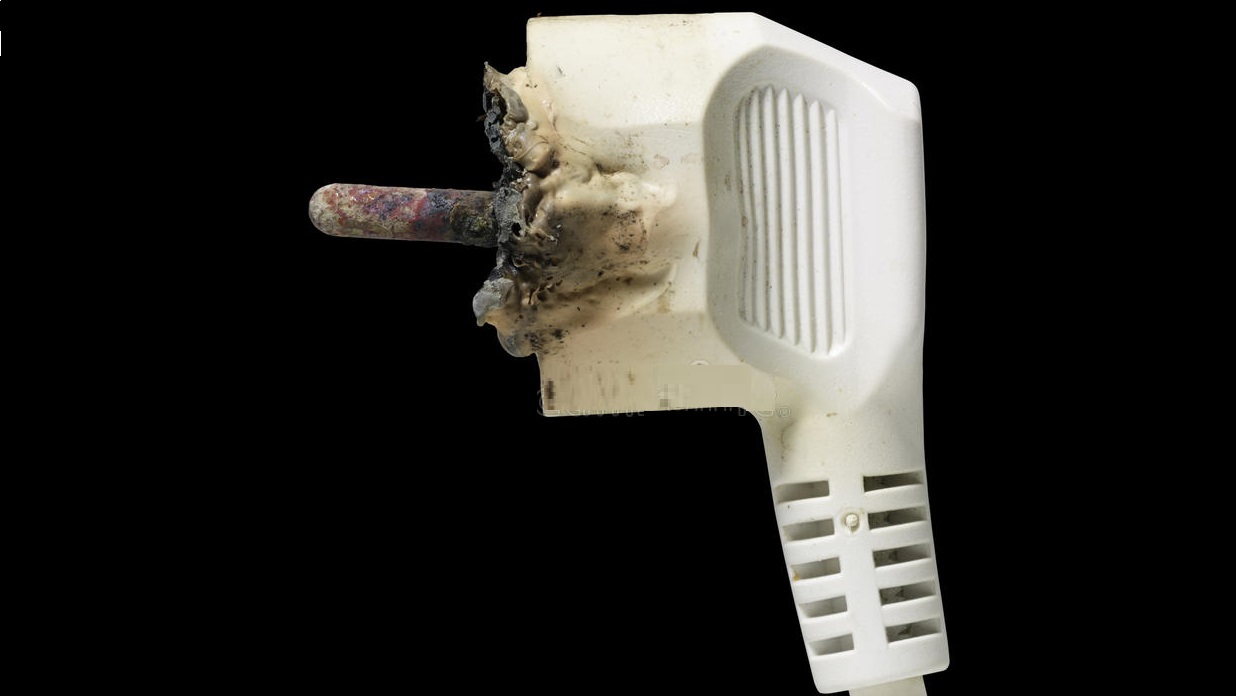
Modern washing machines are equipped with non-detachable power plugs, so repairing the plug is impossible. The only solution is to replace the plug. Ideally, the entire power cord should be replaced.
A non-detachable plug cannot be repaired; the only option is to replace the plug or the entire power cable.
Sometimes it's not the plastic tip of the plug that heats up, but its external contacts. In this case, the socket is at fault—or more precisely, the holes in it don't fit the plug's pins, or the locking tabs have become loose. The lack of a tight grip impairs electrical conductivity, causing leakage and subsequent heating. Adjusting the socket in this situation is unsafe—it's safer to install a new electrical outlet.
To prevent this from happening again, you need to not only know what to do but also choose the right replacement. First, buy genuine parts, taking into account the brand and serial number of your washing machine. Second, buy from trusted suppliers. Third, calculate the cord length in advance and avoid stretching or pinching it.
Get rid of adapters
The adapters used may also be the reason for the machine's power cord heating up. It's no wonder that manufacturers strongly recommend against using extension cords and adapters—connecting appliances to the power grid through them is unsafe. Especially for high-power consumers like washing machines. A washing machine requires a large amount of power and a direct connection to the grid. Without the latter, the following problems will occur:
- broken contact;
- heating the fork;
- damage to insulation, including combustion and fire.
It's even worse if the machine is connected via a coiled extension cord. Due to inductance, such a cord heats up faster, increasing the risk of fire. Even the highest-quality adapter won't provide a direct connection. If using an extension cord is unavoidable, it's essential to constantly monitor the cord's temperature. The "coil" will inevitably unwind.
The washing machine should also be provided with high-quality electrical connections—a protected point, an individual RCD, and grounding. Ideally, the wiring should be copper and of the appropriate cross-section. Aluminum wires are more flexible and soften over time, causing them to become loose. As a result, the plug and socket constantly heat up. Ignoring the heating of the washing machine's cord is unsafe. To prevent a fire, it's best to immediately begin repairs—replace the power cord, plug, or socket.
Interesting:

Readers' comments
Headings
Washing machine repair




For buyers




For users


Dishwasher




Add a comment