
Bosch Logixx 6 Sensitive Washing Machine Manual
 The Bosch Logixx 6 Sensitive is a well-known, reliable top-loading washing machine from a German manufacturer. It can be operated without any instructions, as many homeowners are accustomed to doing. However, sometimes situations arise that simply cannot be resolved intuitively. This is where the instructions come in handy; you can read a short version of them in this post.
Getting ready to connect
Before packaging this brand of washing machine, the factory prepared it for transportation, specifically by securing the necessary components to the frame and tightening the shipping bolts. Therefore, our first task is to remove the washing machine from its packaging, check that all the specified components are present, and, of course, remove the specified fasteners, which are designed to secure the moving parts.
Note: After removing the shipping bolts, be sure to seal the resulting holes with plugs to prevent dirt and dust from getting inside.
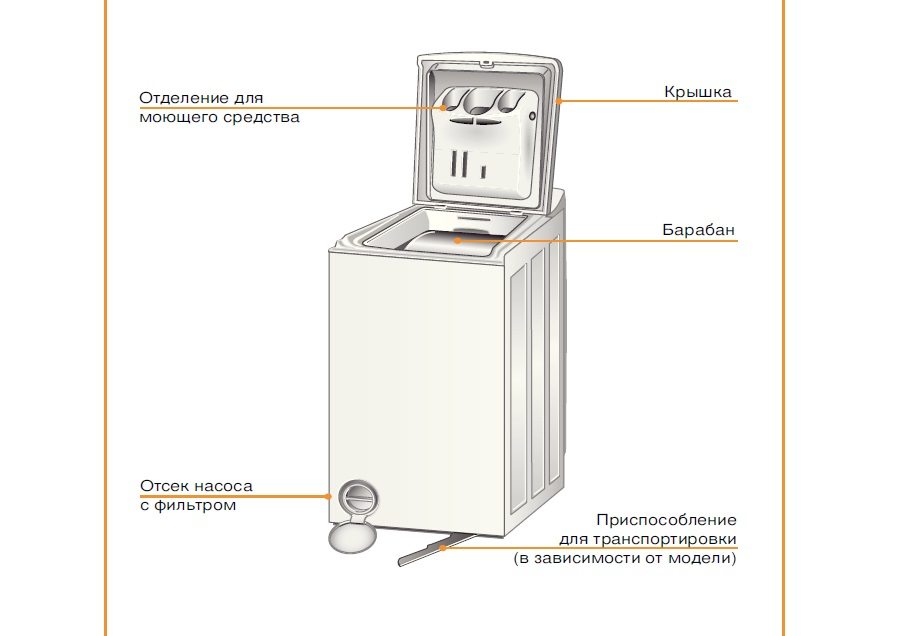
Now about the installation location. Install the machine according to the manufacturer's operating instructions.
- The location of the washing machine should be convenient, in the sense that there should be free access to it, not blocked by any interior items.
- There should be a gap of at least one centimeter on the sides of the machine body, and 10 cm at the back. Nothing should be placed on top.
- The Bosch Logixx 6 should only be placed on a level, solid surface; no fabric pads should be present. Any flooring that is exposed to vibration must be properly reinforced. It is not advisable to lay parquet or laminate flooring under the washing machine body. Although this machine protected from leaks, there is still a possibility of such a problem occurring, so don’t risk your expensive floor coverings.
- The proposed washing machine installation location must be connected to water, sewer, and electricity. There are certain requirements for utility connections, which we'll discuss later.
Move the washing machine to the prepared location and release the hoses from their mountings. Be extremely careful; do not carry the machine alone, as it is very heavy. Once the machine is in place, use a spirit level and, by adjusting the feet alternately, level it as best as possible. The acceptable level difference is no more than 2 degrees.
We connect to water and sewerage
Take the inlet hose equipped with the Aqua Stop system and connect it to the outlet of the washing machine's inlet valve, which is located at the top of the machine. When screwing the hose on, be sure to install the included rubber sealing ring.
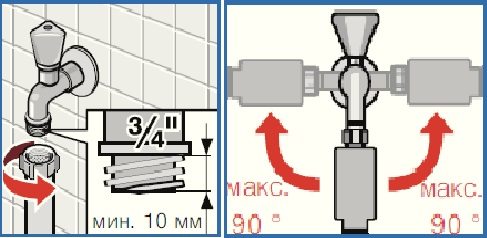
Next, turn off the water and unscrew the hose from the water pipe to the cold water faucet. Install a 3/4-inch faucet tee, screwing one end to the water pipe. Attach the faucet hose to the other end, leaving the other end free. Attach the other end of the washing machine's inlet hose to the free end of the tee, making sure to insert the sealing ring. Attach the hoses securely, but be careful not to overtighten.
When installing a tee tap, do not forget to wrap fumka against the thread to ensure the connection is as tight as possible.
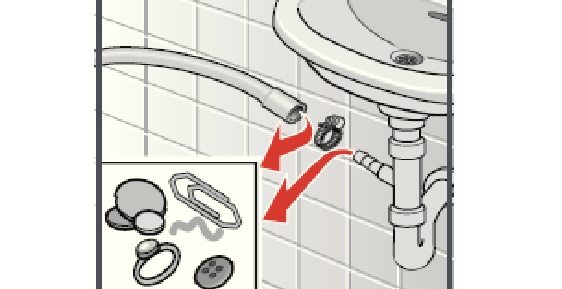
Now let's connect the drain hose to the sewer. There are several connection methods. You can simply run the free end of the hose into a sink, toilet, or bathtub. This drainage method is unsightly and will force you to clean the plumbing more often. You can also install a branch pipe and insert the hose into it. The connection must be sealed to prevent water from splashing onto the floor when the pump is running.
The third option is the most aesthetically pleasing and relatively simple. Simply install a side-mounted trap for your washing machine, to which the drain hose will be connected. Slide the hose over the side-mounted trap, secure it with a clamp, and you're done!
Connecting to the power grid
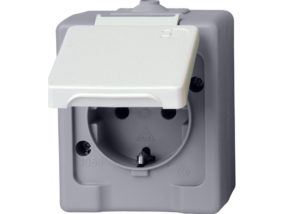 The easiest step in installing a washing machine is connecting it to the power supply, provided all electrical connections are properly prepared in advance. What is this all about?
- Firstly, a moisture-resistant socket must be installed, since the washing machine is an appliance that is used with water.
- Secondly, the socket must be grounded.
- Thirdly, the socket must be powered by a three-core copper wire with a cross-section of 2.5 mm.
- Fourthly, the socket must be protected by a residual current circuit breaker.
If you experience significant voltage fluctuations, it is better to power your Bosch washing machine using a special stabilizer.
If you have no experience working with electrical networks, do not undertake this task yourself. This is very dangerous. Call an experienced electrician who will install the outlet for you quickly and professionally.
Technical specifications
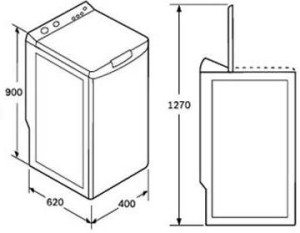
Now, a quick look at the technical specifications of the Bosch Logixx 6 washing machine. According to the manufacturer's instructions, the machine's dimensions are W x D x H = 40 x 65 x 90, including protruding parts. It weighs approximately 58 kg. Power is approximately 2.3 kW. Voltage is 220-240 V, 50 Hz. Minimum water pressure is approximately 1 bar, maximum 10 bar (100-1000 kPa).
That's the entire abridged version of the instructions. There's very little information, but we've compiled the most important bits here. If you find this insufficient, please read the manufacturer's instructions included with this article. Good luck!
Interesting:




Readers' comments
Headings
Washing machine repair




For buyers




For users


Dishwasher




Add a comment