
Intensive drying in the dishwasher
 A huge number of dishwashers are released on the market, and each brand strives to stand out with new features. Models generally differ in functionality, power, and drying method. Machines with intensive or active drying are particularly popular. Let's explore the advantages of intensive drying in dishwashers and its disadvantages. A brief overview is below.
What is intensive drying?
Dishwashers with active drying are considered more reliable, affordable and economical. Unlike their “competitors”, they consume less energy and ensure complete removal of moisture from plates and mugs. The housewife will also be pleased with the final result: there will be no drips or streaks on the dishes.
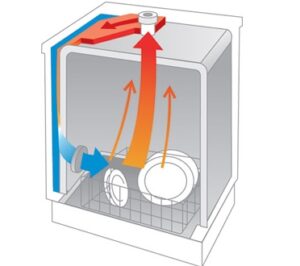
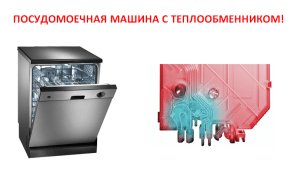
Dishwashers with intensive drying are equipped with a heat exchanger, which enables natural air conditioning in the chamber.
Unlike other dishwashers, active drying machines are equipped with a heat exchanger—a cold water tank. This tank improves air conditioning:
- a temperature difference appears between the cold heat exchanger and the warm walls of the dishwasher;
- a difference in air pressure occurs;
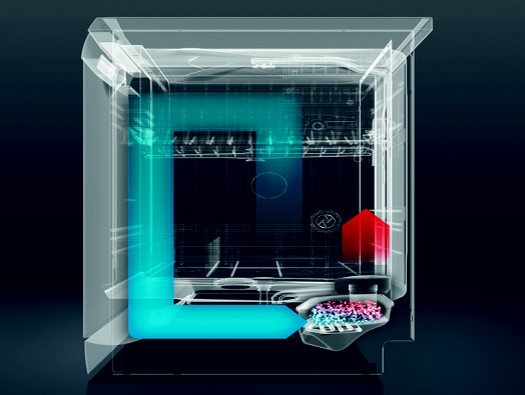
- air currents begin to move through the washing chamber;
- Due to active circulation, the dishes dry out.
The difference between condensation drying and intensive drying is immediately clear. In the former, moisture is removed through evaporation—plates and spoons are treated with boiling water, which creates steam. The active method requires no additional time or resources.
Rapidly moving air currents speed up the drying process, completing the cycle faster than condensation drying. Turbo-dryers remain the fastest, but they are inferior in terms of cost and efficiency.
Knowing what kind of drying this is, you can also be assured of the reliability of "intensive" dishwashers. Their design eliminates heating elements and fans, which often break down and require replacement. Here, everything operates solely on the laws of physics, so the likelihood of failure is virtually zero.
Which dish drying technology is preferable?
Drying type is only one of the dishwasher's parameters. When choosing a dishwasher, it's important to consider other characteristics as well: cost, features, power, and efficiency. Only after fully evaluating the available units can you choose the most suitable model.
- If you're looking for the most affordable option, it's best to choose models with condensation drying. They're less expensive, but they take longer to dry and often leave drips and streaks.
- Intensive drying is purchased when a more expensive machine is available. However, it can save money over time – dishwashers use less water and energy.
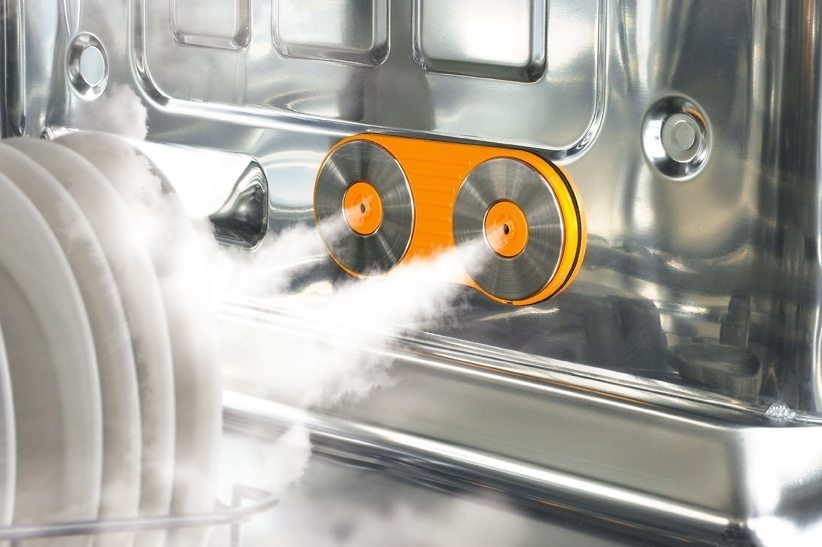
- Premium models include turbo-drying models. They operate much faster thanks to heating elements and fans, saving significant time. However, be prepared for increased electricity and maintenance costs.
Dishwashers with zeolite are considered the most economical and reliable to operate!
- The most expensive dishwashers are equipped with a zeolite drying system. These models include the ZeolitAirflow and Zeolit-Drying. These models contain zeolite, a mineral that continuously absorbs and releases moisture. During the moisture exchange process, it heats up and releases heat into the surrounding environment. As a result, the chamber temperature rises, and dishes are dried naturally without any additional costs. Even better, the stone doesn't require periodic replacement or repairs—it functions indefinitely, until the dishwasher itself breaks down. Users will also appreciate the quality of water removal from dishes, as well as the machine's energy-efficient operation.
Dishwasher manufacturers are constantly improving drying, offering consumers more convenient and economical options. Electrolux recently introduced the AirDry system, which automatically opens the door at the end of the cycle, providing natural ventilation.
In addition to the drying type, you should also consider its class. The grading ranges from "A" to "G," from highest to lowest. Models with a "B" rating, which allows for moisture and streaks to remain on dishes, and "A" ratings, which guarantee complete drying of dishes, are more common.
Interesting:

Readers' comments
Headings
Washing machine repair




For buyers




For users


Dishwasher




Add a comment