
What is an inverter drive in a washing machine?
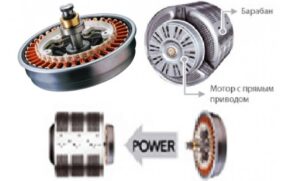 Household appliances are constantly changing, with manufacturers striving to improve their equipment and, in some cases, outperform their competitors. An inverter drive in a washing machine is a functional development with several advantages over commutator drives. Let's explore the distinctive features of these motors, as well as their advantages and disadvantages.
What is this technology?
Inverter motors are considered a high-tech development. Previously, these motors were used in microwaves and air conditioning equipment. The main feature of such a motor is the ability to convert alternating current into direct current. Direct-drive machines can control the speed, frequency, and direction of the drum's rotation.
The operating principle of an inverter-type electric motor is based on the use of electromagnetic induction.
A significant difference from commutators is that the winding current is directed by an inverter, not by graphite brushes. The improved motor has no moving parts, significantly reducing energy consumption.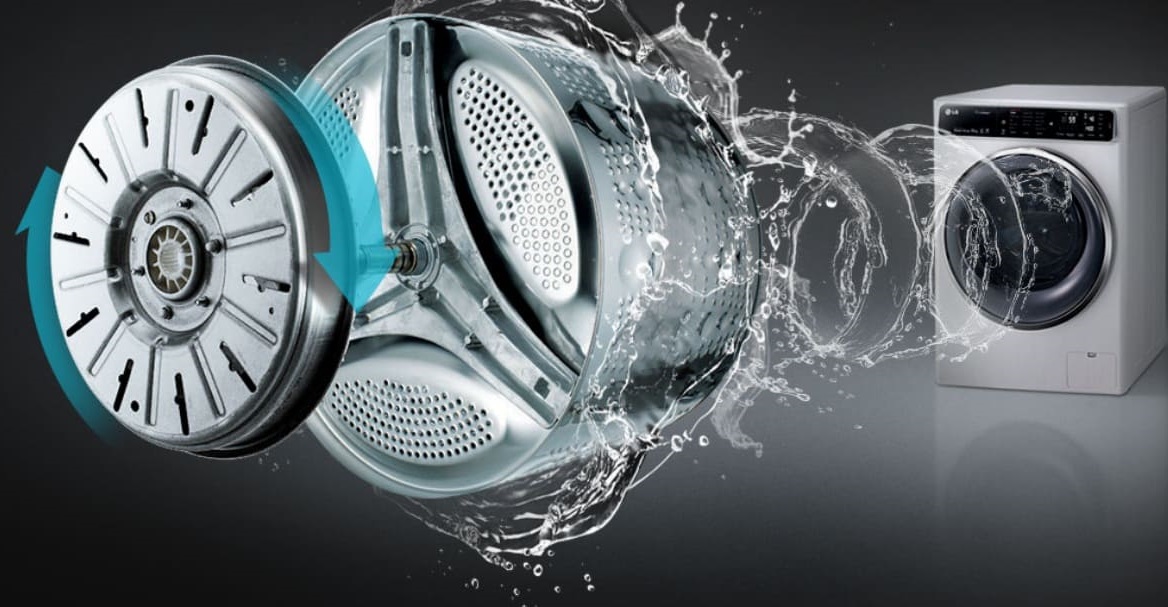
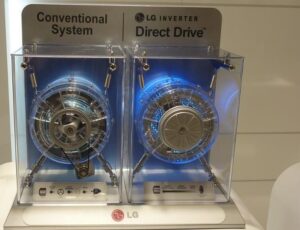
What is an inverter drive in an automatic washing machine? The mechanism is a disk with a shaft. These washing machines do not have a belt drive.
Pros and cons of inverter motors
According to the advertising, direct-drive machines offer a host of advantages over collector-type machines. Is this true, or is this just another marketing ploy? Washing machines equipped with inverter motors do indeed offer many advantages.
- No brushes or drive belt. These parts are subject to accelerated wear. The graphite rods need to be replaced every 2-4 years, and the rubber band connecting the drum and motor pulleys should be replaced at the same frequency. The inverter design does not include any components that quickly fail, so no additional motor maintenance is required.
Manufacturers of automatic washing machines usually provide a 10-year warranty on the inverter motor.
- Energy-efficient. The machine uses fewer kilowatts due to its design, eliminating moving parts. Inverters can also regulate their power output based on the weight of the laundry loaded in the drum, further reducing energy consumption.
- Quieter operation. The rotor rotates virtually silently, so your family won't experience any discomfort, even if the machine is washing at night.
- Precise rotor operation. This feature ensures the drum never slows down, ensuring high-quality washing and efficient spinning.
- Precisely configured washing programs are programmed into the intelligent system. Inverters can regulate not only the rotation speed but also the drum rotation frequency, smoothness, and direction. This ensures the most gentle care for all types of fabrics.
If we talk about the disadvantages of direct drive machines, we can highlight:
- high cost. Compared to collectors, inverters are more expensive;
- the possibility of damaging the laundry in the drum due to excessively fast spinning.
When considering purchasing a washing machine with an inverter motor, consider all the pros and cons of such equipment in advance. Indeed, thousands of users have already appreciated the Direct Drive technology. The cost of direct drive machines generally corresponds to their quality.
How are they different from other engines?
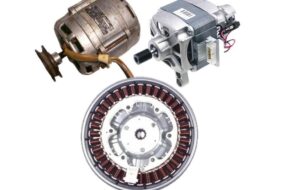
What other types of motors are used in the production of automatic washing machines? There are three. Let's look at the features of each motor.
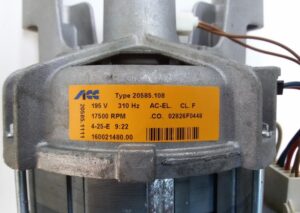
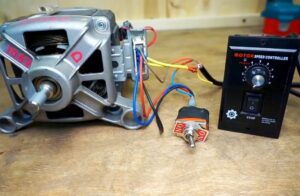
- Commutator motors. The motor consists of a copper housing divided into sections and brushes, which are necessary for directing current to the moving parts of the device. Commutators can quickly reach the set speed and are easy to operate and adjust. Disadvantages include noise during operation and the need for periodic maintenance (brush replacement).
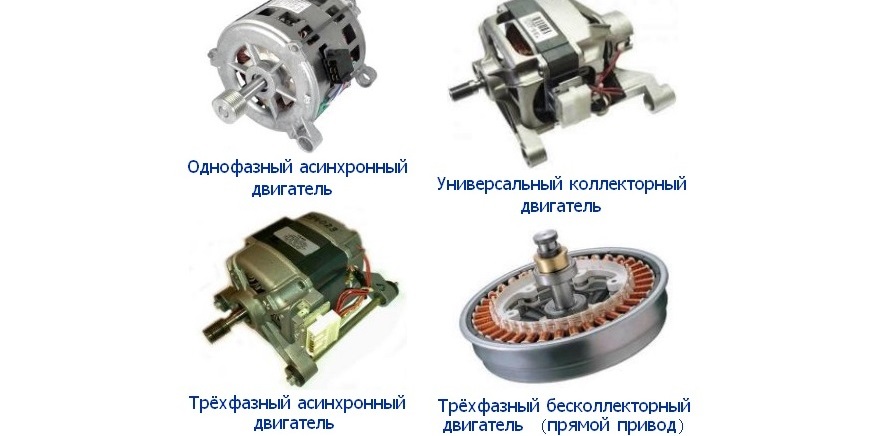
- Asynchronous motors. These motors have a main and auxiliary winding and produce much less noise than commutator motors. However, they require a more complex circuit and several additional devices to operate.
- Inverter. This type of electric motor is considered the most advanced today. The inverter is characterized by increased reliability, ease of operation, and economy. Helps ensure high washing and spinning efficiency.
Most washing machines today are manufactured with either brushed or inverter motors. If you're particular about purchasing a model with a specific motor type, be sure to check the machine's specifications with the seller.
How to fix it?
Whether you can repair it yourself will depend on the type of malfunction. Before disassembling the washing machine, it's best to run the self-diagnostics system. The machine will run a test and display an error code corresponding to the problem. If the problem is simple, try to fix it yourself.
For more serious problems, such as issues with the inverter drive, it's best to contact a specialist. Service center technicians will perform a thorough diagnosis and repair your "home assistant."
Manufacturers of automatic washing machines recommend not to repair inverter motors yourself.
If you have sufficient knowledge and skills, you can try testing the inverter yourself. To test the electric motor, follow these steps: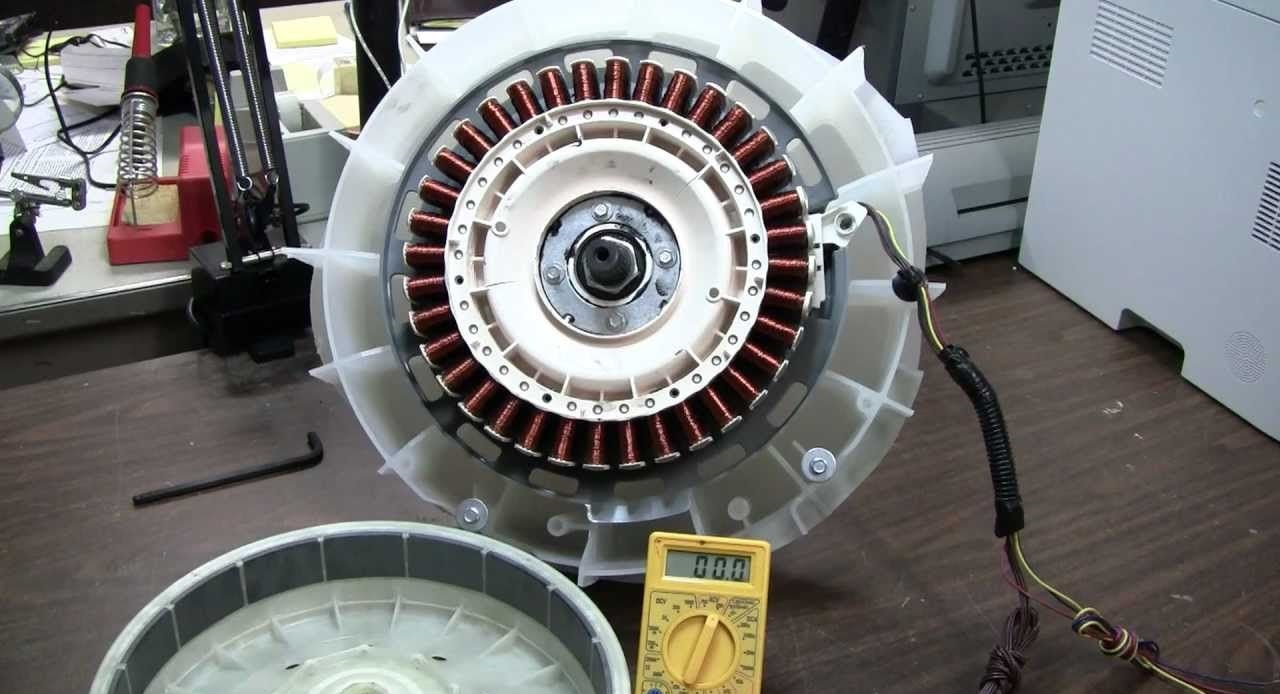
- de-energize the automatic machine;
- remove the rear panel of the case;
- find the screws located under the rotor;
- unscrew the screws securing the wiring;
- take a photo of the contact connection diagram;
- disconnect the wiring;
- remove the central bolt holding the rotor;
- dismantle the rotor assembly, then the starter;
- Disconnect all wire connectors one by one.
Once the manipulations are complete, you can check the motor. Next, inspect the rotor winding for damage. If a defect is detected, it's best to call a technician to create a new winding. Replacing the electric motor is simple: install a new one in the place of the old one and secure it with screws. The wiring is connected to it according to the diagram.
Users can extend the life of their inverter motor by following a few simple rules:
- connect the washing machine to the power grid through a stabilizer;
- use washing powders and gels specifically for automatic machines;
- Strictly adhere to the dosage of the detergent and avoid excessive foaming.
A stabilizer is necessary to smooth out power surges in the electrical network. It's essential to monitor the quality of your cleaning products, as they directly affect the condition of your "home helper."
In what machines is this technology used?
The LG brand was the first to release automatic washing machines for the home equipped with an inverter motor. Models from the Korean manufacturer of the " seriesDirect Drive» are distinguished by an improved engine, high-quality drum construction and new washing control options. The innovations used increase cleaning efficiency while providing gentle care for items.
LG's "6 Motion" inverter washing machine can rotate the drum in different ways, depending on the fabric type and the selected program. These machines offer six different motion modes:
- standard;
- slightly rocking – this is how the drum moves when the “Soak” program is selected;
- reversible – such rotations are designed for faster dissolution of detergents;
- scrolling – perfectly cleans laundry;
- Smoothing – used for washing delicate fabrics or when the “Easy ironing” option is selected;
- Saturating – designed to evenly distribute the detergent among the items in the drum.
Samsung produces the Crystal Standard series of washing machines. In addition to direct drive, they feature EcoBubble technology. Thanks to the bubble wash feature, the machine removes stains effectively, even in cold water.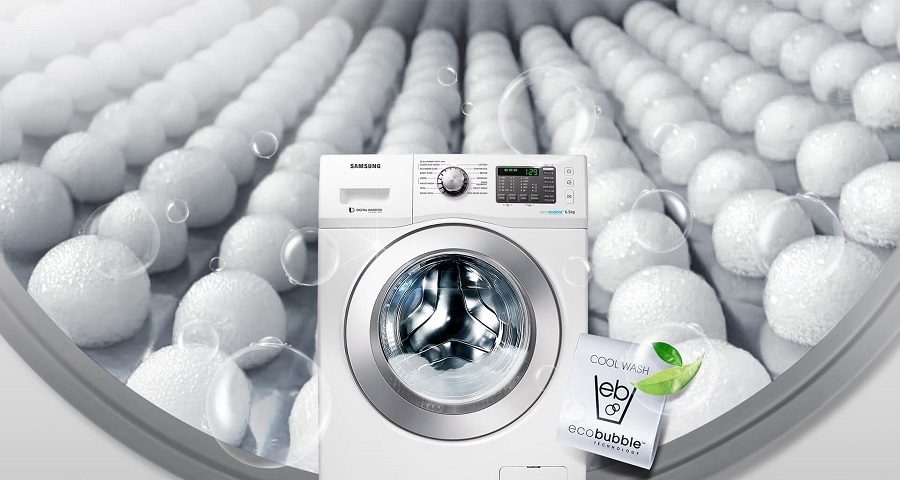
Automatic washing machines from Electrolux, Candy, AEG, Bosch, and Whirlpool also feature inverter-driven models. The choice is vast—almost all European manufacturers offer washing machines equipped with state-of-the-art motors. When choosing a washing machine, it's important to consider not only the motor type but also other, equally important technical characteristics. Be sure to pay attention to at least five factors.
- Washing efficiency and energy efficiency class. Preference should be given to machines with ratings of A, A+, and higher. Moreover, the more pluses, the more energy-efficient the machine will be.
- Maximum load weight. Drum capacity is an equally important criterion. For a large family, it's best to choose a machine with a 6-7 kg capacity, while for 2-3 people, a 4-5 kg capacity will suffice.
- Functionality. It's essential to look at the washing machine's software. It's advisable to buy a washing machine that can control foaming and prevent drum imbalance. Models with a delayed start, night mode, child lock, and bubble wash options are always a priority.
- Dimensions. The machine needs to fit in the designated space. Dimensions are especially important when purchasing built-in appliances.
- Noise level. To avoid discomfort, it's best to choose machines with minimal decibels. Ideally, the spin cycle should not exceed 75 dB.
Direct-drive washing machines are simple and easy to use. Before purchasing one, consider all the pros and cons of inverters and decide whether you're willing to pay extra for this technology. If so, the choice is clear: machines equipped with modern motors are energy-efficient and highly effective.
Interesting:
Readers' comments
Headings
Washing machine repair




For buyers




For users


Dishwasher




Add a comment