
Can you wash dishes without rinse aid in the dishwasher?
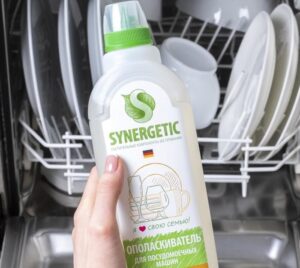 In an effort to save money, dishwasher owners often forgo using rinse aid, believing that a simple powder or tablet is sufficient. Are they doing the right thing? Or is using a dishwasher without rinse aid a mistake, leading not only to poor dishwashing results but also to appliance failure? It's worth exploring whether rinse aid is really that important.
The main function of the rinse aid
Let's take a look at how the rinse aid system inside a dishwasher works. First, dirt is removed from dishes by soaking them in water and rinsing them under high pressure. This process injects chemicals, such as dissolving powder or tablets, into the water, which is heated to a high temperature. These chemicals dissolve the dirt and rinse it away. Poorly dissolved detergent particles can remain on dishes and cutlery, and hard water can also often cause streaks.
At this point, the rinse aid comes into play. It contains special additives that soften the water, weaken the tension of water molecules, and the drops easily flow off the surface of objects, washing away all the stains. Such products are safe for health and will not affect the taste of food in any way. But you'll be pleased with the results; achieving such a shine on cutlery and especially glassware by hand washing is quite difficult.
Thus, the dishwasher rinse aid performs several important functions at once:
- neutralizes particles of alkali, acid and other chemicals contained in dishwasher detergents, be they gels, powders or tablets, washing them off the surfaces of objects and the dishwasher;
- eliminates all kinds of odors, grease residues and other dirt;
- prevents the formation of limescale film and stains on glass, porcelain and metal utensils, giving them a pleasant shine;
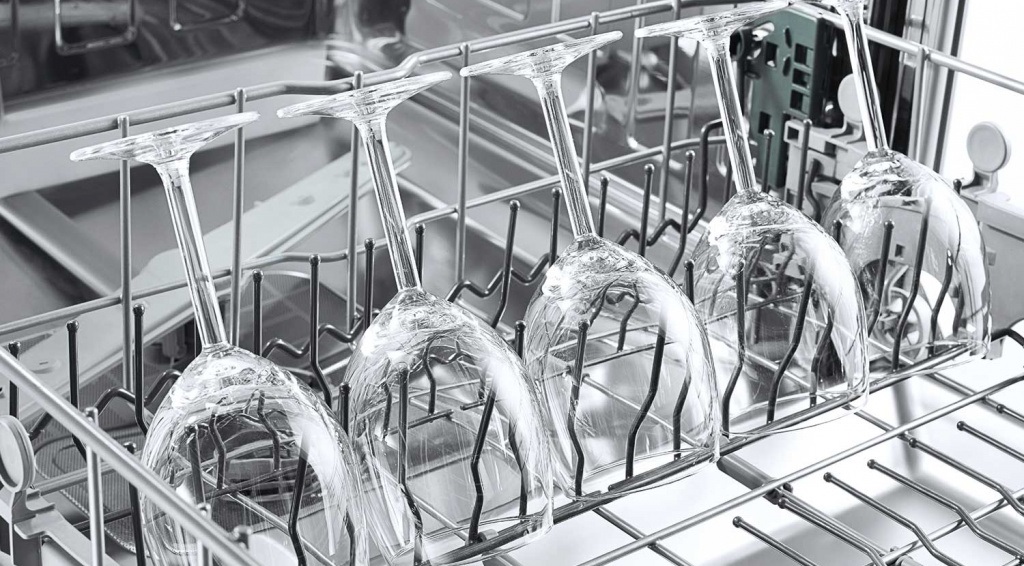
- reduces the time at the drying stage;
- Protects the interior of the dishwasher from limescale deposits and the heating element from scale, which extends the life of your "home helper."
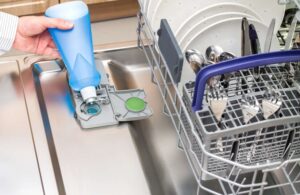
Don't give up on rinse aid, as it's no coincidence that dishwasher manufacturers have included a special compartment for this product.
Yes, you can use the appliance to wash dishes without rinse aid. However, the cleaning quality will be very poor. You'll have to polish wine glasses and beer mugs by hand with a soft kitchen towel, as streaks and water marks are unlikely to be a concern.
Choosing a quality mouthwash
There are a huge number of dishwasher rinse aids available, so you can choose the one that's right for you. It could be the cheapest or the most expensive. The main thing is that you're satisfied with the results. Let's take a look at a few rinse aids.
Cinderella
This product is suitable for all dishwashers, leaving dishes sparkling and fresh after drying. It contains no more than 5% non-ionic surfactants, no more than 15% acid, 5% solvent and 5% functional additive, and the remainder is purified water. A half-liter bottle of this product costs an average of $0.69, making it very attractive to customers. Most homeowners are satisfied with this rinse aid, noting not only the reasonable price but also the cleaning performance. The product consumption is reasonable. Many users, when comparing it to the more expensive Finish rinse aid, report no difference, so they prefer the less expensive product. It is easily found and purchased online, but you may not find it in a regular store.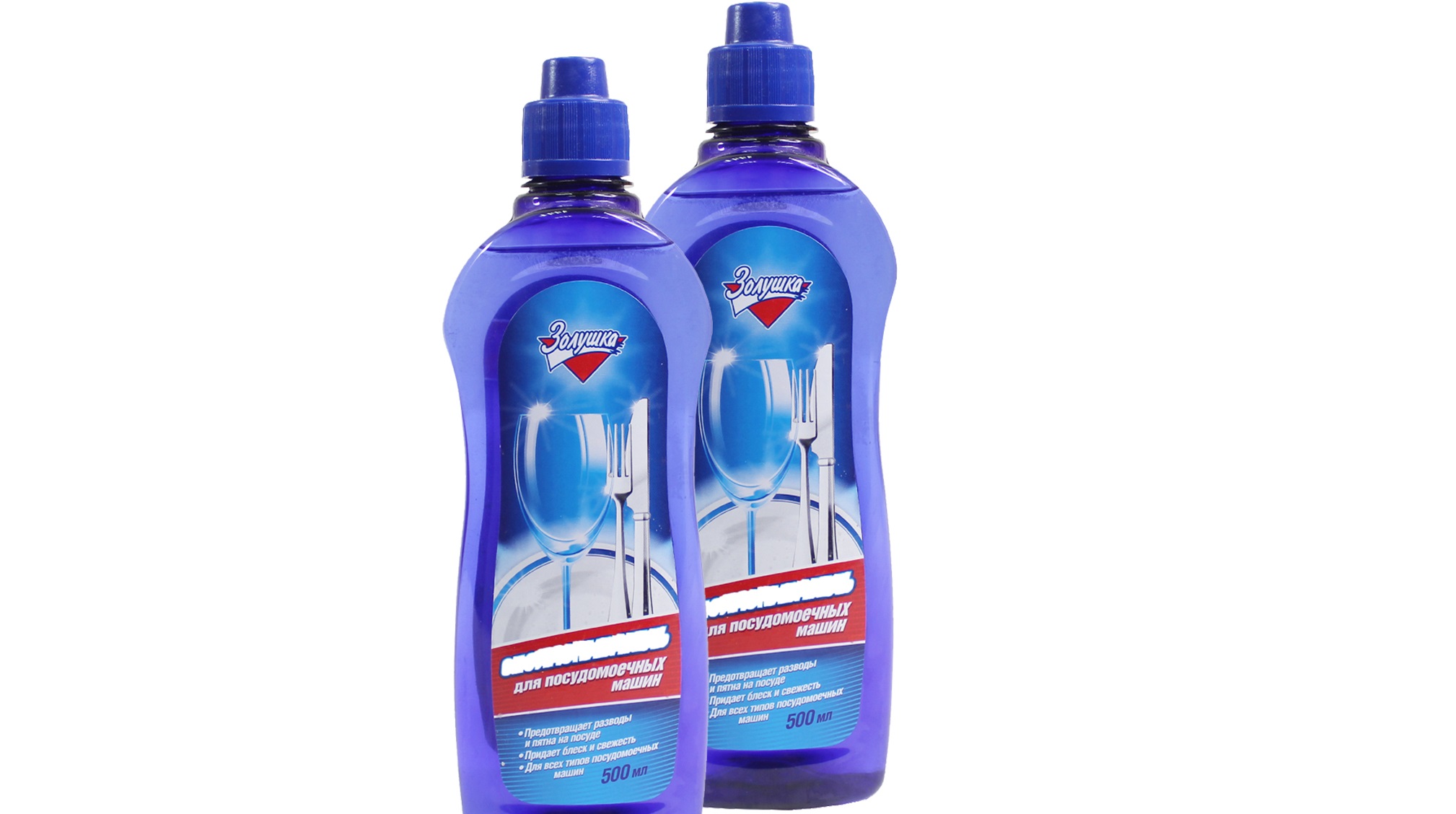
Clean & Frash
Clean & Frash cares not only for your dishes but also for your dishwasher. It removes all detergent residue, fights streaks, and leaves your dishes and cutlery sparkling. This rinse aid prevents the formation of crystal deposits and extends the life of your dishwasher, according to the manufacturer. A 0.5L bottle costs $1.16. Unlike the previous product, it does not contain acids or solvents, but it does contain non-ionic surfactants (NPs) up to 15%, preservatives and fragrance.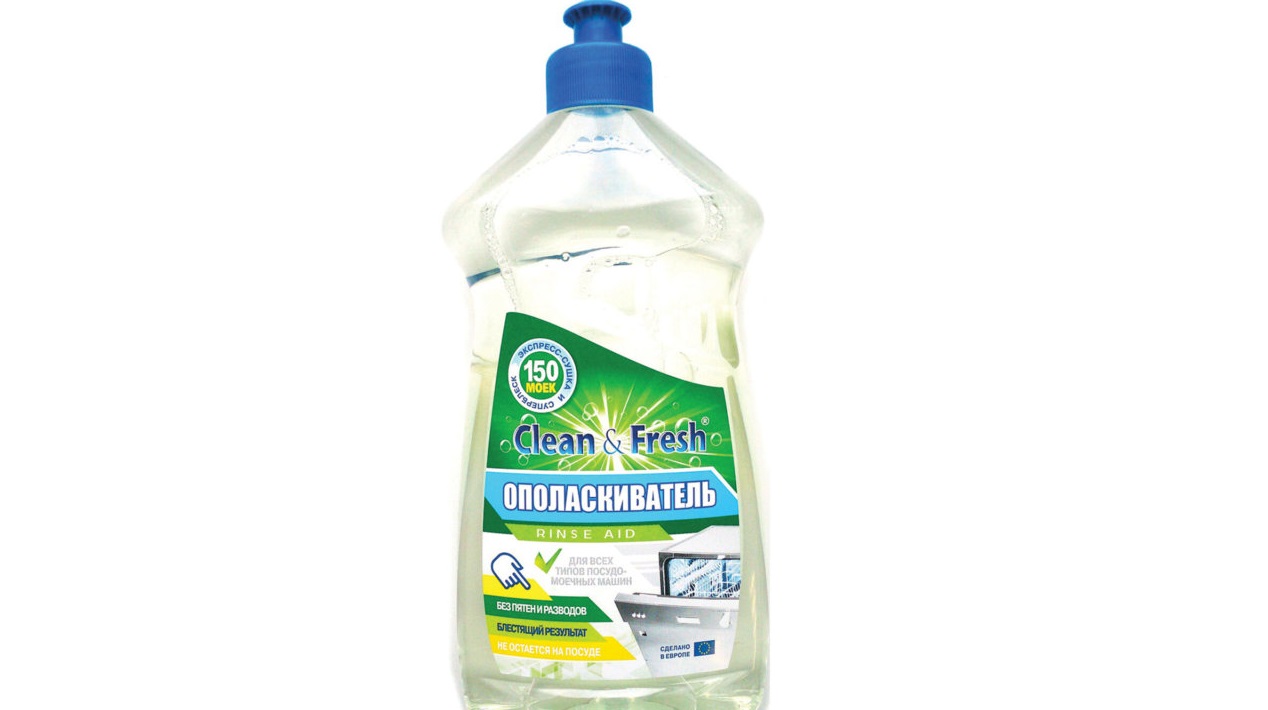
Consumers note that the product does its job very well. Despite the fragrance, it leaves no odor, although some people find the smell unpleasant. Overall, the product's cleaning effectiveness is excellent. The consumption is similar to that of more expensive products like Somat or Finish. So, is it worth paying extra if the results are identical, yet the price is significantly higher?
Paclan Brileo
This product is designed not only to give dishes a sparkling shine but also to protect the dishwasher from limescale. Like previous rinse aids, it is chlorine- and phosphate-free. It contains only nonionic surfactants and preservatives; it is fragrance-free. The manufacturer states that the product's effectiveness will be enhanced when used in conjunction with Brileo dishwasher detergent and salt. It's also worth noting that the product is easy to dose thanks to the special capsule on the cap. Its average price is $1.55 for 500 ml.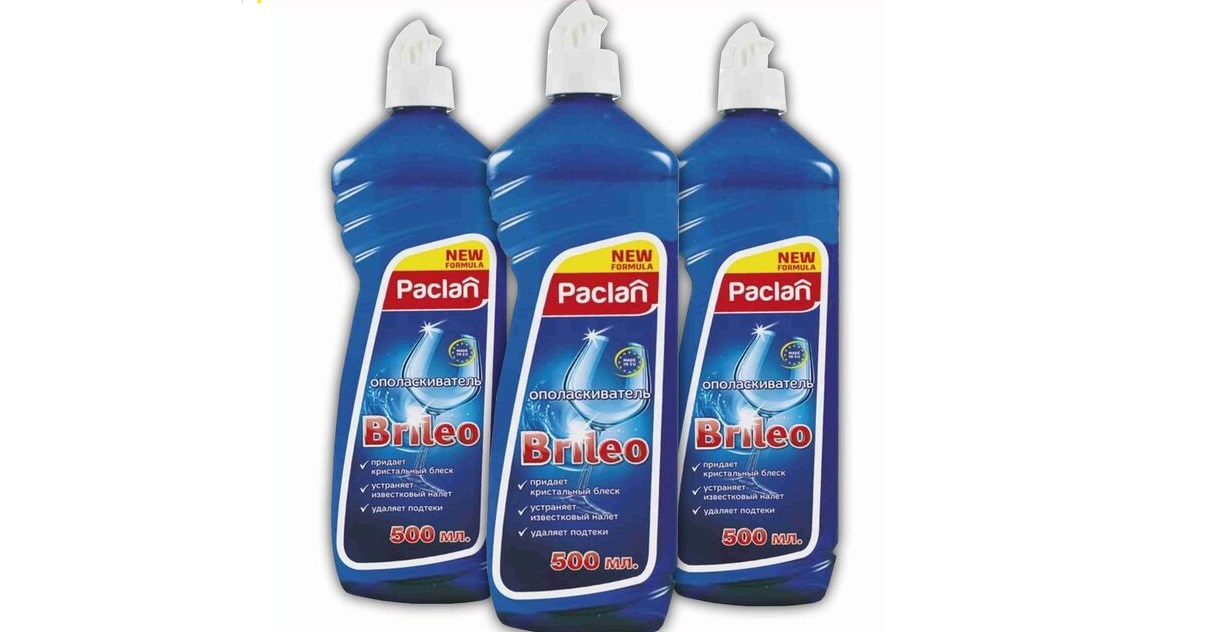
Most reviews of this rinse aid are positive. People like the cleaning results, and the price is quite reasonable. It leaves no streaks, dishes sparkle, and, according to people, there's practically no odor.
Ultimately, whether to use dishwasher rinse aid or not is up to you. But is it worth giving it up, given the market offers so many affordable, yet high-quality options? Isn't the hassle and time saved from meticulously wiping away streaks worth it?
Interesting:


2 reader comments
Add a comment
Headings
Washing machine repair




For buyers




For users


Dishwasher




Yes, without rinse aid, there are streaks on the glass and cutlery. Horrible. So I decided to save money, but I realized my mistake. After the first time, I rinsed by hand, and after the second, it's even worse. I'm going to buy more and read it again.
I didn’t decide to save money, I just don’t want to eat mouthwash!