
What is the counterweight in a washing machine made of?
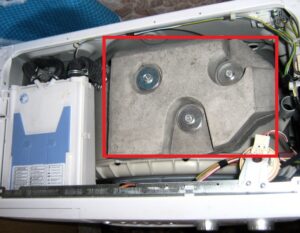 The heavy weight of automatic washing machines is a necessity. Without weighting the body with special blocks, the washing machines will practically fall over during operation. During the spin cycle, the machine is subjected to enormous centrifugal force, making it easy for it to tip over. Let's explore what the counterweight in a washing machine is made of. We'll explain where the weights are located and how to remove them if necessary.
Counterweight material
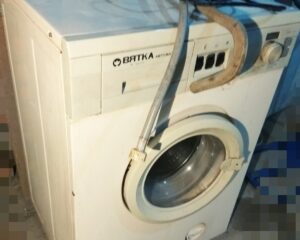
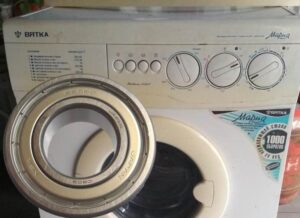
Just 20-30 years ago, almost all washing machines were equipped with cast-iron counterweights or steel blocks. For example, Vyatka-avtomat washing machines, produced in the early 1990s, were used. Nowadays, metal counterweights are only found on premium German and Swedish equipment.
Today, 98% of washing machines are equipped with concrete counterweights.
Concrete weights aren't as durable as cast iron or steel blocks, but they're much cheaper than metal ones. This reduces the cost of modern washing machines. The concrete counterweight has one advantage – price, but its main disadvantage is rapid wear. The counterweight, which is made of concrete, deteriorates over time due to vibrations—which are inevitable inside a busy washing machine. Cracks form in the weights, which gradually become larger.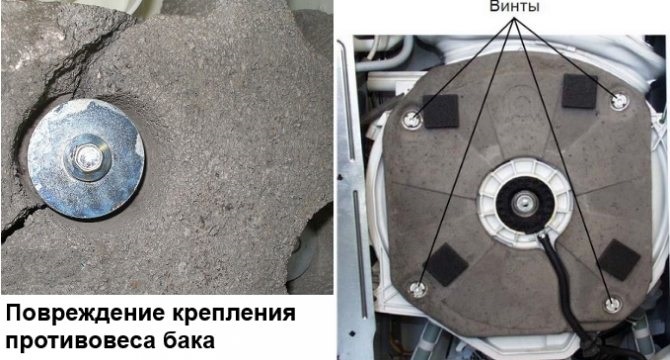
A cracked concrete counterweight can simply break into several pieces and fall during a regular wash cycle. When falling, the fragments will inevitably hit some internal components of the washing machine, such as the door lock, pressure switch, interference filter, and others. Not only will the counterweight need to be replaced, but any subsequent damage will also need to be repaired.
It's clear that a concrete counterweight isn't the best solution for washing machines. However, manufacturers, in an effort to keep their automatic machines as cheap as possible, will continue to equip their machines with such counterweights for a long time to come.
If you need to replace the counterweight, you can do the job yourself without the help of a professional.
You can purchase a new counterweight at a specialty store, based on your washing machine model. We'll explain how to remove old counterweights.
Location of counterweights
Finding the counterweights in an automatic washing machine is very simple. The easiest way to access them is the top weight. However, removing this block is always more challenging. To access it, you need to:
- de-energize the automatic machine;
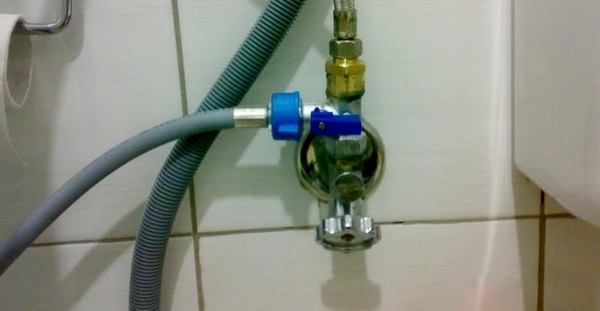
- close the shut-off valve responsible for the water supply;
- Move the washing machine away from the wall to have free access to all sides of the body;
- Use a screwdriver to unscrew the two screws holding the top panel of the machine;
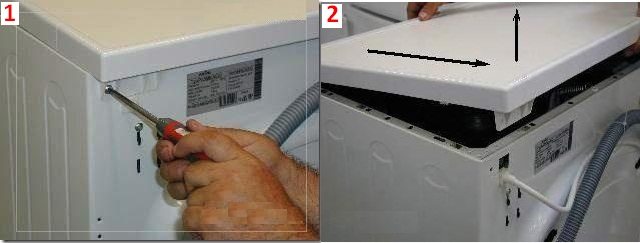
- remove the housing cover by moving it slightly backwards and lifting it up.
The upper counterweight will be immediately visible. It's necessary to inspect the unit for defects. Next, assess the condition of the front weights, which will require removing the front panel of the housing. The next step is as follows:
- remove the powder container;
- Unscrew the bolts located around the perimeter of the control panel;
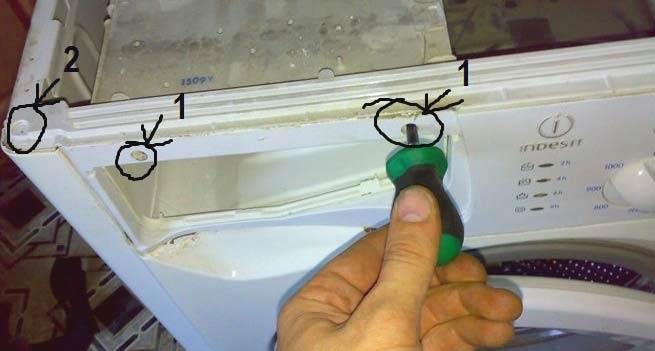
- unhook the dashboard from the body and carefully place it on the car so as not to damage the wiring;
- remove the lower false panel behind which the dust filter is hidden by prying it up with a screwdriver;
- open the hatch door wide;
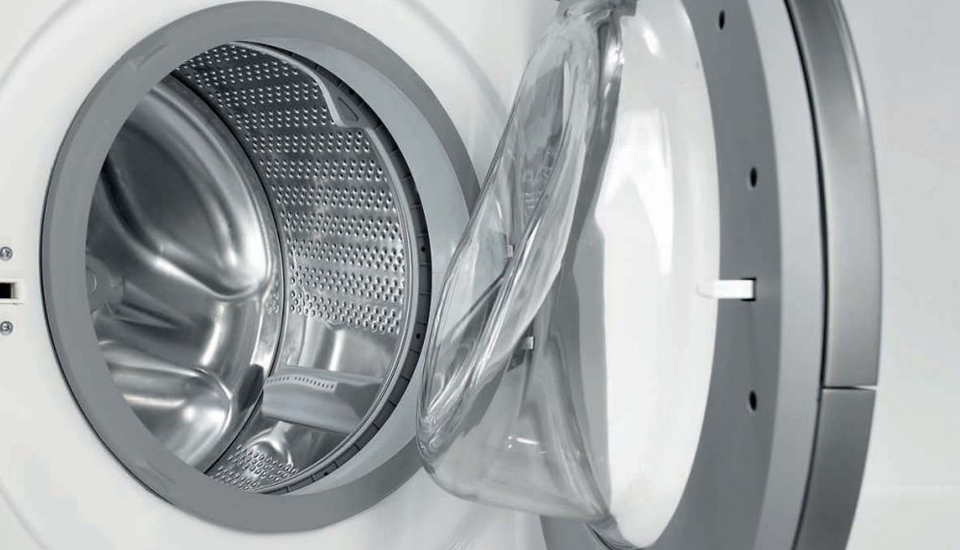
- Use a screwdriver to pry up the outer clamp holding the drum cuff and remove the ring;
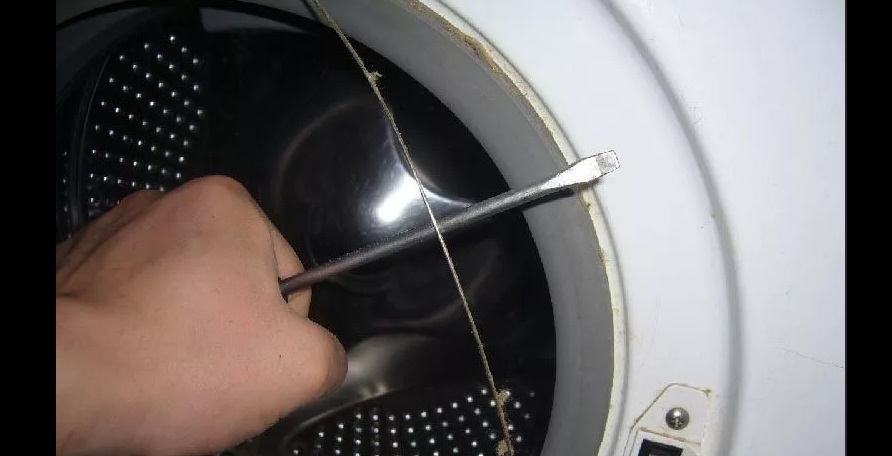
- tuck the sealing rubber inside the drum;
- tilt the machine body slightly back, put your hand between the tank and the front wall, feel for the door lock and disconnect the connector with the blocker contacts;
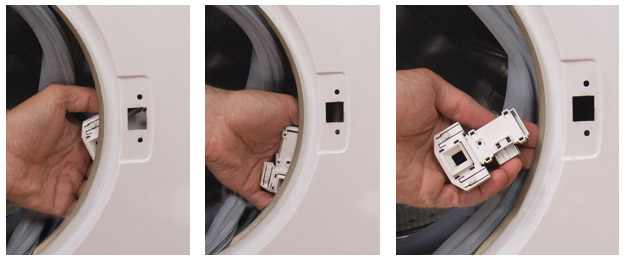
- unscrew the screws holding the front wall;
- remove the front panel.
Now you can inspect the front counterweights. If they have many cracks, they will need to be replaced. We'll explain how to remove damaged concrete weights to make room for new ones.
Problem with removing counterweights
Removing the weights from most washing machines is very easy. To remove the counterweights, simply use a socket wrench or head to remove the bolts that secure the blocks. Once the screws have been removed, the concrete elements must be removed from the housing.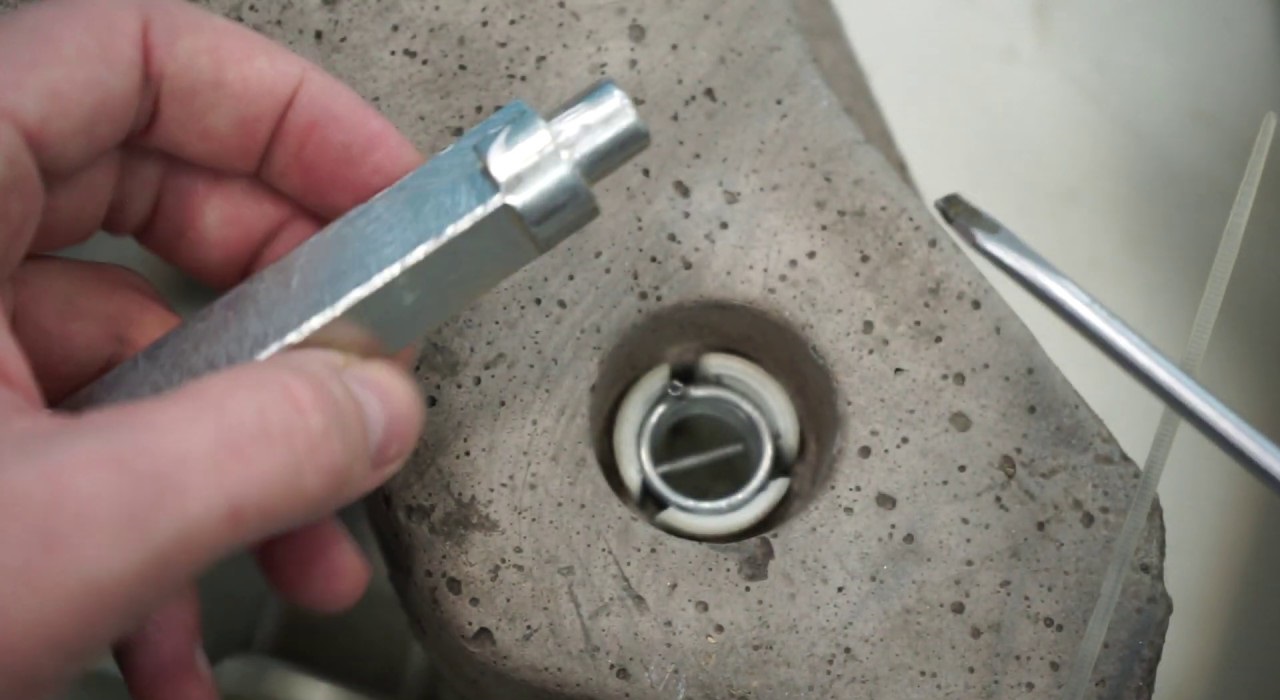
Owners of Ariston washing machines will have a slightly more difficult time. On this brand's models, the counterweights are secured with special bolts that don't fit standard socket wrenches. All that remains is to construct a special tool yourself.
To make a special key, you will need:
- a metal tube with a cross-section of 20-22 mm and a length of at least 20 cm;
- drill;
- hacksaw for metal;
- screw 4*16;
- soldering iron.
One end of the tube needs to be sawed through to a depth of 5 cm in the middle. Drill a 2 cm hole at the other end and screw a 4 x 16 mm screw into it. Weld the bolt from the inside. This homemade device will easily hook onto the counterweight fastener and facilitate the removal of the weights.
Interesting:

Readers' comments
Headings
Washing machine repair




For buyers




For users


Dishwasher




Add a comment