
How often should I add salt to my Bosch dishwasher?
 Users often forget about salt immediately after adding it to the special compartment at the bottom of the dishwasher. However, you should add salt to your Bosch dishwasher regularly, though less frequently than you add rinse aid. Special dishwasher salt helps soften hard tap water and effectively clean dirty dishes. Let's take a closer look at how often you need to refill the salt compartment of your "home helper."
How do I know when the salt reservoir is empty?
To avoid missing the moment when it's time to add salt, you can simply keep an eye on the light on the dishwasher body, which indicates the current amount of household chemicals in the compartment. The salt indicator looks like this S-shaped icon.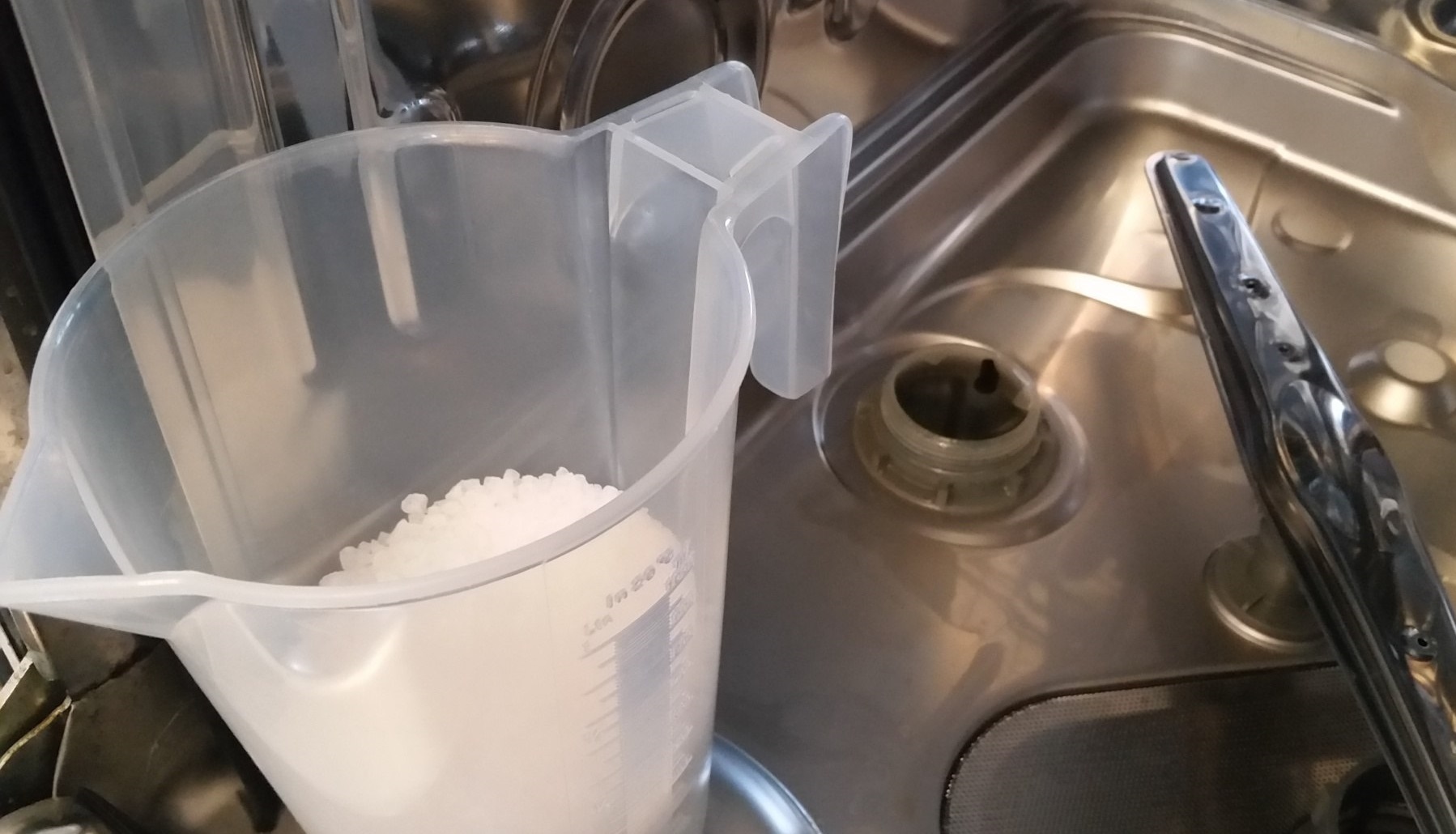
It often lights up bright red when the salt supply in the bin is getting low, but in some dishwashers it may glow a dull, pale yellow light that is difficult to see with the naked eye.
The light will remain on until the salt supply in the special compartment is replenished.
A special sensor, installed directly in the dishwasher's ion exchanger, monitors the salt solution's consistency. As soon as the salt level approaches the minimum, it transmits a signal to the dishwasher's control panel, which lights up a corresponding indicator. This alerts the user to add special salt for their Bosch dishwasher.
PMM without salt indicator
Things are much more difficult when there's no dedicated indicator on the dashboard to remind users to add salt. In this case, it's important to remember to add household chemicals yourself, for example, by writing down the date of the next salt refill on a sticky note or by recording the information in your phone or notebook.
You can also use indirect signs. You can add salt if you notice the following:
- After a cycle, dishes are slightly cloudy, have whitish droplets, or a milky film. If this can be corrected by hand washing, the problem is with the salt solution, which isn't saturated enough to properly regenerate the resin in the ion exchanger;

- Cutlery isn't completely cleaned with multilayer tablets and capsules. If your area has very hard water, above 21°dH, salt tablets alone won't suffice—you'll need to add salt to a special compartment.
This way, the cleanliness and shine of your dishes will help you understand when it's time to replenish the salt in the separate compartment. If there's a special indicator on the display, you don't have to wait for it to light if the washing performance has already deteriorated.
Frequency of adding salt
There is no standard schedule for adding salt to a dishwasher, as the frequency depends solely on the quality of tap water, which varies even in different areas of the same city, not to mention different cities or even countries. If we are talking about a brand new "home assistant", then after the first addition of salt granules, the equipment may indicate the need to replenish the supply after approximately 5-8 dish washes. This behavior is completely natural, because the first time the user may have added slightly less of the product than is necessary to create a high-quality solution.
A number of factors will influence salt consumption in the future. The most important ones are worth mentioning.
- The quality of your tap water, its hardness, and the selected ion exchanger settings all play a role. The harder your tap water, the higher the salt flow rate should be set, ensuring the machine receives a concentrated salt solution sufficient to regenerate the depleted resin. However, you shouldn't overdo it with the settings to avoid wasting salt, so check your local water utility beforehand to ensure you adjust the flow rate appropriately.
If you have medium-hard water in your area, you should add special salt approximately once every six months or a little more often.
- Dishwasher usage frequency. If the dishwasher is used every day, it will use significantly more salt than if it's used once a week. Therefore, frequent use will require adding salt at least once a quarter, while infrequent use will require adding salt approximately once a year.
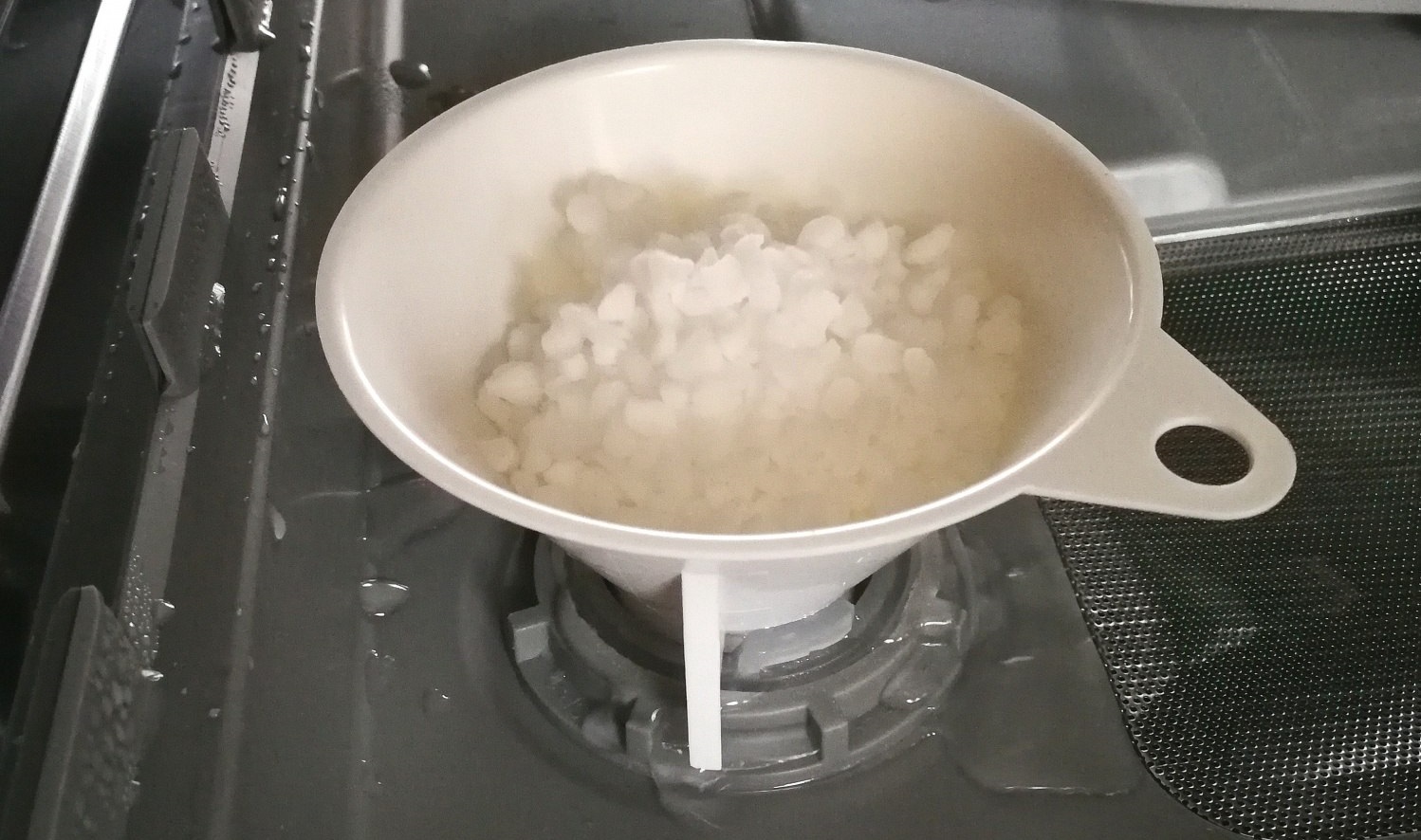
- Salt granule size. Only salt specifically designed for this purpose should be added to the salt compartment. Commercial salt alternatives are much smaller and less purified from foreign impurities, so they are not recommended for use in the salt compartment. Try to choose larger granules—they dissolve more slowly in water, meaning fewer are needed for proper operation of your "home helper." Experts recommend products from EONIT and Mister DEZ, which feature large crystals and are relatively inexpensive.
It's crucial to ensure that each of the factors described above is taken into account during the process. This is the only way to ensure efficient and economical salt use.
Loading salt correctly
If the salt refill light comes on, it doesn't mean the machine is no longer usable, for example, if there are no salt granules in the house at the moment. However, it does mean that you should add salt as quickly as possible. This should be done as you would for the first load: carefully open the lid at the bottom of the wash chamber and pour the granules into the reservoir.
Questions may arise when the compartment is full of water. This is normal, as liquid should always remain in the compartment—it's a saturated salt solution that regenerates the resin in Bosch dishwashers. Add the granules to the water, which is easy to do using a small funnel, which is sometimes included with appliances.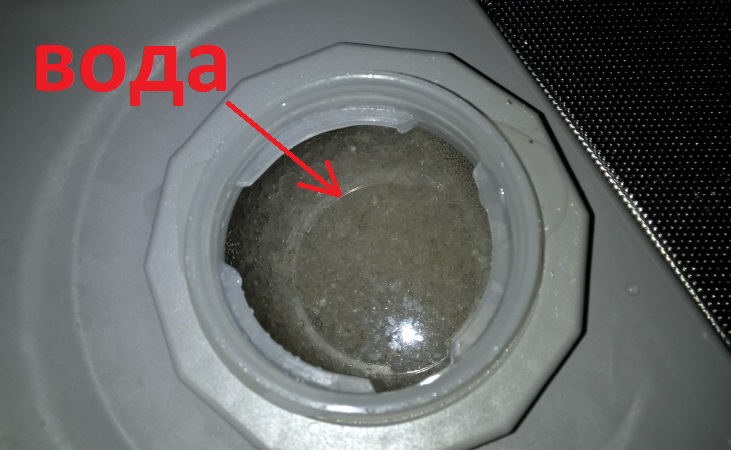
As you add salt, water will overflow from the salt compartment and drain. You should stop when the compartment is almost full, and the salt is covered by about a few centimeters of water. Typically, adding just 700 grams of salt is enough to last for about six months.
After loading, be sure to wipe the edges of the compartment and remove any spilled pellets. Carefully close the hopper lid and ensure it is not warped, as the lid should seal tightly.
Immediately after loading the dishwasher, run the rinse cycle to remove any residual salt solution that spilled out during the process. This step is essential, as if the dishwasher's tank is metal, it will be at risk of corrosion if all the salt is not removed from the bottom.
Don't worry about the salt indicator, as it may stay on for several washes after you've added salt to the compartment until the salt solution reaches the required concentration.
That's all you need to know about salt granules, which need to be added to your dishwasher from time to time. Keep a close eye on the indicators and always evaluate the dishwashing process to ensure you don't miss the right moment to add salt.
Interesting:





Readers' comments
Headings
Washing machine repair




For buyers




For users


Dishwasher




Add a comment