
How to transport a washing machine – expert advice
 When moving and transporting all your belongings, including household appliances, you'll inevitably face the challenge of transporting your washing machine. After all, it can't be transported like other large items. Many questions arise: can an automatic washing machine be transported on its side? Can it be transported without packaging? Can it be transported without shipping bolts? We'll try to answer them in this article.
How to prepare a washing machine?
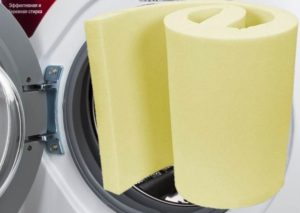
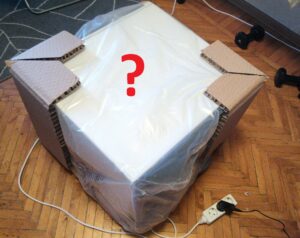
Before transporting, it's best to place the washing machine in its original packaging and line the space with foam or foam rubber. This is ideal. More often than not, a washing machine that's been in use for years doesn't even have its packaging intact, nor any components or fasteners. Therefore, you'll have to improvise during transportation. When preparing your washing machine for transport, first and foremost, you should do the following.
- Disconnect the washing machine from the electrical and water lines. This may seem ridiculous at first, but there are countless instances where people move the machine without disconnecting the hoses or one of the hoses. And often, they simply leave the power cord unplugged. What happens next is easy to guess.
 Remove any remaining water from the machine. Water can accumulate in hoses, pipes, and the drain pump and can cause problems when transporting the appliance.
- Secure the hoses, wires, and hatch so that all of this does not dangle and does not interfere with moving the washing machine.
- Tape all sharp corners and protruding sharp parts of the washing machine to avoid injury when carrying it.
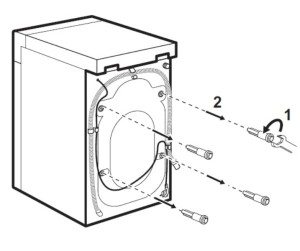
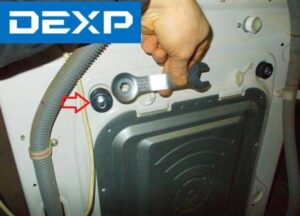
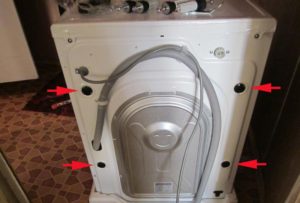
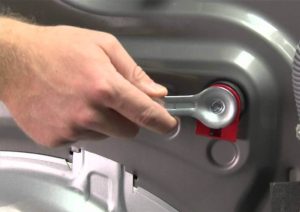
After this, you need to secure the washing machine's tub. The best way to secure it is with shipping bolts, which are screwed through the holes in the back of the washing machine. Read more about installing and removing shipping bolts in this article.
If the shipping bolts are missing, you'll need to open the top of the washing machine by unscrewing several bolts. Then, place foam rubber, polystyrene, clean rags, and other items in the space between the drum and the walls. Then, replace the top panel with its fasteners.
Once the drum is securely in place, wrap the washing machine body in cloth and secure it with twine. If you follow all the steps above, you can successfully transport the machine without its original packaging; just be careful.

Transporting a washing machine
Once the washing machine is properly prepared for transport, it can be moved and loaded into the vehicle. Frequently, it must be carried down from the top floor of a multi-story building, which is quite challenging given the size and weight of this appliance. Experts recommend not to turn the washing machine upside down when carrying it to the vehicle. The only acceptable position is a slight tilt backward.
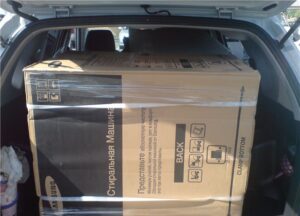
Next, you need to decide how to load the automatic washing machine into the vehicle. There are several options for properly loading a washing machine, depending on the vehicle's specifications. If it's a large truck, things are simpler; if it's a domestic car, things are more complicated. You can transport the washing machine:
- in a natural position - standing;
- on the side wall;
- on the back wall.
The best option for transporting a washing machine, according to experts, is standing up, provided that the tank is securedThe washing machine should be turned sideways, facing the direction of vehicle travel. If there are other large items in the truck bed, position the washing machine so that it is sandwiched between them. This will ensure the shock absorbers remain intact and no hoses or connections are damaged.
Important! Do not transport the washing machine on its lid, i.e., upside down. The machine can only survive transport upside down if the motor and all moisture are removed.
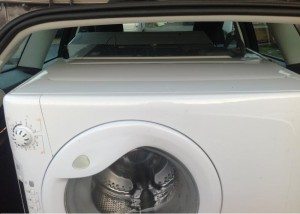 It's also a good idea to lay the washing machine on its side during transport. In this case, some experts claim, you won't even need to secure the drum. However, we recommend that even with this transport option, you either install the shipping bolts or secure the drum with foam.
When placing the machine on its side, be mindful of the detergent drawer. When the machine is turned over, water accumulated in the drawer will leak onto the control panel contacts, potentially damaging the electronics. Therefore, when transporting the machine on its side, remove the detergent drawer and store it separately. Alternatively, wipe the inside dry with a cloth.
If your washing machine is any brand and model except Zanussi, it can be safely transported lying on its back. In Zanussi washing machines, the inlet valve is located right next to the counterweight. If you lay the machine on its back, the counterweight will hit the inlet valve, causing it to break.
Important! Do not transport the washing machine on its front. Placing the washing machine on its front will damage the door hinges and tear the seal.
What happens if the preparation and transportation rules are violated?
Failure to properly prepare and transport your washing machine can lead to dire consequences. Just one bad trip can send your washing machine straight to the landfill—no kidding! Here are some common problems that may arise.
- The integrity of the power cord is damaged.
- The plastic parts of the washing machine body are breaking.
- The cuff tears and the hatch fasteners break.
- The tank shock absorbers fail.
- Hoses and pipes are torn.
- The electrical wiring and contacts get wet and short-circuit.
- The control panel toggle switch breaks off.
- The drain pump breaks.
- The powder tray breaks off and is not secured.
To summarize, even an experienced mover doesn't always know how to properly transport a washing machine. Before transporting, the washing machine must be prepared and then properly positioned in the vehicle. Otherwise, there's a chance that after a makeshift transport, this appliance will not work.
Interesting:
1 reader comment
Add a comment
Headings
Washing machine repair




For buyers




For users


Dishwasher




How do you transport it with top loading?