
How to connect a dishwasher to the power supply
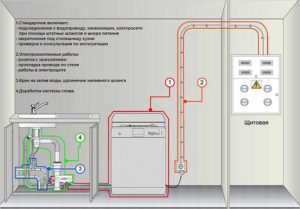 When connecting a dishwasher, many people pay special attention to the water supply and sewer connections, completely neglecting the electrical connections. This is a mistake, especially considering the deterioration of the electrical outlets in many kitchens. Remember, a dishwasher is a major energy consumer, placing a significant strain on the electrical system. If the electrical system is worn out and not designed for such a load, a fire can start. So, gather all the necessary equipment and start installing the electrical connections.
We buy everything we need
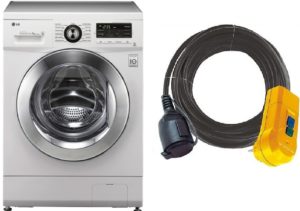
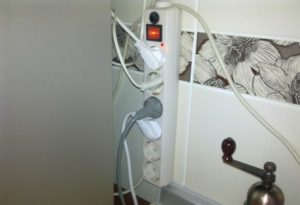
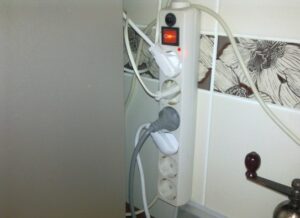
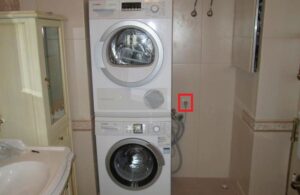
The socket for the dishwasher must be installed in the same place as the machine itself. It is not permissible to connect such a unit via an extension cord. Moreover, the outlet itself must be moisture-resistant, as the kitchen is a fairly damp place, always at risk of contact with water. Furthermore, the electrical cable feeding the outlet must be of the appropriate cross-section, and the outlet must be grounded and protected by a residual-current device (RCD). Taking these requirements into account, we will purchase everything necessary.
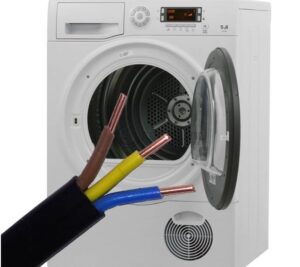
- Triple stranded copper wire (2.5 mm) of the required length in insulation.
- Plastic cable channel of the required length.
- Residual current device.
- A socket with a moisture-resistant housing, protective shutter and grounding.
To avoid having to cut additional grooves in the wall for the wall box, purchase an external wall socket.
- Wiring connection pads.
- A roll of electrical tape.
- Putty to fill the groove.
If you frequently experience power outages or electrical grid failures, you should think ahead about protecting your dishwasher, as well as other household appliances in your kitchen. You can purchasedishwasher stabilizer and connect your "home assistant" to it. This will cost you some money, but you'll keep your equipment safe.
Once you've acquired all the necessary materials, it's time to consider tools. What exactly do you need? First, you'll need a hammer drill, as you'll need to cut grooves in the wall for the cable yourself. Second, you'll need a screwdriver/tester. Third, you'll need wire cutters, pliers, and a utility knife. Gather all of these items and keep them handy, then begin preparing the electrical connections.
We are pulling electrical communications
First, let's determine exactly how we'll run the wiring. Mark the appropriate locations on the wall and cut a channel from the electrical panel to the outlet location. Use a utility knife to strip the ends of the wires and connect one wire to the live wire, one to neutral, and one to ground through an RCD. Remember which wire is connected to which—we'll need it later. Install the cable channel in the channel, open it, pull the wires through, and close the channel.
We bring the end of the wire to the location where the outlet will be installed. Unscrew the new outlet. Attach the base to the wall. Make sure the wire is de-energized, and then connect it to the outlet's internal components. Screw the outlet's internal components to the base and finally, screw on the housing cover. That's it, the outlet is installed. Turn on power and test the outlet's operation. Lastly, we seal the cable channel.
Be careful! When working with electrical wiring, make sure the power is off several times to avoid electric shock.
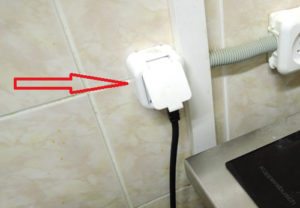 Of course, running cables by chasing the wall is only possible if you're renovating. If you have new wallpaper on the wall and a completed renovation, you're unlikely to want to undertake such a messy procedure as chasing. Keep in mind that you can temporarily run the cable channel directly along the wall, and then hide it inside during your next renovation—no problem!
Connecting the dishwasher
There's one rule that appears in almost all dishwasher manuals. Never plug the dishwasher into a power outlet until it's connected to the water supply and sewer system. First, check for leaks before plugging in the dishwasher. During a test run of the washing program, stay close to your dishwasher. If a short circuit occurs, you can prevent any untoward consequences.
So, we've provided a brief guide on how to connect a dishwasher to the power supply. We've explained what kind of wire is needed for this connection, as well as what other materials and tools you'll need. We've also covered the entire process. We hope everything is clear to you, and you'll avoid making any mistakes. Good luck!
Interesting:

Readers' comments
Headings
Washing machine repair




For buyers




For users


Dishwasher




Add a comment